

Can Household Robots Become Practical Helpers in Modern Homes?
Robots in the home have been promised for a long time. For decades, the picture in films and adverts was the same: a friendly machine that cooks, cleans, and tidies while its owners get on with their lives. The reality, for most of that time, was a single modest success: the robot vacuum, bumping gently around the living room.
That picture is starting to change. In 2026, the robots in our homes are smarter, more capable, and more varied than they were even a few years ago. They map rooms, avoid cables, empty themselves, and in some cases talk with us. The question is no longer whether robots can work in a home. It is whether they can become practical helpers, doing jobs that genuinely save time, rather than expensive gadgets that need more attention than they save.
This article looks at where household robots stand in early 2026, what they can already do well, what still holds them back, and what to consider before bringing one home.
The Robots Already in Our Homes
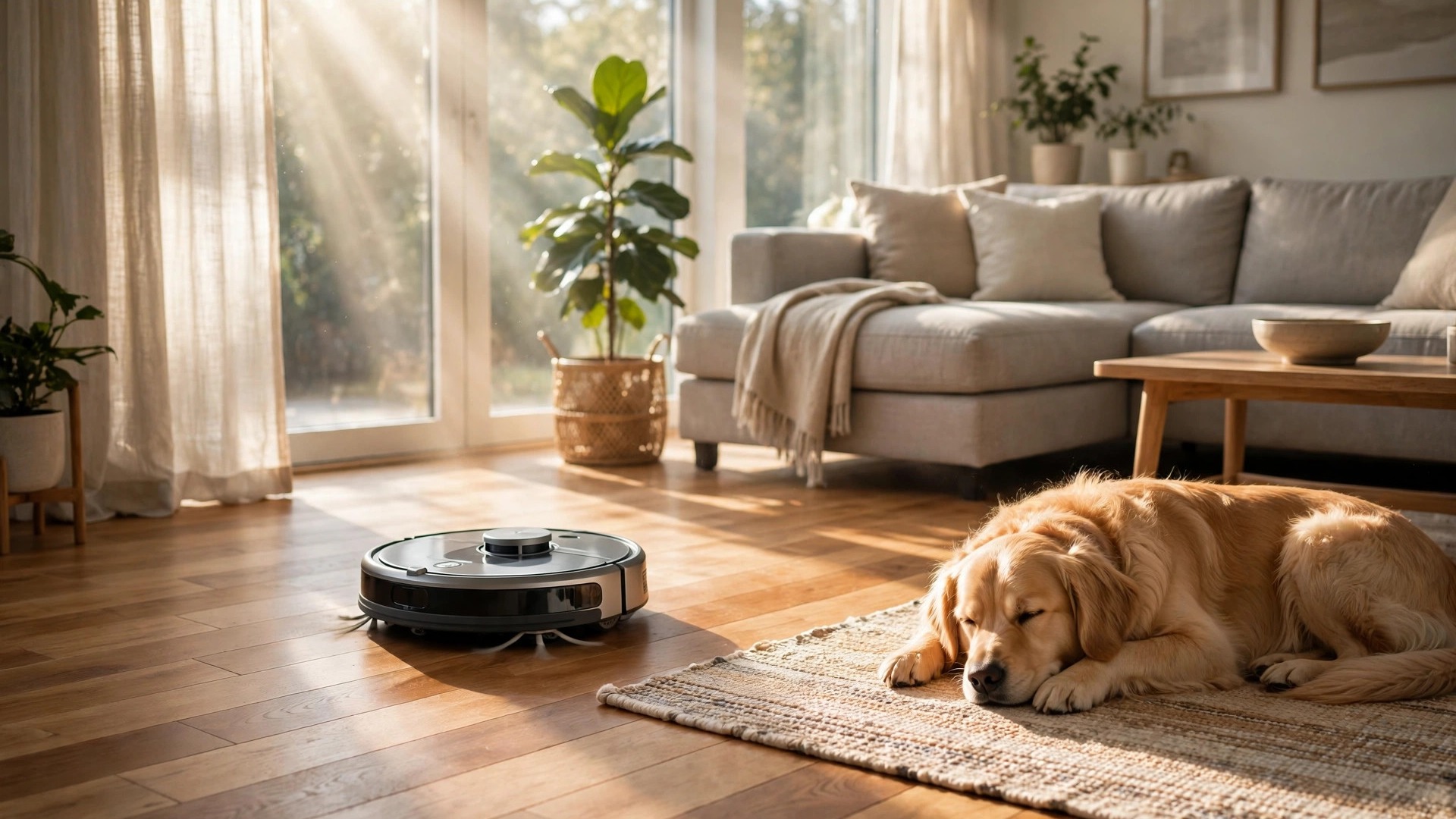
The most successful household robot so far is also the simplest. Robot vacuums from companies such as iRobot, Roborock, Dreame, and Ecovacs now sit in millions of homes. The latest models map a floor plan, avoid shoes and cables, mop as well as vacuum, and return to a dock that empties their dustbin on its own. For many owners, they are the first robot that simply works: set a schedule, and the floors stay clean with little thought.
Robot lawn mowers have followed a similar path. Early models needed a boundary wire buried around the garden. Newer ones use cameras and satellite positioning to mow without wires, handling slopes and uneven ground that once defeated them. They are still a niche product, but they show the same pattern: a single job, done well, repeated without fuss.
The lesson from these successes matters. The robots that have found a place in homes are specialists. They do one job, and they do it reliably. The general-purpose helper that does everything is still a promise, not a product.
Why the Home Is the Hardest Place for a Robot
A factory is built for machines: flat floors, fixed lighting, and objects in known places. A home is the opposite. Stairs, rugs, toys on the floor, a chair moved since yesterday, a glass left on a table: every home is a changing obstacle course, and no two are alike.
That unpredictability is the central problem for household robots. A robot that works well in a tidy showroom can struggle in a real living room. It must recognise objects it has never seen, cope with lighting that changes through the day, and recover when something goes wrong, such as a sock tangled in a wheel.
Hands are the other great difficulty. A robot arm that can pick up a mug, fold a shirt, or load a dishwasher needs fingers that are strong enough to lift and gentle enough not to break things. Human hands manage this without thinking. Robot hands, even the best of them, are still clumsy by comparison. Until hands improve, the most useful home robots will be the ones that work without them: machines that roll, clean, carry, and watch, rather than machines that grasp.
Smarter Robots: Vision, Language, and Learning
What has changed most in the last few years is the robot’s brain. Better cameras, cheaper sensors, and AI models that understand language and images are making home robots more capable. A robot that can see a room, understand a spoken request, and plan a route is far more useful than one that follows a fixed pattern.
This is part of the wider wave of AI innovations reaching everyday life, where assistants are becoming able to see, hear, and act. In the home, that means a robot that can be told “clean up after dinner” and work out what that involves, rather than needing a button pressed for each step.
Smart speakers from Amazon, Google, and Apple control lights, thermostats, and locks, and they can now hold a more natural conversation than the rigid command systems of a few years ago. The robot that combines that understanding with wheels and arms is the goal many companies are working towards. The pieces exist, but putting them together in a machine that is affordable and reliable is still a work in progress.

The Humanoid Question: Helpers or Hype?
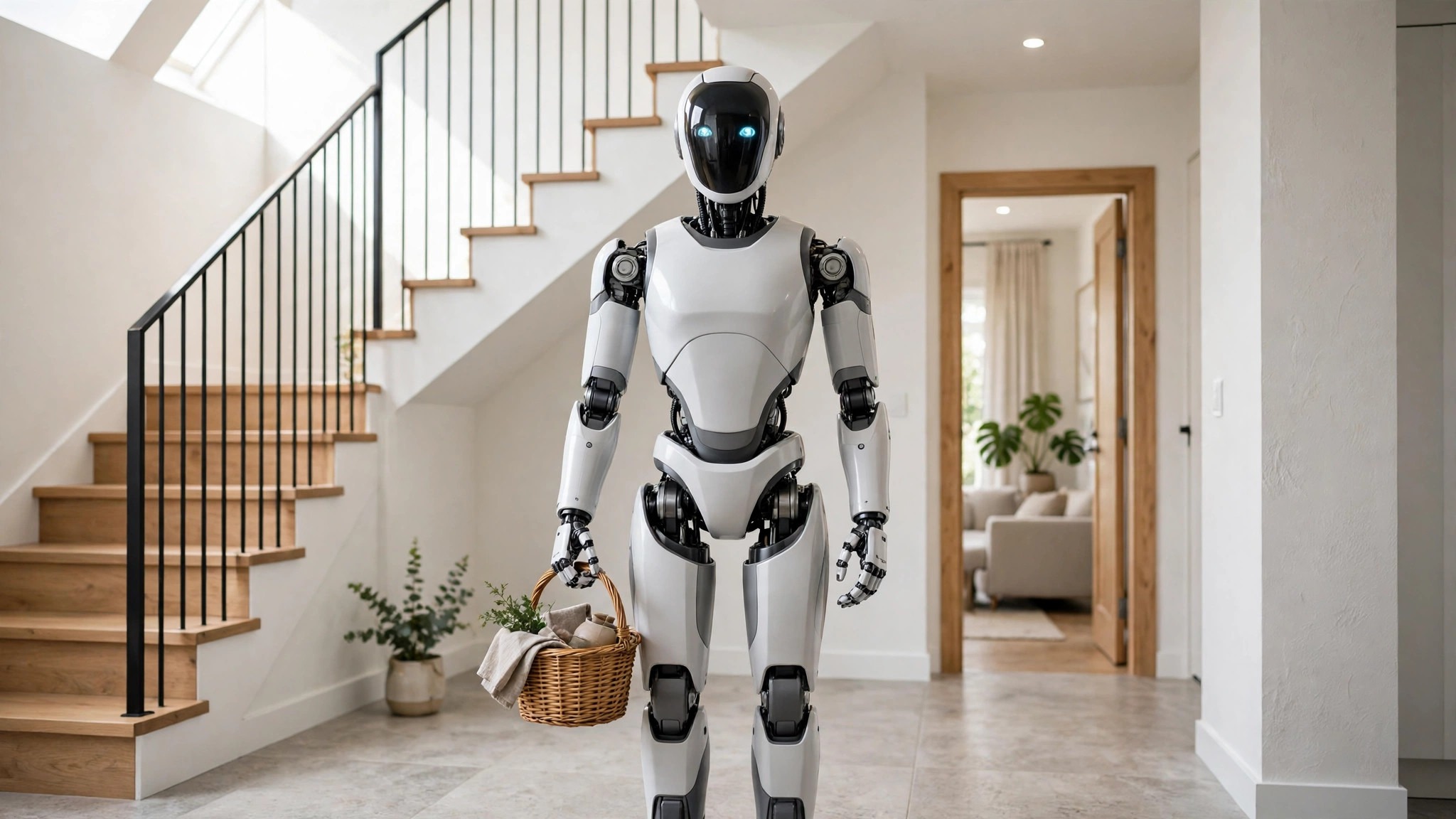
The most ambitious household robots are humanoids: machines with arms, legs, and hands, built to use a home designed for people. Tesla has shown Optimus carrying out simple tasks, Figure AI has demonstrated its robots in warehouse trials, and 1X Technologies has built NEO, a humanoid aimed specifically at the home.
The appeal is obvious. A humanoid could climb stairs, open doors, and use the same tools people use. But the gap between a demonstration and a product is wide. The humanoids shown so far are slow, expensive, and need supervision. Their batteries last hours, not a full day. And a machine that moves around a home with people and pets in it must be safe in ways a factory robot never has to be.
The industrial robotics advances behind these machines are real, as described in our article on robotics innovations transforming industries, but the home is a harder test than the warehouse. For now, the honest answer is that humanoid helpers are coming, but the practical version is still some years away. The robots that help at home in 2026 are more likely to be small, specialised, and wheeled than tall, human-shaped, and general.
Cleaning, Cooking, and Carrying: What Works Now
So what can a household robot actually do for you today? Cleaning is the clearest win. A good robot vacuum with mopping, a self-emptying dock, and obstacle avoidance can keep floors clean with a few minutes of attention a week. For homes with pets or children, that alone is a real saving of time.
Kitchen robots are narrower but growing. Machines that chop, stir, and cook a recipe step by step have found buyers, though they still need a person to load ingredients and clean up afterwards. Laundry remains the hardest chore: folding clothes needs the dexterous hands that robots lack, so no home robot folds a shirt well yet.
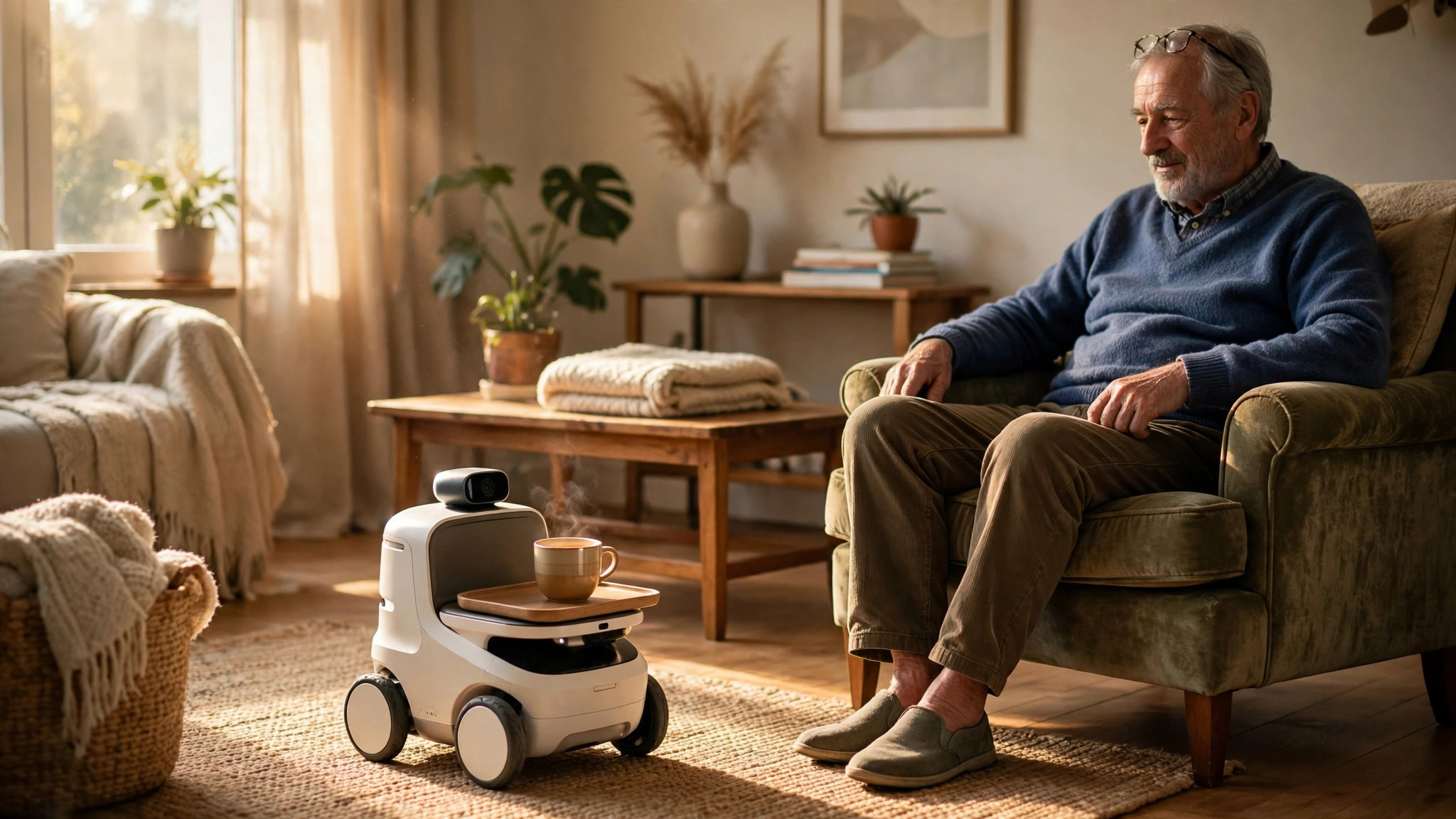
Carrying is a quieter success. Small robots that follow a person around the home, carrying items from room to room, are being tested as helpers for older people and for anyone with limited mobility. Amazon’s Astro, a small wheeled robot, patrols rooms and can check on things while its owner is away. These are modest jobs, but they are real ones.
Robots for Older People and Care at Home
One of the most promising uses for household robots is care. Populations are ageing in many countries, and there are not enough carers to go around. A robot that reminds someone to take medicine, checks that they have moved during the day, or alerts a family member if something seems wrong could help older people live independently for longer.
Companion robots are part of this picture. Machines such as ElliQ, a small tabletop companion, hold conversations, remind their owner of appointments, and offer company. They are not replacements for human contact, and nobody serious claims they are. But for a person living alone, a device that notices and responds can make a real difference to a day.
Safety and dignity matter here more than anywhere else. A care robot must protect privacy, since it sees and hears a great deal inside a home. It must also be honest about what it is: a machine, not a friend. The best designs are clear about that, and they work best when a family stays involved rather than handing care over entirely.
Cost, Privacy, and What to Check Before You Buy
Household robots are still expensive for what they do. A top robot vacuum costs several hundred dollars, and a capable home robot can cost several thousand. Before buying, the honest calculation is time saved against money spent, and the answer is not always in the robot’s favour.
Privacy deserves the same careful thought. A robot with cameras and microphones in your home collects a great deal of information: the layout of your rooms, when you are in, what you say. Before you buy, check what data the company keeps, where it is stored, and whether you can delete it. A robot that maps your home should let you control that map.
Reliability matters too. A robot that needs rescuing from under the sofa every day is not saving time. Read reviews from people with homes like yours, with the same pets, the same floors, and the same clutter, rather than trusting a showroom demonstration.
Practical Tips / Examples / Things to Know
- Start with a single job, such as vacuuming, and choose a robot that does that job well before buying anything more ambitious.
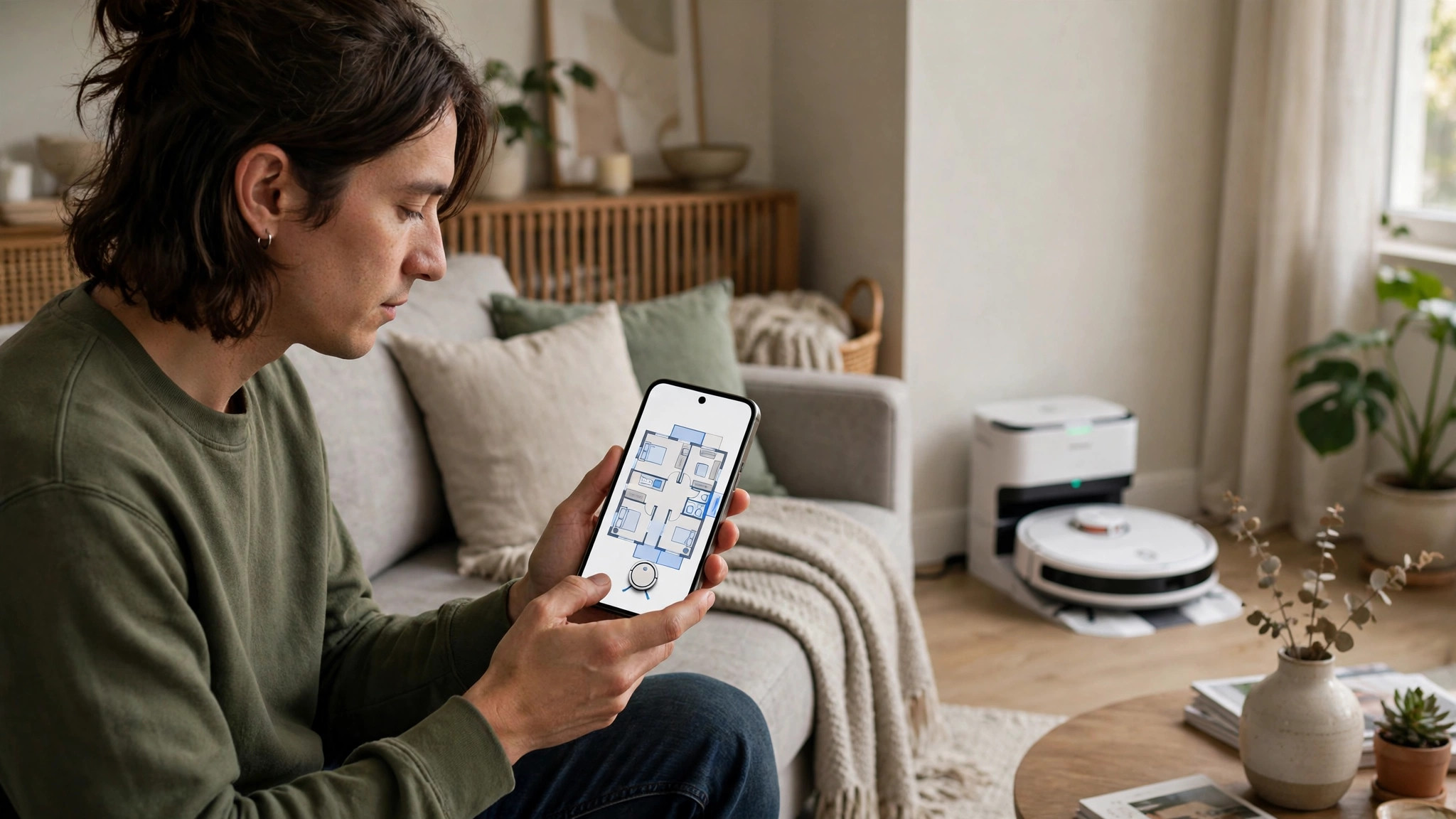
- Map your home with the robot’s app and set no-go zones around cables, pet bowls, and fragile items.
- Check whether the robot works with the voice assistant you already use, so it fits into your home rather than needing a separate system.
- Read the privacy policy before you buy: find out what data the robot collects and how to delete it.
- Keep floors reasonably tidy for the first few weeks while the robot learns your home, then relax the routine once it copes.
- If you buy a robot for an older relative, set it up yourself and test it in their home, not yours.
- Budget for replacement parts such as brushes, filters, and batteries, which add to the real cost over a year.
Common Mistakes / Considerations / What to Avoid
- Buying a robot for a job it cannot do yet, such as folding laundry or loading a dishwasher.
- Expecting a humanoid helper to work like the ones in films and adverts, when the real versions are still slow and limited.
- Choosing the cheapest robot and discovering it cannot navigate your home or avoid your pet’s toys.
- Ignoring privacy settings and letting a robot’s camera and microphone send data you would rather keep at home.
- Leaving the robot to run while a pet is alone with it for the first time, before you know how the pet reacts.
- Replacing human care for an older person with a machine, when the robot should support care rather than replace it.
- Forgetting that a robot needs maintenance: brushes wear out, sensors get dirty, and software needs updates.
Final Thoughts
Household robots in 2026 are at an interesting point: good enough to be genuinely useful, but not yet the helpers of science fiction. The machines that work best are the specialists, doing one job well, day after day, without fuss. The general-purpose helper is still on its way, and it will arrive first in the form of better cleaning, carrying, and watching, not in the form of a robot that cooks dinner and folds the laundry.
The practical question for any home is simple: is there a job a robot can already do that would save you real time? If the answer is yes, the robots of 2026 are worth a look. If the answer is no, waiting is a reasonable choice too. The technology is improving quickly, and the helpful version of the household robot is getting closer every year.