
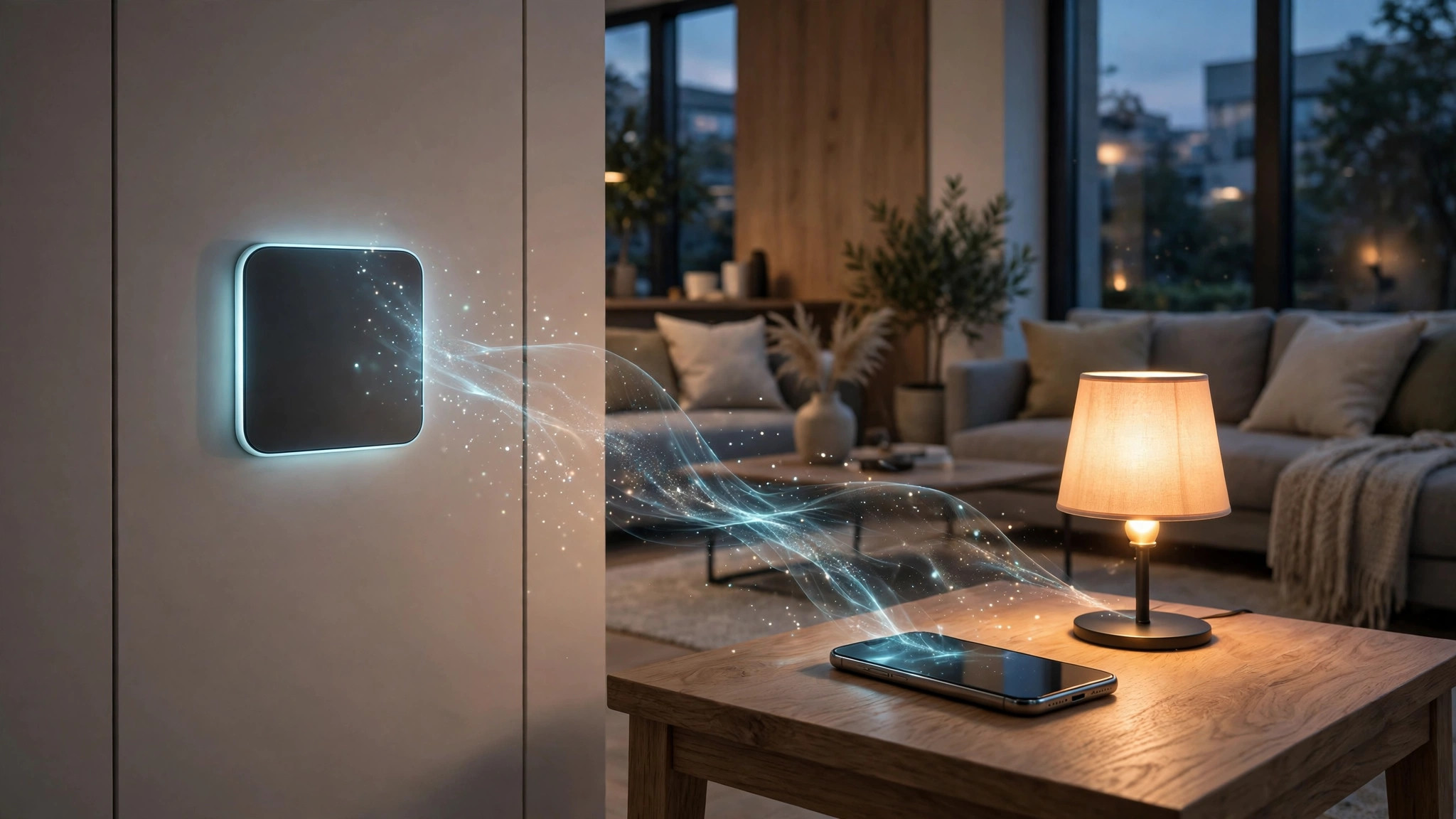
What Is Wireless Electricity and How Close Are We to Everyday Applications?
Plug a phone in to charge it, and the cable is the most ordinary part of the routine. It is also the part most people would happily lose. That simple wish — power without a cable — is the idea behind wireless electricity, and it is older than most people realise.
The idea goes back more than a century, to the inventor Nikola Tesla, who dreamed of sending power through the air to homes and cities. His experiments never became a working system.
Today, wireless electricity is real, but only in a limited form. Millions of phones charge on pads, and some cars park over charging plates. This article explains how it works, where it already exists, and how close it is to everyday life.
What Wireless Electricity Actually Is
Wireless electricity means sending electrical power from one place to another without a wire between them. It is not the same as wireless communication: a Wi-Fi signal carries information, almost no power. Wireless electricity carries useful power: enough to charge a phone, run a light, or top up a car battery.
All of the methods in use today work the same basic way. Electricity is converted into another form of energy, sent across a gap, and converted back into electricity on the other side. The form in between is usually a magnetic field, a radio wave, or a beam of light.
That conversion is the whole challenge. Every step loses some energy, usually as heat, and the wider the gap, the more is lost. Wireless power has to earn its place by being more convenient, not by being more efficient.
Two goals are at play. The first is cutting the last cable: charging a phone without plugging it in. The second is devices that draw power from the room around them. The first is already ordinary. The second is the frontier.
A Short History: From Tesla to the Charging Pad
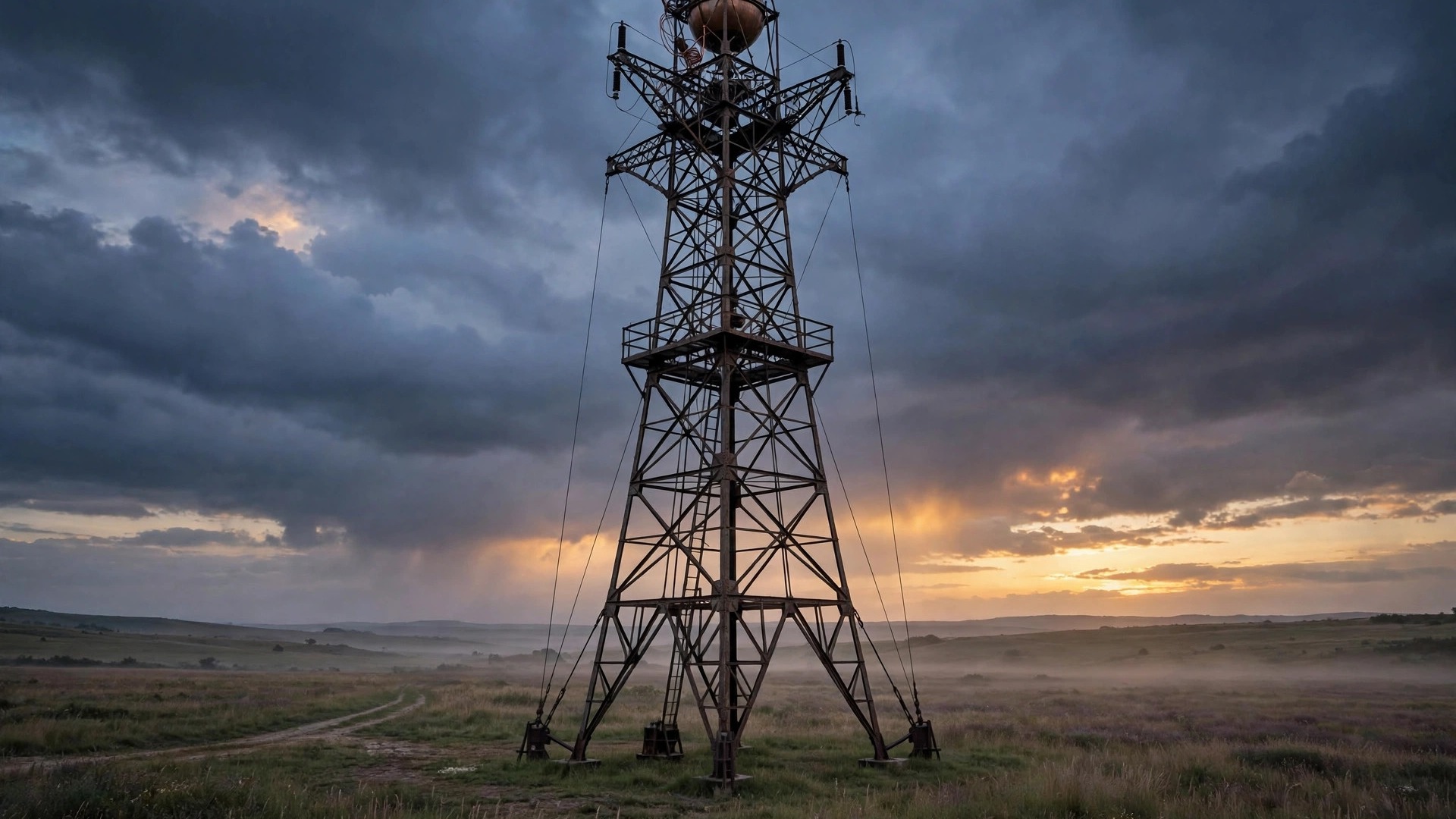
The story starts with Nikola Tesla. In the 1890s he lit lamps without wires in public demonstrations. In the early 1900s he built the Wardenclyffe Tower on Long Island, meant to send power across the Atlantic without wires. The project ran out of money before it worked, and the tower was demolished in 1917.
For most of the twentieth century, wireless power stayed a curiosity. The electronics were too bulky and too inefficient for everyday use. The first practical products were small and unglamorous: electric toothbrushes that charged in a cradle.
The modern era began in 2008, when the Wireless Power Consortium introduced the Qi standard for inductive charging. Phone makers adopted it, and in 2020 Apple added MagSafe: magnets that snap a phone into exactly the right position on a charger. In 2023 the Qi2 standard arrived, building on the same magnetic alignment, and it is now appearing in new phones.
In parallel, researchers pushed the range further. In 2007, a team at the Massachusetts Institute of Technology lit a 60-watt bulb from two metres away using magnetic resonance, work that led to the company WiTricity.
The Main Methods Compared
There is no single way to send power through the air. Four methods matter today.
| Method | How it works | Typical range | Used for today | Main limit |
|---|---|---|---|---|
| Inductive charging | A charger coil creates a magnetic field; a device coil turns it back into electricity | A few millimetres | Phones, earbuds, watches, toothbrushes | The device must sit exactly on the pad |
| Magnetic resonance | Tuned coils resonate together, transferring power more freely | A few centimetres to a couple of metres | Electric vehicles, industrial equipment, research demos | Needs larger coils and careful tuning |
| Radio frequency (RF) | A transmitter beams radio waves to a small receiver | Several metres across a room | Low-power sensors, remote controls, small gadgets | Only tiny amounts of power arrive |
| Infrared and laser | An invisible light beam carries power to a receiver | Several metres, line of sight | Research systems, remote sensors, drones in trials | Needs a clear line of sight |
The pattern is clear. Short range is easy and efficient. Long range is possible but wasteful, and the further the power travels, the harder it is to deliver enough of it safely. That is why the charging pad succeeded first: it solves the easy version of the problem.
Where Wireless Electricity Already Works Today
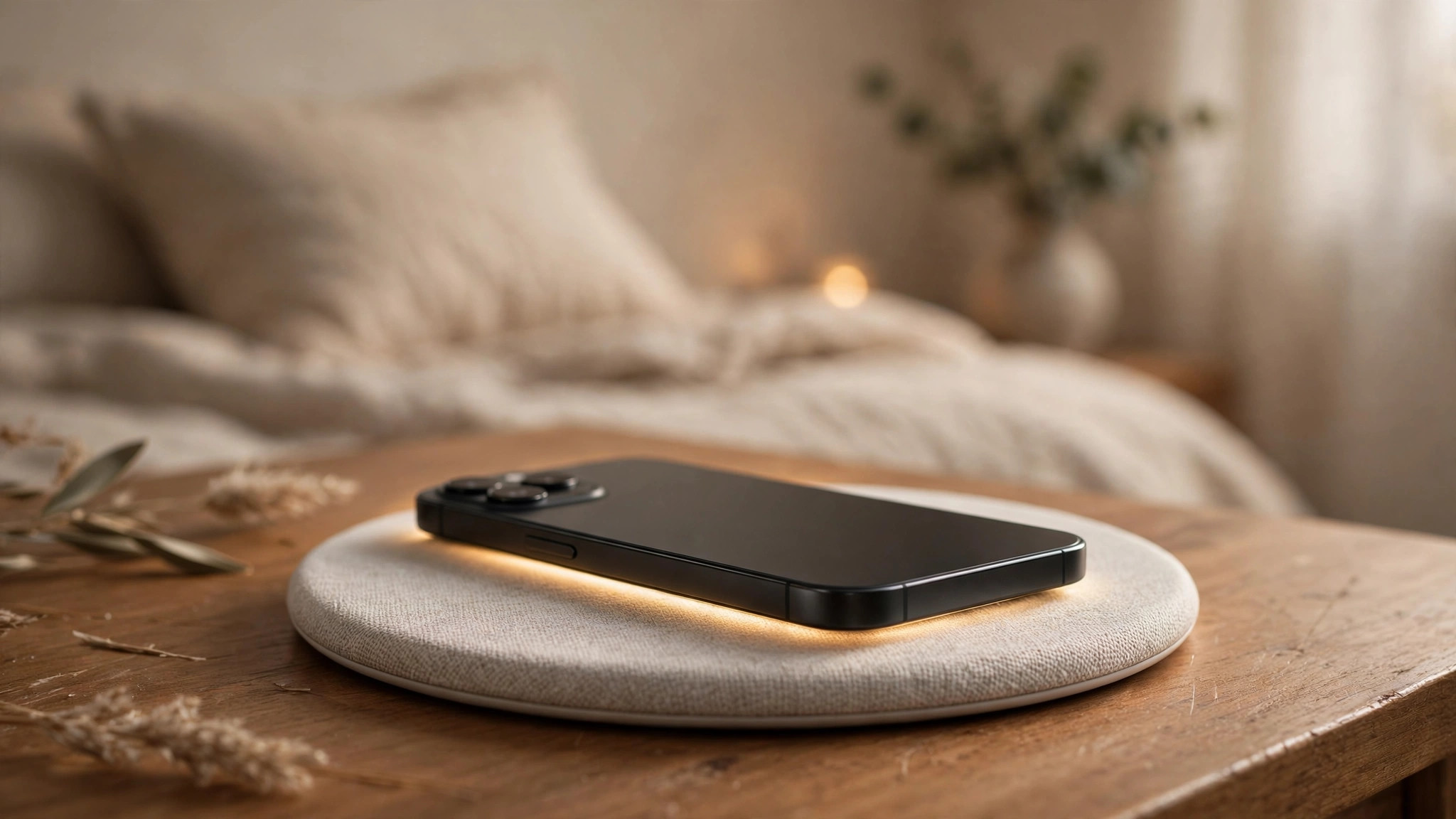
The most familiar use is the phone on a pad. Most modern smartphones support the Qi standard, and newer ones support Qi2, which uses magnets to line the phone up correctly and charges at up to 15 watts. Apple’s MagSafe chargers deliver up to 25 watts to recent iPhones.
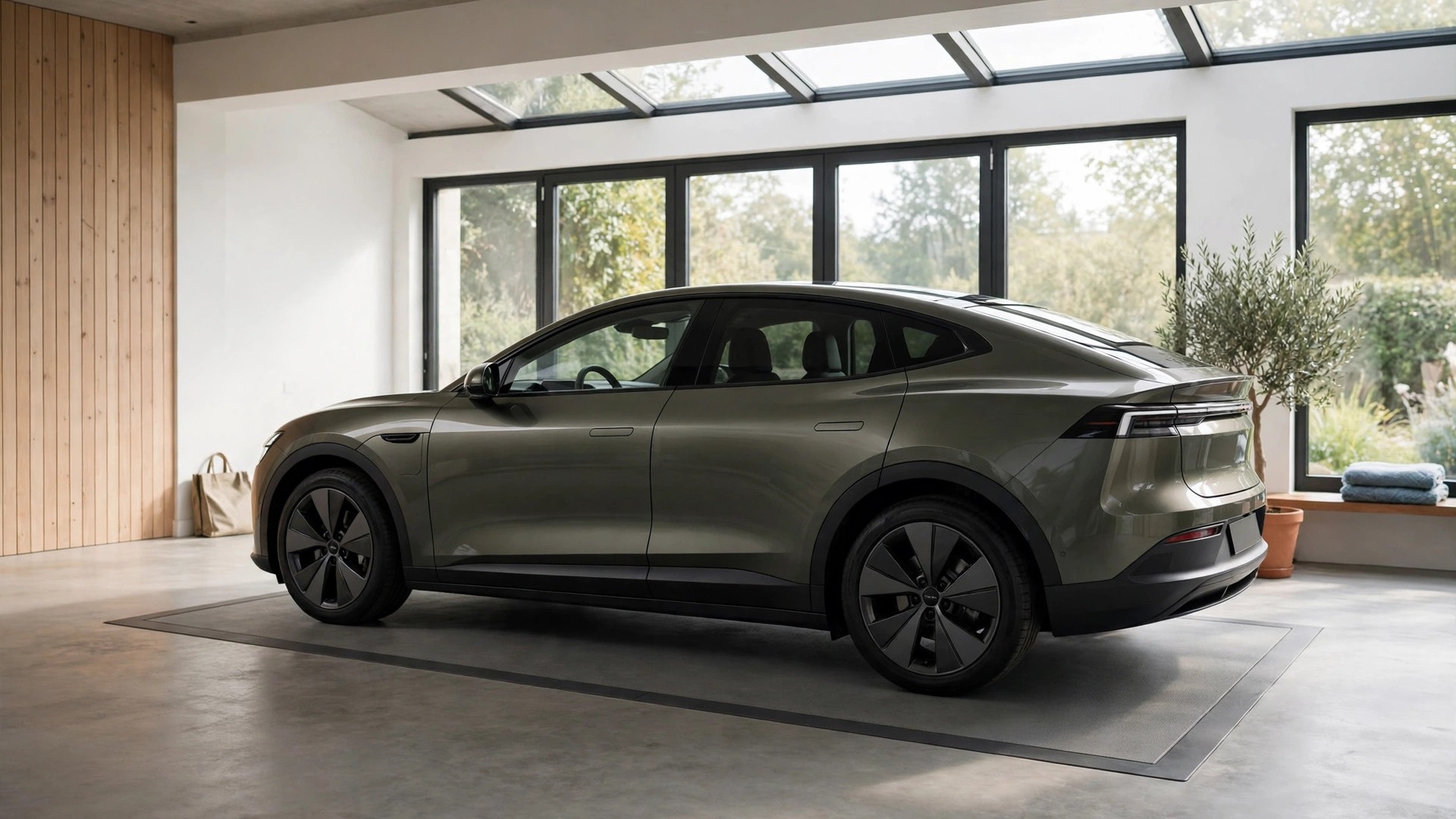
Electric cars are the next frontier, and the idea is the same, only bigger. Instead of plugging in, a car parks over a pad in the ground and charges through the floor. BMW tested a wireless charging system for a plug-in hybrid in 2018, and SAE International has published a standard, known as J2954, for wireless charging of electric vehicles. The technology works; the question now is cost.
Medicine is a quieter success story. Some implants already receive power wirelessly through the skin. Cochlear implants, which help people hear, have used inductive charging for years.
Kitchens are another promising setting. The Wireless Power Consortium has developed a standard called Ki, for cordless kitchen appliances, so a blender or kettle can draw power from a worktop instead of a socket.
Cafes, airports, and hotels have fitted tables and counters with charging spots, and furniture makers sell bedside tables with charging built in.
The Hard Part: Power at a Distance
Charging a phone on a pad is one thing. Powering a device across a room, with no pad at all, is much harder.
One approach uses radio frequency waves. Companies such as Ossia and Energous have built transmitters that beam radio waves to receivers a few metres away. The catch is power: by the time radio waves have spread across a room, only a tiny amount of energy reaches the receiver. That is enough for a sensor, but not for a phone.
Another approach uses light. Wi-Charge sends power as a beam of invisible infrared light, and its receivers convert that light back into electricity. The focused beam can deliver more power than radio waves over the same distance, but it needs a clear line of sight: put a hand in the way and the beam stops.
Physics sets a hard limit here. Radio waves and light spread out as they travel, so the power reaching a receiver falls quickly with distance. A transmitter can compensate by sending more power, but that raises safety questions. International guidelines limit how much radio energy a person can be exposed to, and any distance-charging system has to stay well within those limits.
Distance charging works today for small, low-power devices. A room that quietly powers every gadget in it remains a goal, not a product.
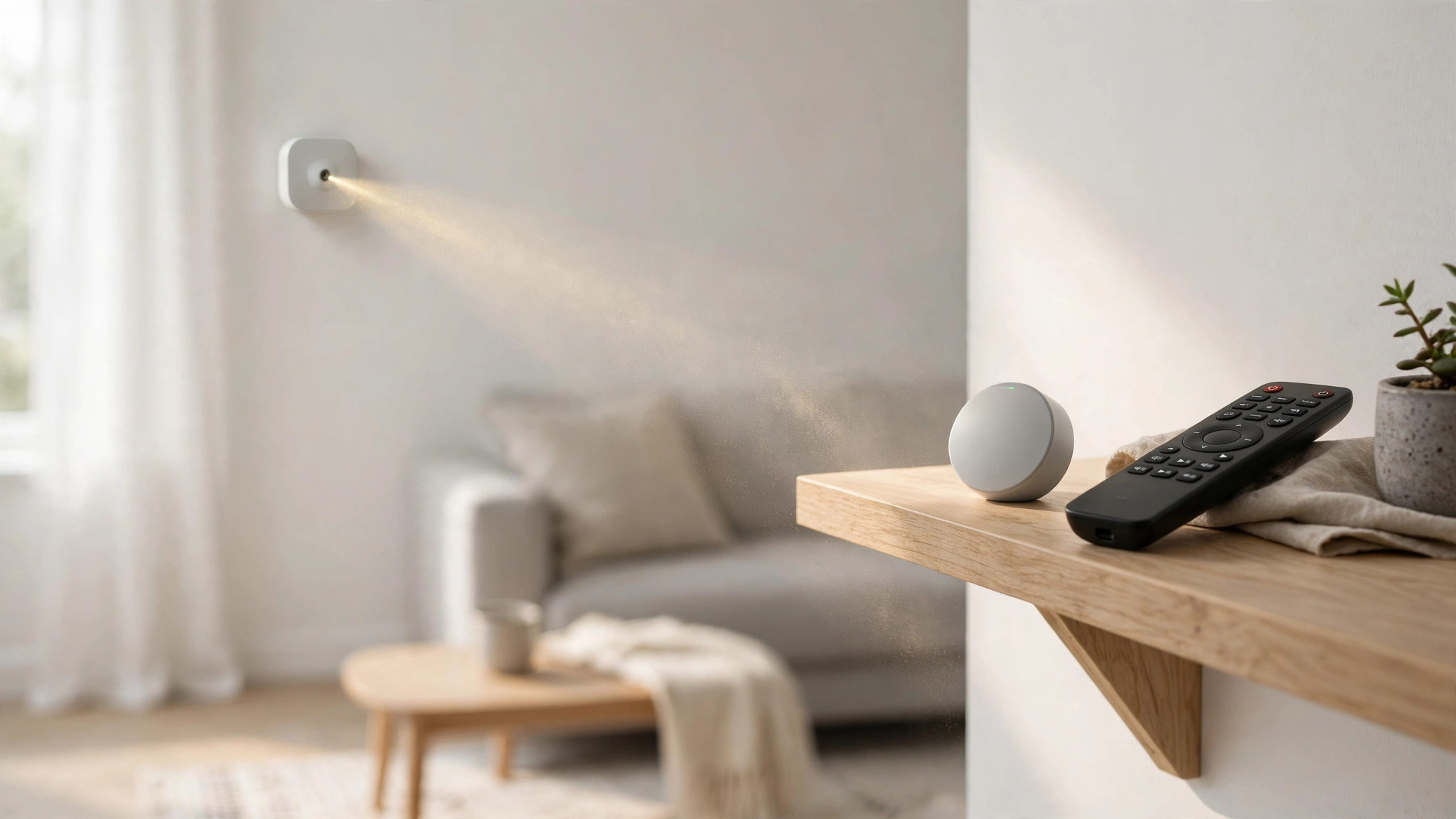
What Everyday Wireless Power Could Look Like
Even so, the shape of an everyday wireless-power world is starting to appear. It is more like cables quietly disappearing, one place at a time.
The home is the most likely place to notice it first. Kitchens with cordless appliances are one step. Furniture with charging built in is another: a phone tops up whenever it is set down. It fits the ambient computing vision of homes where power is simply present in the background.
Cars may change more visibly. Wireless pads in garages and parking spaces would remove the daily ritual of plugging in. Researchers are also testing roads that charge cars as they drive: a short stretch has been built in Detroit by the company Electreon, with similar pilots in Europe and Israel.
Robots are another natural fit. A household robot that has to find a plug and connect a cable is a robot that needs help. One that simply parks itself over a charging pad can look after itself.
None of this needs a breakthrough in physics. It needs cheaper hardware, agreed standards, and enough products to make it worth building into homes and cars.
The same rooms could one day be filled with small sensors that talk to each other over future networks such as 6G, drawing tiny amounts of power from the air around them.

The Challenges: Efficiency, Heat, Safety, and Standards
The biggest obstacle is efficiency. Wireless charging wastes more energy than a cable, and the wasted energy becomes heat. Anyone who has picked up a phone after wireless charging will have felt the warmth. For a car battery, the wasted energy is far larger. As grids add renewable energy, from sources such as next-generation solar panels, wasted electricity matters more, not less.
Cost is the second obstacle. A wireless charger needs coils, magnets, and control electronics that a cable does not. For a car, a wireless charging system is a serious extra cost, and for a road, it is an enormous one. Until the hardware gets cheaper, wireless power will stay a premium feature rather than the default.
Standards are the third. The phone world has largely settled on Qi. But other areas are still fragmented. Different carmakers and suppliers have backed different approaches, and distance charging has competing systems that do not work together.
Safety and regulation come with all of this. Wireless power systems have to prove they do not interfere with other electronics, do not overheat, and do not expose people to more radio energy than the guidelines allow. The rules exist, and the products on sale today pass them. But every new method has to clear the same bar, and that takes time.
Practical Tips / Examples / Things to Know
- A Qi or Qi2 pad is a good bedside companion: set the phone down at night and it is full in the morning.
- Use a charger made for your phone: MagSafe works best with an iPhone, and Qi2 gives recent Android phones their fastest wireless speeds.
- Keep the phone centred on the pad: a phone sitting off-centre will charge slowly or not at all.
- Take a thick metal case off before charging: metal between the phone and the pad blocks the magnetic field.
- Expect wireless charging to be slower than a cable. If you need a fast top-up before leaving the house, use a cable.
- Do not worry about overcharging: modern phones stop drawing power when the battery is full, whether they charge by cable or by pad.
Common Mistakes / Considerations / What to Avoid
- Assuming wireless charging is free of energy loss: it wastes some electricity as heat.
- Buying a cheap, uncertified charger. Poorly made pads can overheat, charge slowly, or damage a battery over time.
- Expecting a phone to charge through a thick case or a metal plate. The gap matters, and every millimetre makes charging harder.
- Believing distance charging can already power a phone across a room: today’s systems deliver only tiny amounts of power at a distance.
- Thinking wireless charging replaces cables everywhere. Wired charging remains faster, cheaper, and more efficient, and it will stay the standard for laptops.
- Ignoring the cost for big purchases: a wireless charging pad for an electric car is a major extra expense.
Final Thoughts
Wireless electricity has travelled a long way from Tesla’s tower on Long Island. The charging pad on a bedside table is the proof: power without a cable is no longer an experiment, but an everyday habit for millions of people. The harder dream, power that reaches across a room, is still being worked on.
What happens next depends less on new physics than on practical things: cheaper hardware, standards everyone accepts, and uses that are clearly better than a cable. The most likely future is not a world without wires, but a world with fewer of them: kitchens without trailing cords and cars that charge by parking.