Groomzilla insists that the wedding weekend is “about” him and his friends, insults bride during first look, and more…
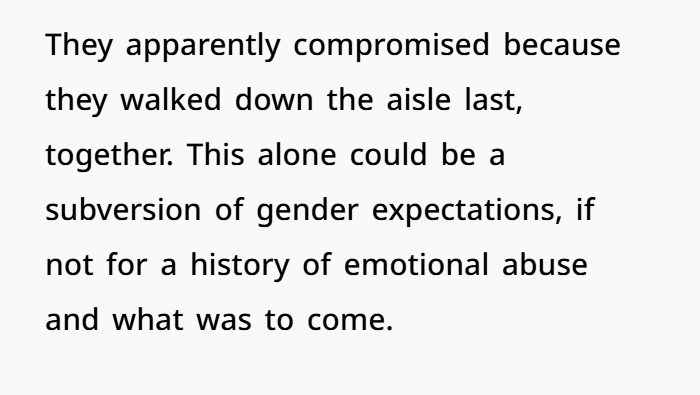
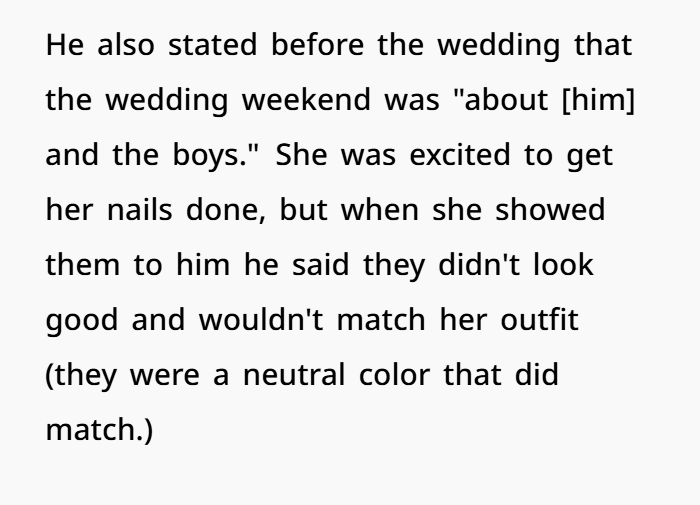
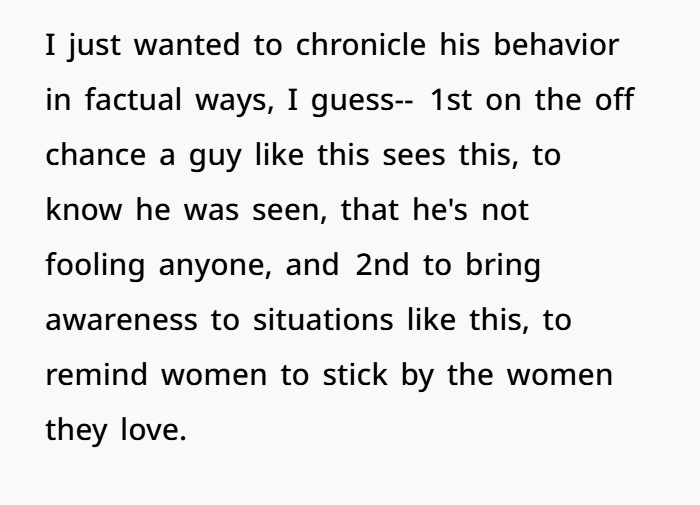
What should have been one of the happiest days of a couple’s life turned into a very upsetting experience for the bride. During the wedding weekend, the groom repeatedly made the day about himself. He said the celebration was “about him and the boys” and ignored the bride’s feelings, appearance, and efforts at nearly every moment.
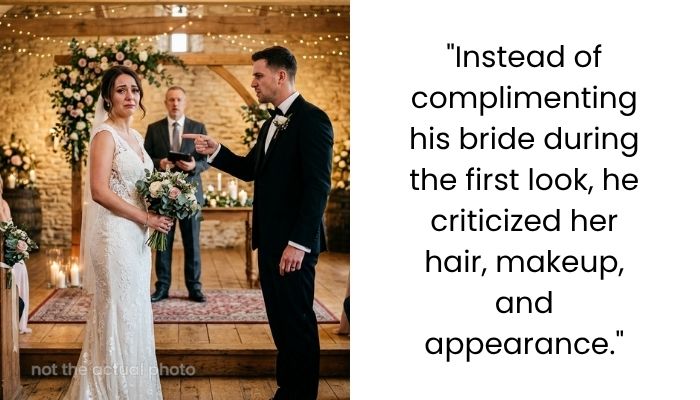
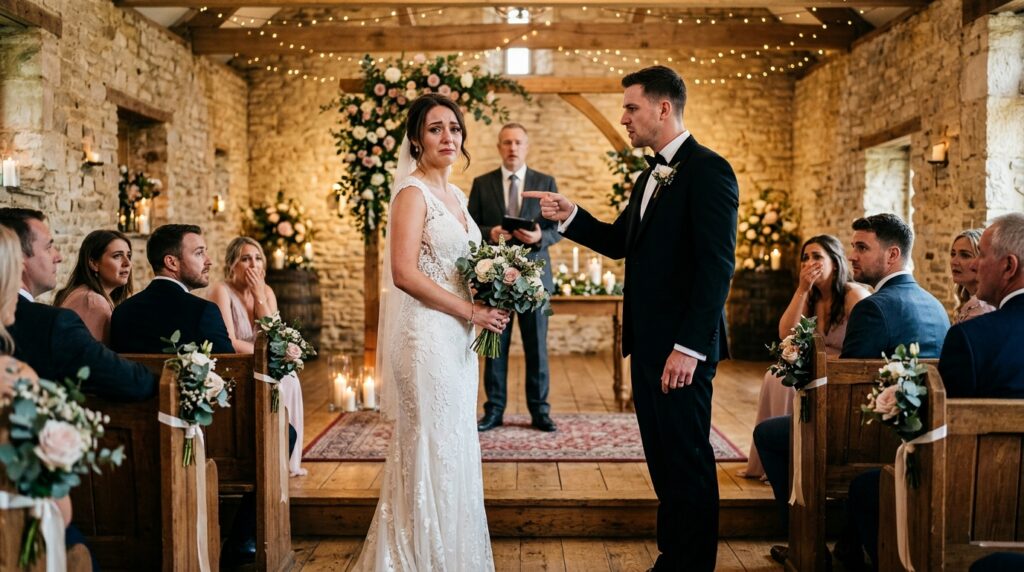
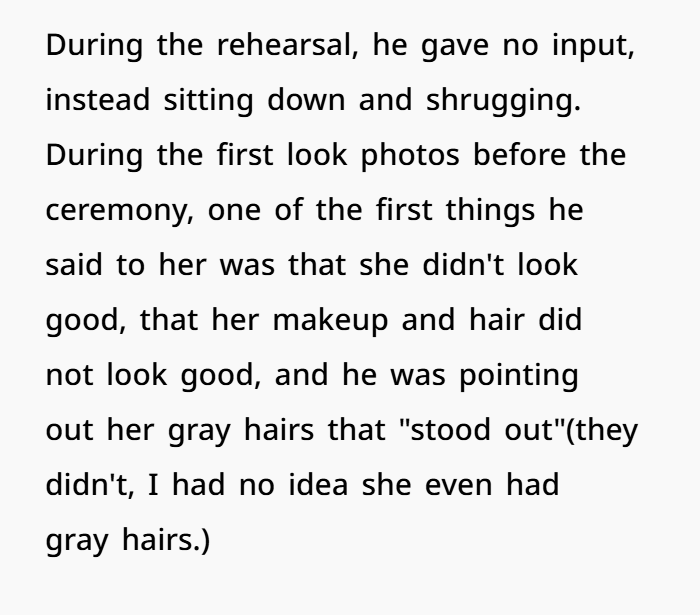
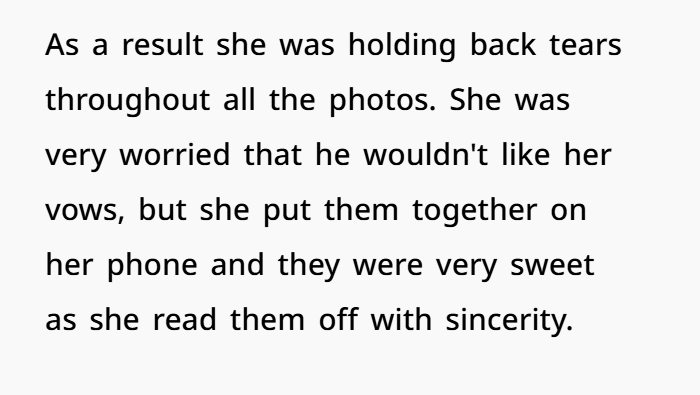
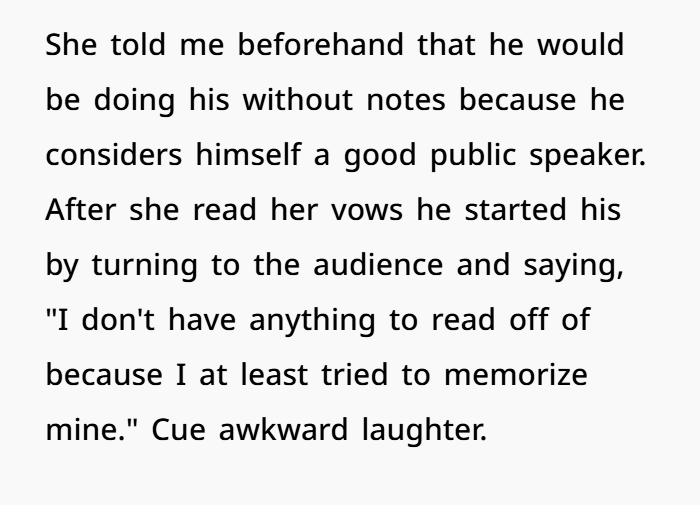
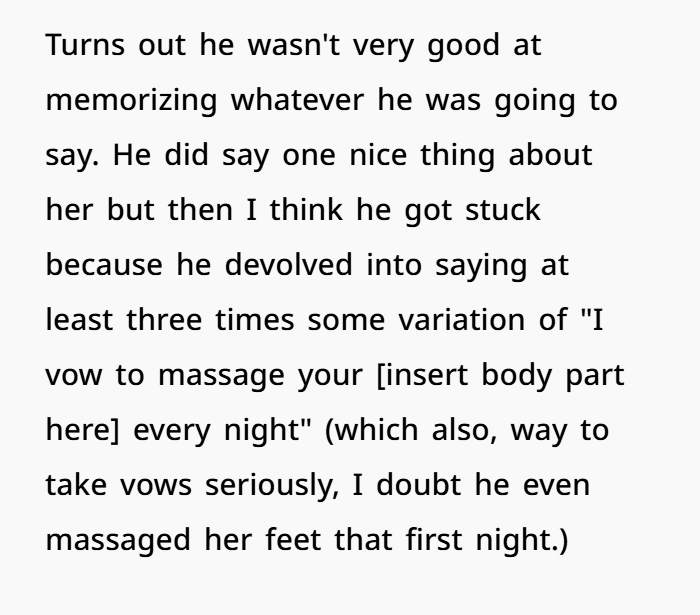
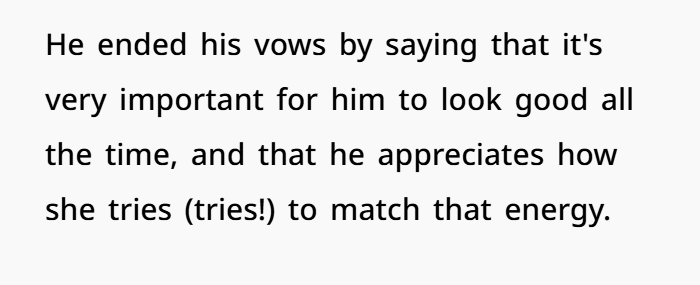
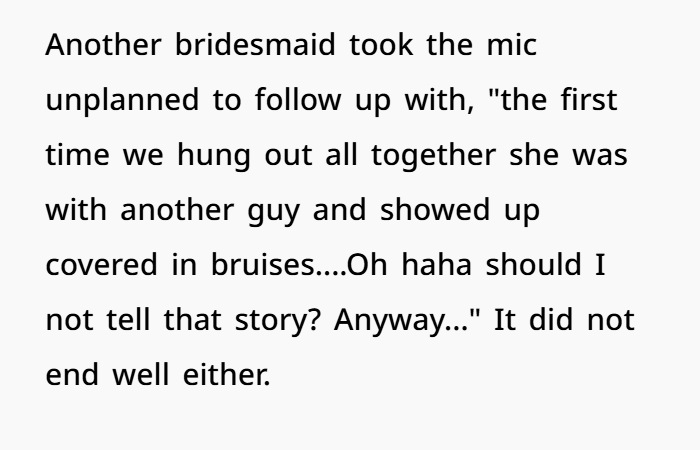
He criticized her wedding nails, insulted her appearance during the first look, and made demeaning remarks during his vows. This was more than just nerves—it showed a consistent pattern of disrespect and emotional harm.
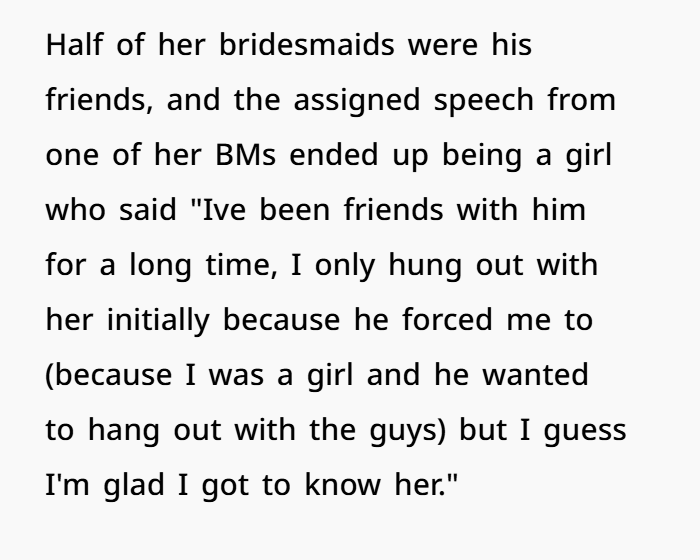
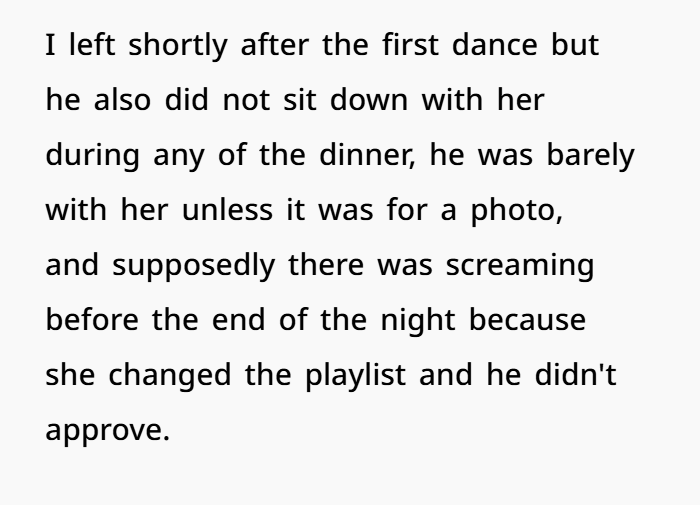
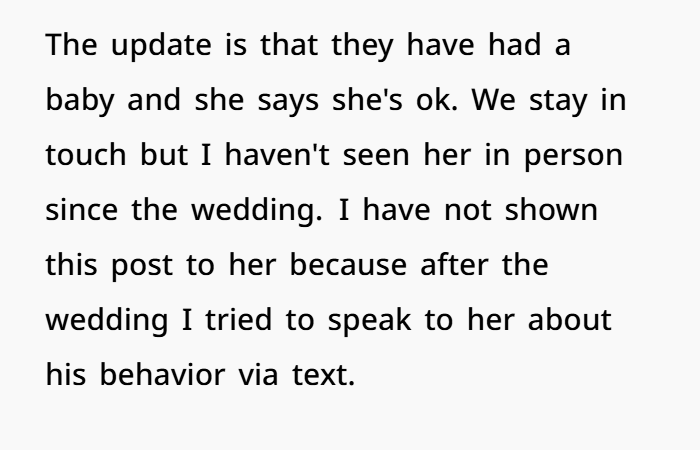
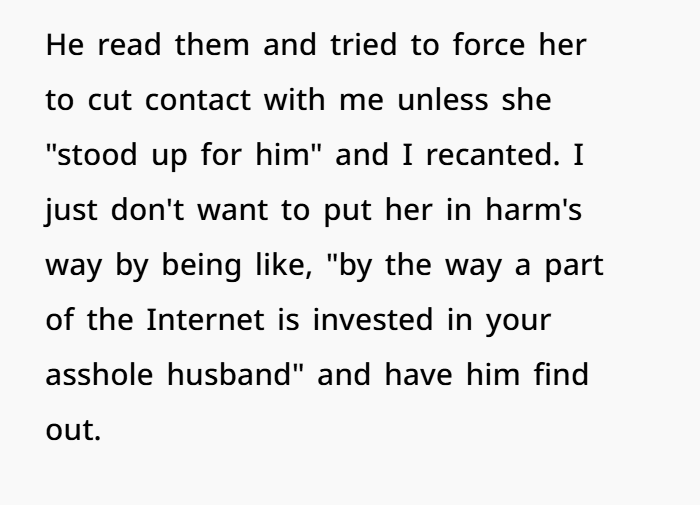
The groom also tried to control the ceremony, showed little interest in planning, belittled the bride in front of family and friends, and avoided the reception unless needed for photos. After the wedding, he reportedly intercepted messages from friends and tried to isolate his wife by asking her to cut off contact unless concerns were withdrawn.
These behaviors match patterns often described as coercive control, a type of domestic abuse where one partner uses repeated psychological pressure to dominate the other. It involves controlling actions, isolating the partner, and undermining their confidence, rather than one single event.
This story highlights the importance of recognizing emotional abuse, coercive control, and controlling behaviors in relationships, even during events that are supposed to be joyful, like weddings.
Emotional abuse is often not about a single big fight. Instead, it happens over time through repeated criticism, humiliation, control, and manipulation. Experts call this coercive control, where one partner tries to dominate the other by limiting their independence, isolating them from friends or family, and constantly criticizing them. This can happen without physical violence.
Warning Signs at the Wedding
During the wedding, several behaviors reflected coercive control patterns:
- Publicly criticizing the bride’s appearance before the ceremony
- Mocking her vows
- Minimizing her efforts and accomplishments
- Repeatedly redirecting attention to himself
These actions can undermine confidence, create an unhealthy power imbalance, and emotionally harm the partner. Studies show that long-term exposure to coercive control can lead to depression, anxiety, and PTSD.
Social Isolation and Control
After the wedding, the groom reportedly read private messages between the bride and a friend and pressured her to defend him or end the friendship.
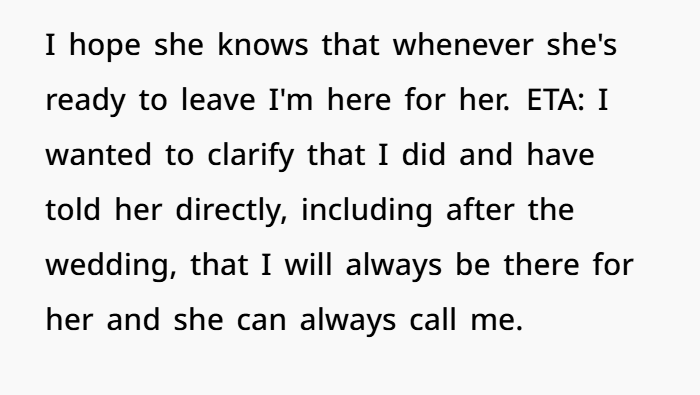
Experts note that controlling partners often try to isolate victims from trusted support systems. This makes leaving the relationship harder and increases emotional dependency on the abuser.
Focus on Self and Validation
Throughout the event, the groom insisted the wedding be about him, repeatedly highlighted his appearance, and minimized the bride’s role. While this alone does not indicate a personality disorder, experts say that persistent entitlement, public humiliation, and grandiosity combined with control are key warning signs of emotional abuse.
Expert Insights on Coercive Control
Researcher Evan Stark, who developed modern understanding of coercive control, emphasizes that abusive relationships often involve ongoing domination and emotional manipulation, rather than isolated violent events. This includes surveillance, intimidation, and restricting personal freedom.
Importance of Bystander Support
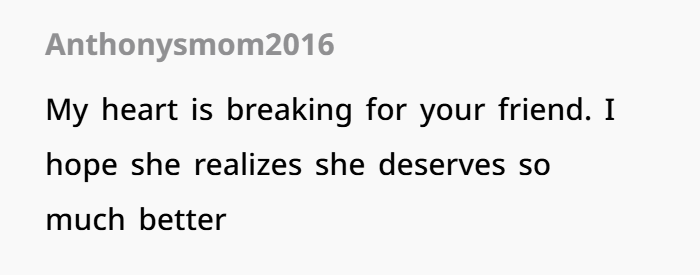
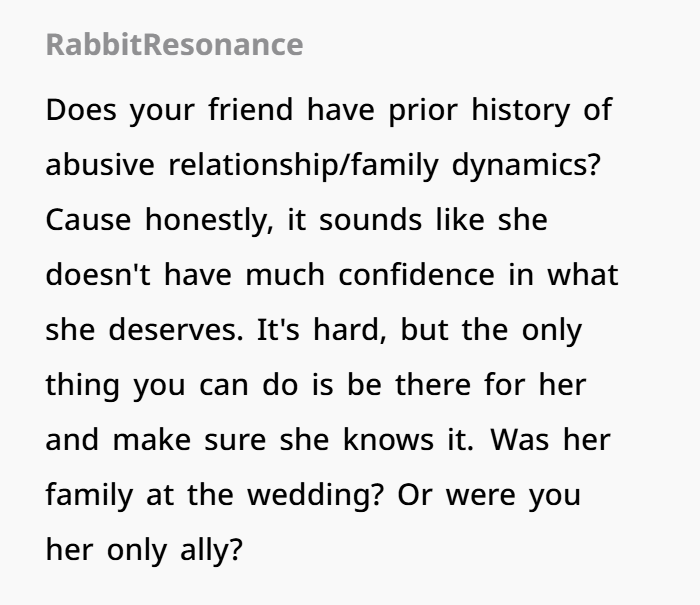
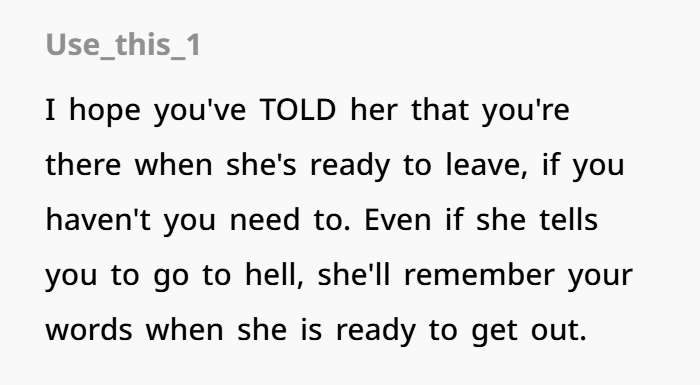
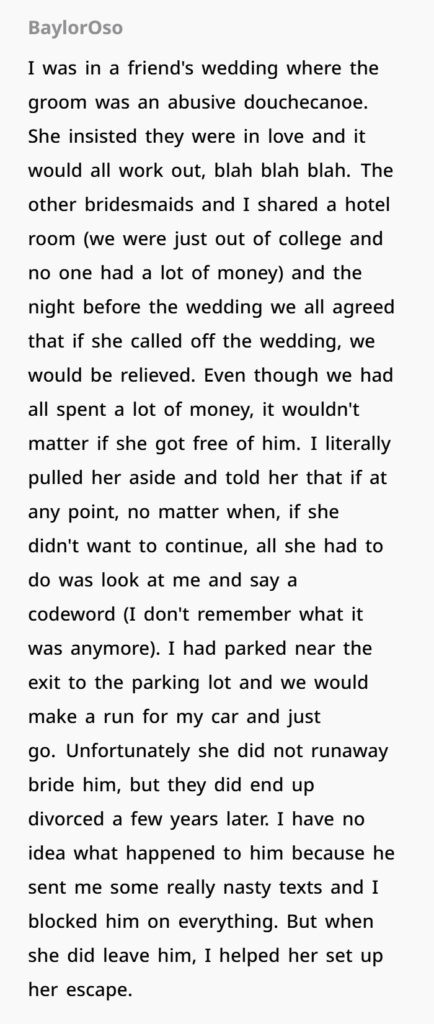
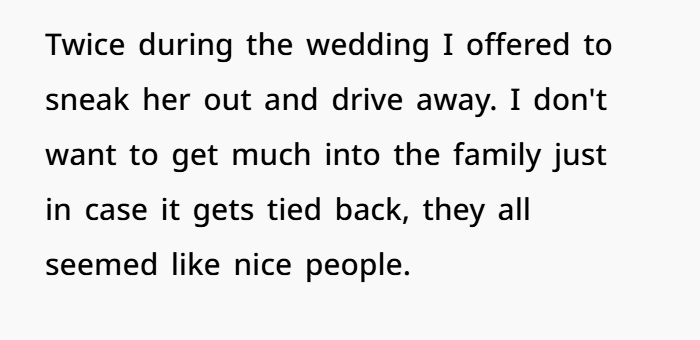
Friends and family cannot force someone to leave an abusive relationship, but supportive communication is critical. Research shows that survivors benefit from friends who:
- Offer non-judgmental support
- Avoid victim-blaming
- Provide safe opportunities for help
Children and Relationship Dynamics
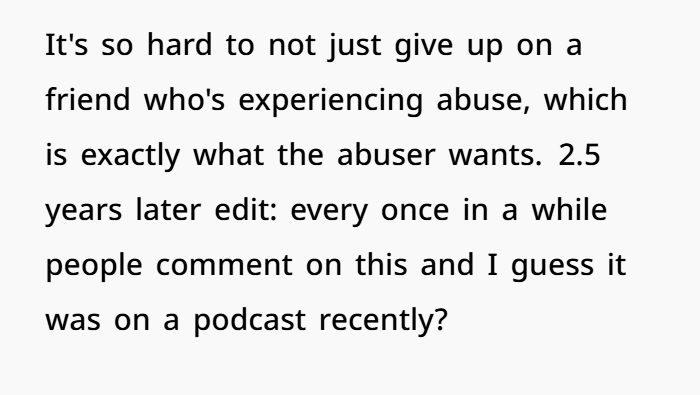
Even though the couple later had a child and the bride reports doing well, having children does not automatically fix or prevent unhealthy dynamics. The key takeaway is that repeated public humiliation, criticism, and controlling behavior are serious warning signs of coercive control, toxic relationships, and emotional abuse.
This story highlights topics that remain widely discussed by psychologists, family violence researchers, and legal experts, including emotional manipulation, domestic abuse awareness, and relationship red flags.
See the comments to know what people said