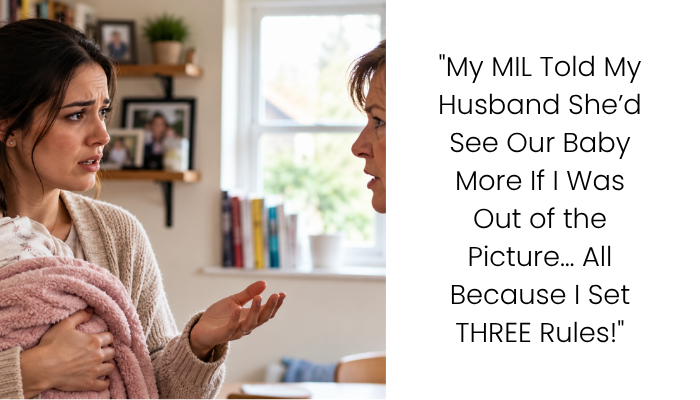
My MIL Told My Husband She’d See Our Baby More If He Were a Single Dad—All Because I Won’t Let Her Control Our Family!
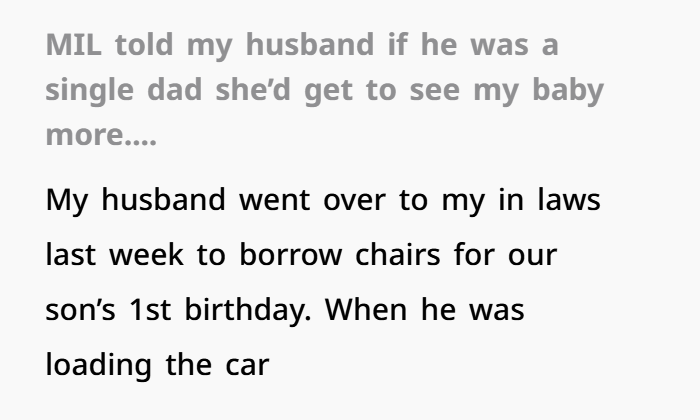
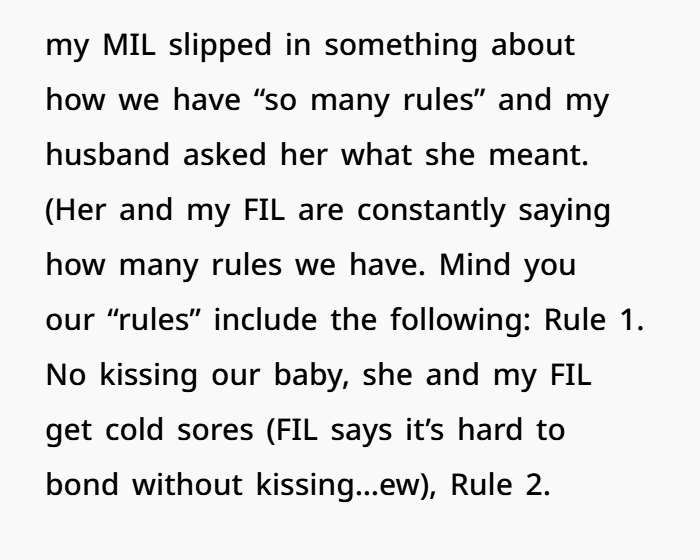
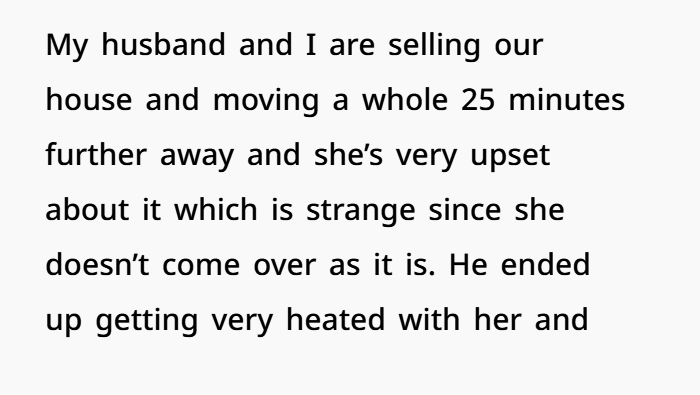
A young mother was upset after learning what her mother-in-law had said about her marriage. The problem started when her husband visited his parents to borrow chairs for their son’s first birthday party. While he was putting the chairs in his car, his mother began complaining about the rules they had made for their baby. The couple had only three simple rules. Nobody could kiss the baby because both grandparents sometimes had cold sores. Family members needed to give at least thirty minutes’ notice before visiting. They also had to ask permission before sharing pictures of the child on social media. The parents felt these were normal baby safety and privacy rules.
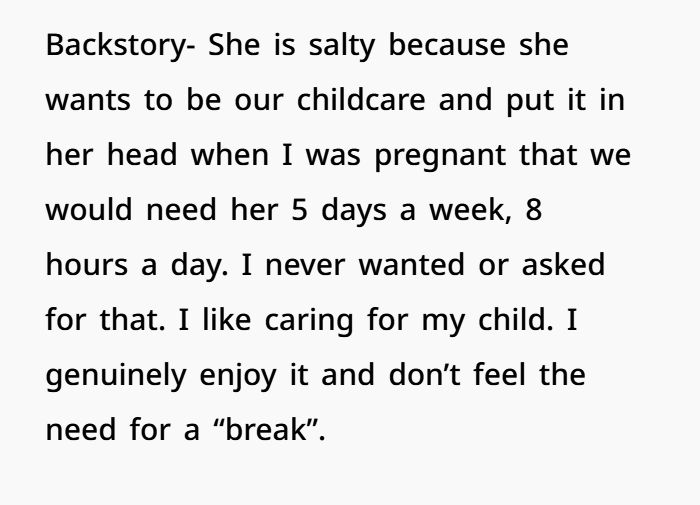
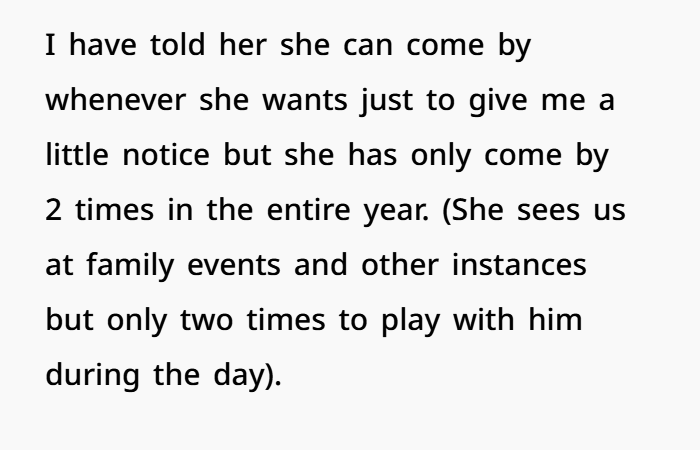
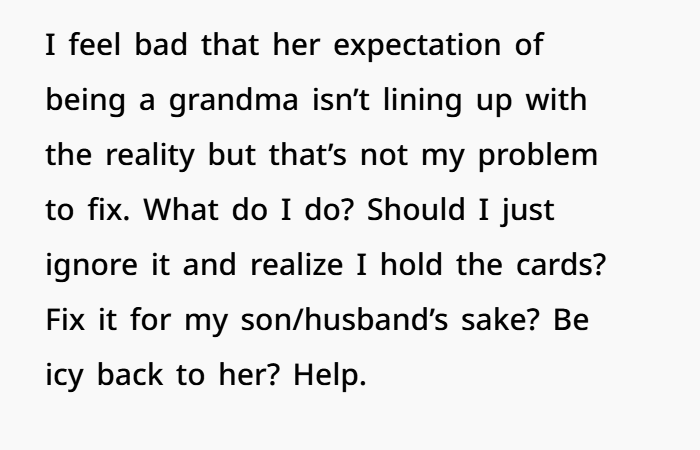
The grandmother was unhappy because she had expected to spend much more time with her grandson. During the pregnancy, she had imagined taking care of the baby five days a week for eight hours each day. However, the baby’s mother had never asked her to provide full-time childcare. She enjoyed being a stay-at-home mother and wanted to handle her own daily parenting routine. She had told her mother-in-law many times that she was welcome to visit as long as she called first. Still, the grandmother had only visited twice during the baby’s first year outside of family events. Even so, she continued saying that the parents were keeping her away from her grandson.
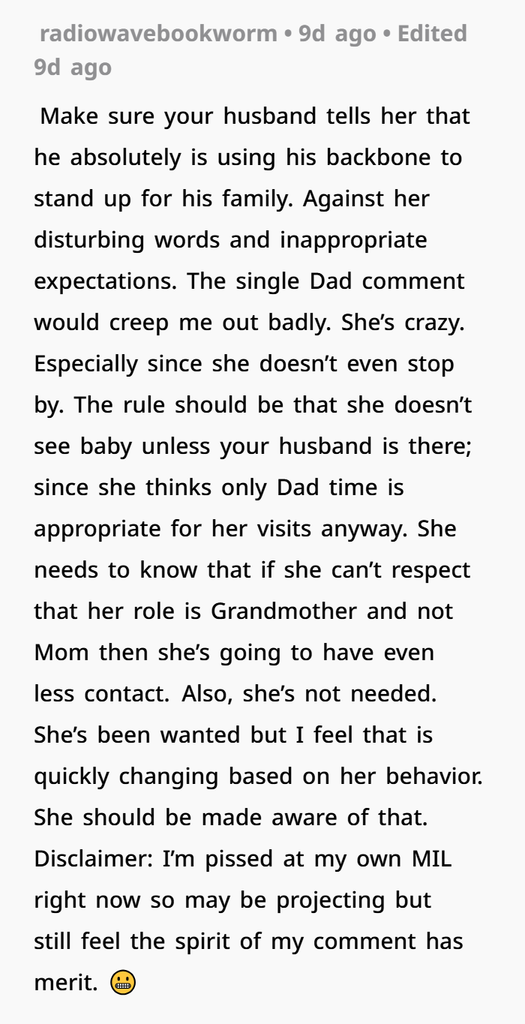
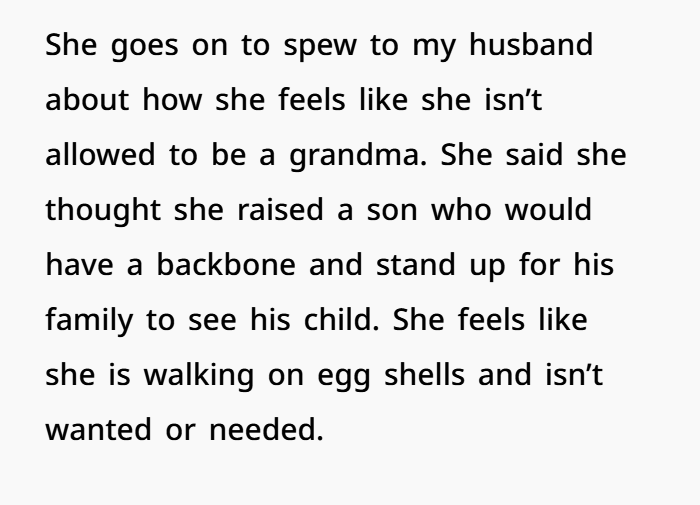
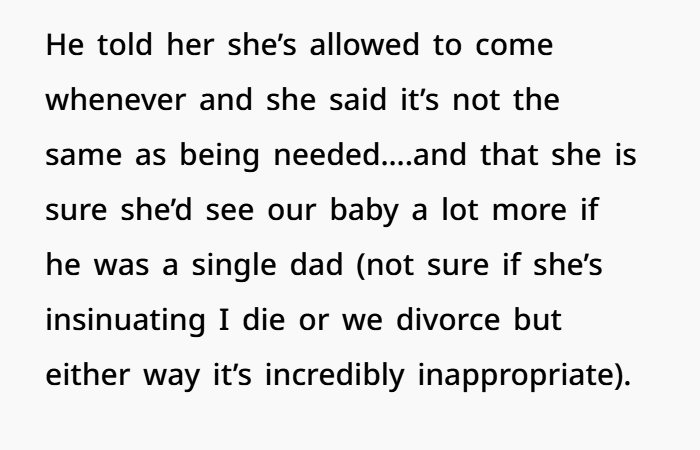
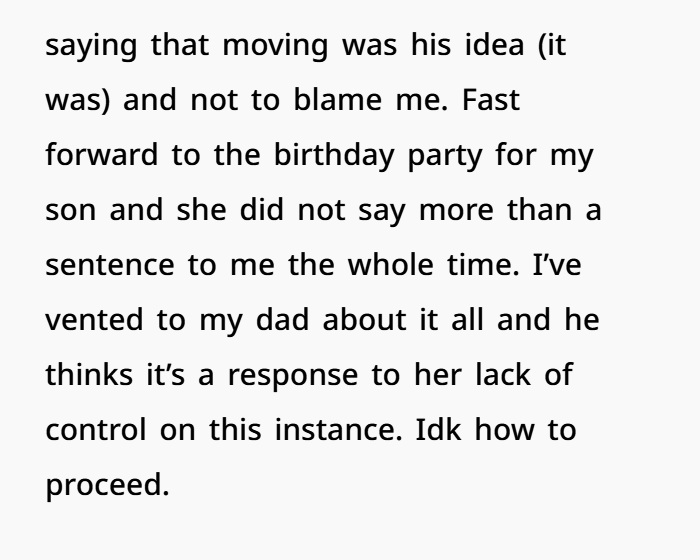
During the conversation, the grandmother told her son that he needed to stand up for his family. She said she felt unwanted and believed she was not being allowed to enjoy being a grandmother. Then she made a comment that deeply upset the young couple. She said she thought she would see her grandson more often if her son were a single father. The young mother could not understand why her mother-in-law would say something like that. Her husband defended their marriage and explained that their plan to move twenty-five minutes farther away had been his idea, not his wife’s. He wanted his mother to stop blaming his wife for decisions they had made together.
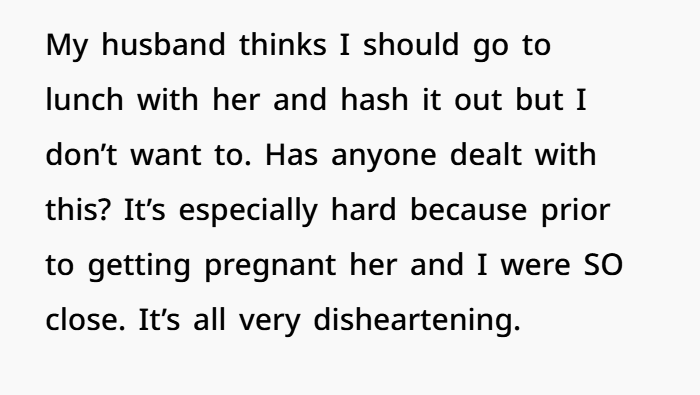
At the baby’s first birthday party, the grandmother barely spoke to her daughter-in-law. This made the situation even more painful because they had been close before the pregnancy. The young mother later talked to her own father, who believed the grandmother was having trouble accepting that she could not control their parenting choices. Her husband suggested meeting his mother for lunch to discuss everything calmly. However, the young mother was not sure she wanted another difficult conversation. She believed that setting healthy family boundaries, protecting her child’s privacy, and making her own childcare decisions were important parts of parenting. Now she was wondering whether to try to repair the relationship or simply keep some distance.

When a Grandmother’s Expectations Create Problems for New Parents
Having a new baby is an exciting time for the whole family. Parents are busy learning how to care for their little one, while grandparents often look forward to spending time with their new grandchild.
But sometimes, everyone has different ideas about how involved grandparents should be.
That is what happened in one family.
A new mother and her husband made three simple rules for people visiting their baby. They wanted to protect their son’s health, keep their home comfortable, and have some control over his photos online.
But the baby’s grandmother was unhappy with those rules.
What started as a disagreement about visiting the baby soon became a bigger family problem.
The Grandmother Wanted a Bigger Role in the Baby’s Life
The grandmother had been looking forward to spending lots of time with her grandson.
She may have imagined regular visits, helping with childcare, and being an important part of his daily routine.
But the baby’s parents had other plans.
They wanted to handle most of the childcare themselves while still allowing family members to visit.
The mother explained that her mother-in-law was welcome to come over as long as she gave a little notice.
However, the grandmother rarely accepted those invitations.
Instead, she seemed upset that the parents did not need her help as often as she had expected.
At one point, she reportedly said that visiting her grandson was not the same as being needed.
That comment showed an important difference in how they viewed the situation.
The parents wanted her to enjoy being a grandmother, while she appeared to want a larger role in raising the baby.
The Parents Made Three Simple Rules
The couple did not create a long list of restrictions.
They had just three main rules for anyone spending time with their son.
- No kissing the baby.
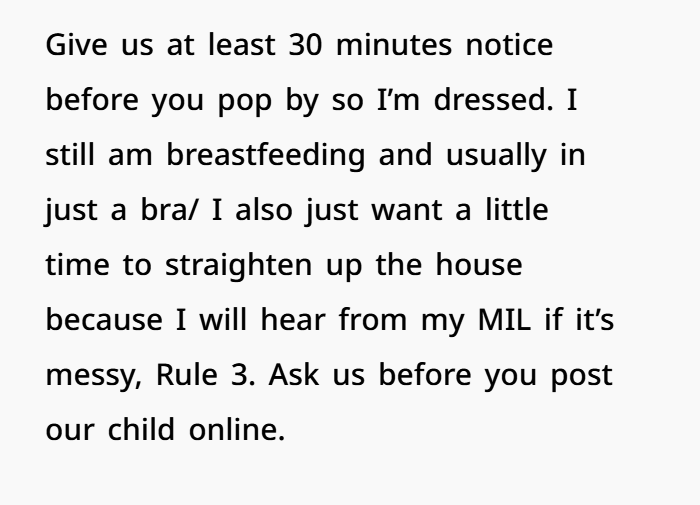
- Give at least 30 minutes’ notice before visiting.
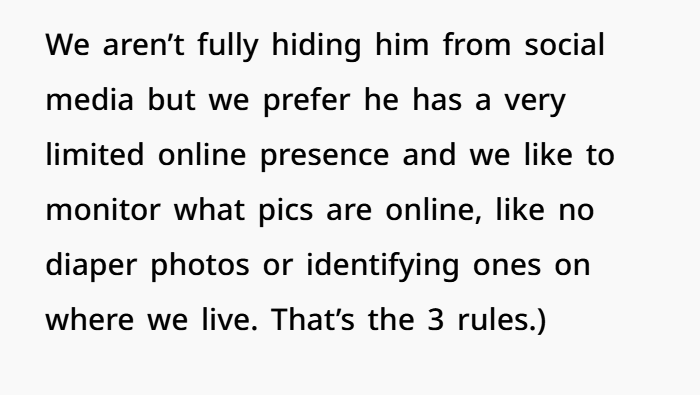
- Ask permission before sharing pictures of the baby online.
These rules were meant to protect their baby’s health, respect the family’s privacy, and make daily life easier.
They were not meant to stop the grandparents from having a relationship with their grandson.
Still, the grandmother felt that the rules were limiting her involvement.
Why the Parents Didn’t Want Anyone Kissing the Baby
The first rule was about the baby’s health.
Both grandparents reportedly have a history of cold sores.
Cold sores are commonly caused by the herpes simplex virus type 1, also known as HSV-1.
The virus can spread through close contact, including kissing.
According to the World Health Organization, HSV-1 is common around the world.
However, herpes infections can be especially serious for newborn babies.
That is why parents may choose to be careful about who kisses their baby, particularly during the early months.
The couple decided that avoiding kisses was the best choice for their family.
This was a baby health and safety decision, not a way to keep the grandparents away.
Grandparents can still hold, talk to, and spend time with their grandchildren while following the parents’ safety rules.
Families with questions about newborn infection risks should speak with their pediatrician.
Asking for 30 Minutes’ Notice Was About Privacy
The second rule was simple.
The parents wanted visitors to let them know at least 30 minutes before coming over.
For a family with a new baby, that is not an unusual request.
New parents often have unpredictable schedules.
The baby may be sleeping, feeding, or needing extra attention.
The mother was also breastfeeding and wanted to feel comfortable in her own home.
She did not want unexpected visitors arriving when she was not ready.
She also worried that her mother-in-law might comment on the house if it was messy.
Anyone who has cared for a newborn knows that keeping the house perfectly clean is not always possible.
Between feeding, changing diapers, doing laundry, and trying to rest, household chores can easily fall behind.
Giving a short warning before visiting allows the family to prepare.
It also helps everyone avoid uncomfortable situations.
The parents were not asking for several days’ notice.
They simply wanted a little time before someone arrived at their door.
The Baby’s Photos Were Another Concern
The third rule involved social media.
The parents wanted family members to ask before posting pictures of their son online.
They were not against sharing every photo.
They just wanted to know what was being posted.
For example, they did not want pictures that showed private details about their home or its location.
They also wanted to avoid sharing diaper-only photos.
These concerns are becoming more common as families think about children’s online privacy.
Once a photo is posted on social media, other people may save, copy, or share it.
Even when someone deletes a picture, it may be difficult to know where copies have gone.
Parents may also worry about their child’s digital footprint.
A digital footprint is the information and photos that can remain connected to someone online over time.
Legal scholar Stacey Steinberg discussed these concerns in her 2017 work on children’s privacy and family social media sharing.
For this couple, asking permission before posting photos was a simple way to protect their son’s privacy.
It did not mean the grandparents could never share happy family moments.
It just meant the parents wanted to approve the pictures first.
The Grandmother Made a Hurtful Comment
The disagreement became more serious when the grandmother spoke privately with her son.
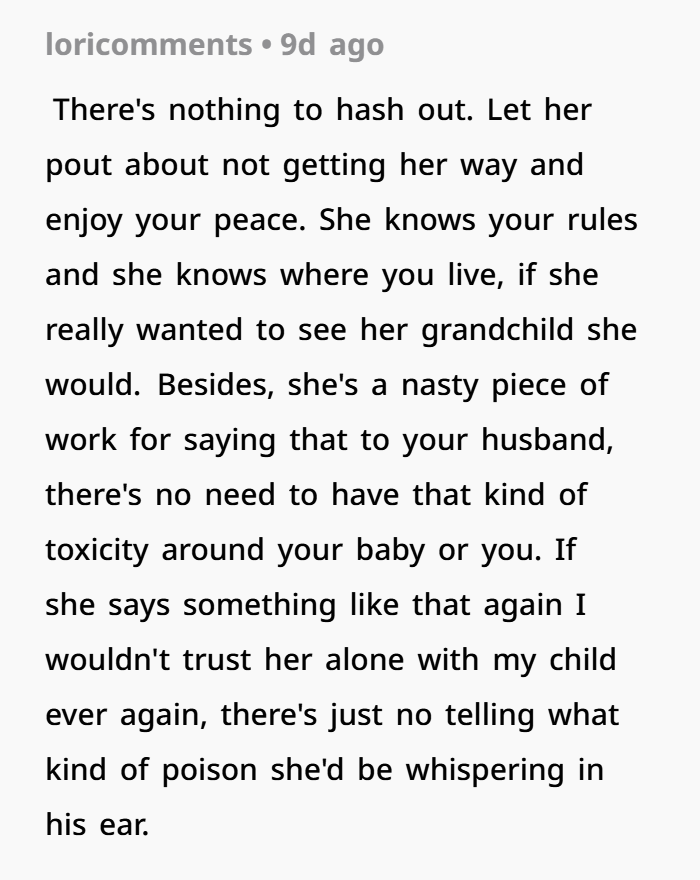
According to the story, she suggested that she would have more access to her grandson if her son were raising the baby alone.
That was a painful thing to say.
Even if she was speaking out of frustration, the comment brought the couple’s marriage into a disagreement about family visits.
It also made it seem as though the daughter-in-law was the only person responsible for the rules.
But that was not true.
The husband supported the same boundaries.
He was not simply following his wife’s instructions.
They had made their parenting decisions together.
The Husband Supported His Wife
One important part of the story was how the husband responded.
Instead of agreeing with his mother, he explained that the parenting rules were shared decisions.
He also made it clear that some choices, including the family’s move, had been his own.
That mattered because the grandmother seemed to believe her daughter-in-law was keeping her away from the baby.
By speaking up, the husband showed that both parents were responsible for their family’s decisions.
This is important in marriage and family relationships.
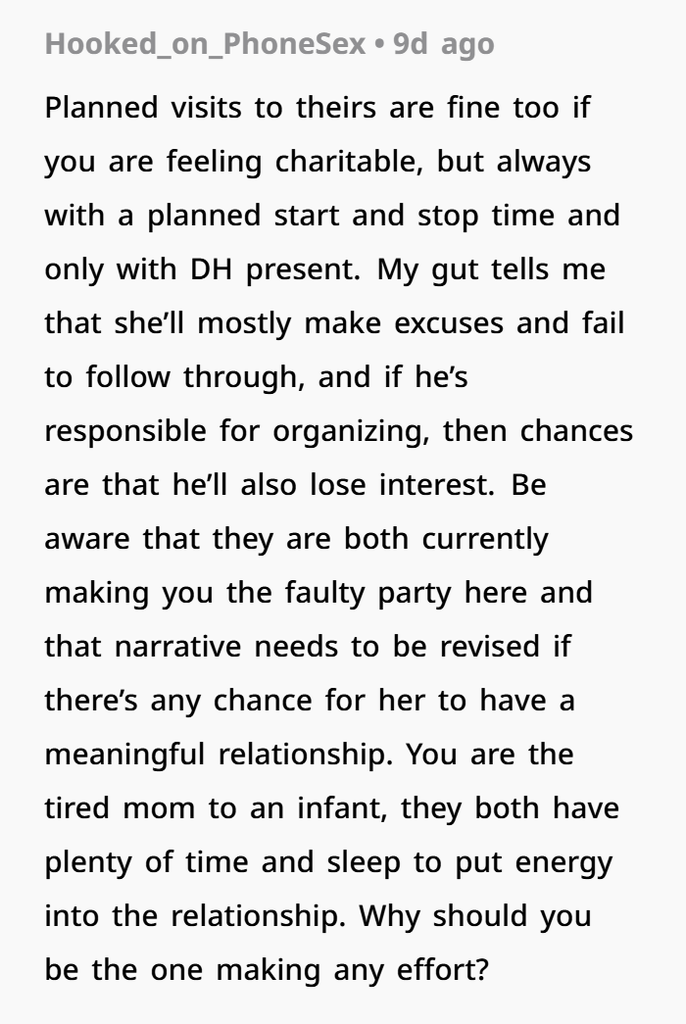
When parents agree on childcare, home privacy, and safety rules, it helps if they communicate those decisions together.
It also makes it harder for relatives to blame only one parent when they disagree.
The Birthday Party Became Uncomfortable
The tension did not end after that conversation.
At the baby’s birthday party, the grandmother reportedly spoke very little to her daughter-in-law.
The mother noticed the change and felt hurt.
They had once shared a close relationship, so the distance between them was especially upsetting.
It is difficult to know exactly why the grandmother behaved that way.
She may have been disappointed, uncomfortable, or unsure how to handle the disagreement.
But the result was an awkward family gathering.
Instead of simply enjoying the celebration, the mother was left thinking about how much their relationship had changed.
Grandparents Can Be Important Without Making Every Decision
Grandparents can play a wonderful role in a child’s life.
They can offer love, share family stories, spend time with their grandchildren, and help parents when support is needed.
Some grandparents also provide regular childcare, which can help families manage work schedules and childcare expenses.
But every family has different needs.
Some parents depend on grandparents for daily help.
Others prefer to manage most childcare themselves.
Neither arrangement automatically means that one family loves its grandparents more than another.
In this story, the parents wanted the grandmother to be involved.
They simply did not want her making decisions about their baby’s health, home routine, or online privacy.
Being a loving grandparent does not require having the final say in those choices.
Can the Family Repair Their Relationship?
The mother and grandmother may still be able to improve their relationship.
But it will likely take patience and honest communication.
The grandmother may need to accept that her role is different from what she imagined.
She can still build a close relationship with her grandson through visits, family activities, and time spent together.
The parents can also acknowledge that she wants to feel included.
However, understanding her feelings does not mean they have to change rules they believe are important.
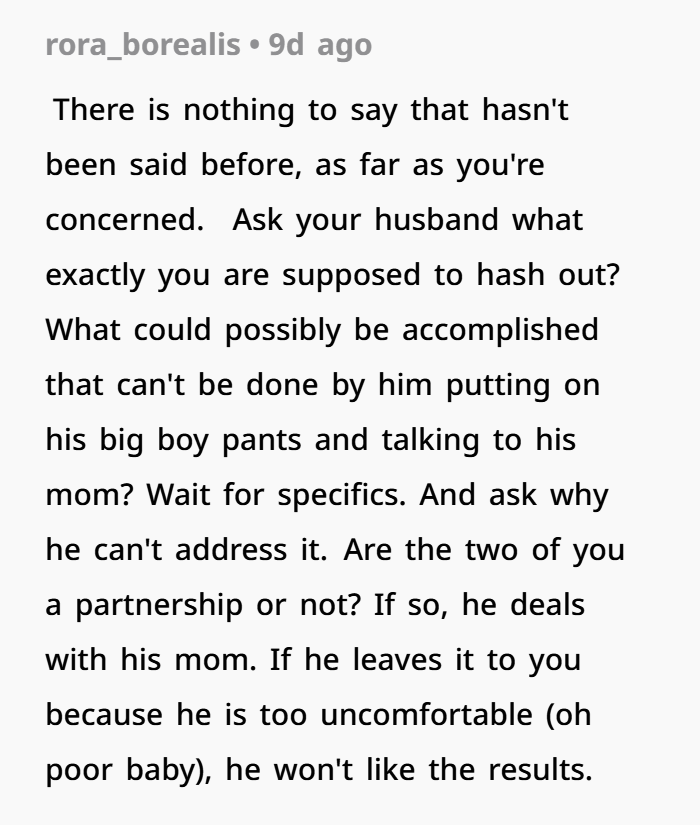
The husband may be able to help by speaking with his mother about the comments she made.
Because he was the person she spoke to, he can explain why those remarks were hurtful.
A calm conversation may help everyone understand what went wrong.
The goal should not be to decide who has more control.
It should be to find a way for the family to spend time together while respecting the parents’ decisions.
Clear Family Boundaries Can Prevent Bigger Problems
Family boundaries are not always easy to discuss.
This can be especially true when grandparents have strong ideas about how babies should be raised.
Parenting advice, childcare routines, and family traditions can change over time.
What worked for one generation may not be what new parents choose today.
That does not mean grandparents have nothing valuable to offer.
Their experience and support can still be helpful.
But parents are responsible for making everyday decisions about their children.
When family members understand that difference, visits and celebrations can become more enjoyable.
Clear expectations about visiting times, baby safety, and social media privacy can also prevent misunderstandings.
Final Thoughts
This family disagreement started with three simple rules.
The parents did not want anyone kissing their baby, asked for 30 minutes’ notice before visits, and wanted permission before photos were shared online.
The grandmother felt disappointed because she had imagined a bigger role in her grandson’s daily life.
But the parents were not trying to remove her from the family.
They were simply making decisions they believed were best for their child.
The husband’s support also showed that the boundaries came from both parents, not just the mother.
Grandparents can be a loving and important part of a child’s life without needing to control how that child is raised.
With respect, clear communication, and a little understanding, families can often find a way to stay close while giving new parents the space they need.
Comments That Say It All