I Didn’t Invite My Sister to My Wedding After What She Said About Me
Family drama around weddings isn’t exactly rare, but this situation escalated into something way bigger than a simple disagreement. A 25-year-old woman says she met her now husband through her sister a few years ago when he worked at the same family business as her brother-in-law. Over time she grew close not only with her sister’s husband but also with his entire family. Since she and her sister didn’t have much extended family besides their mom, those relationships became important to her. She described them as people who treated her like one of their own.
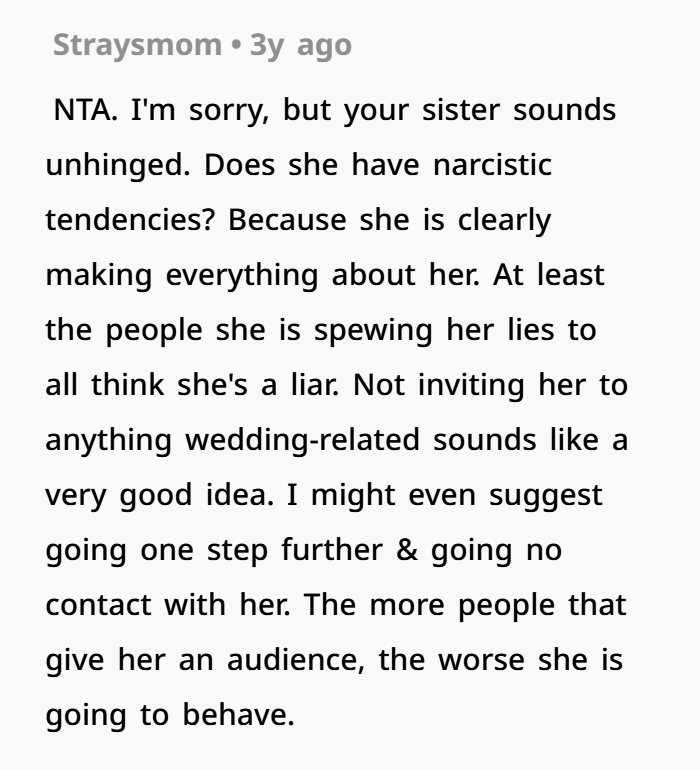
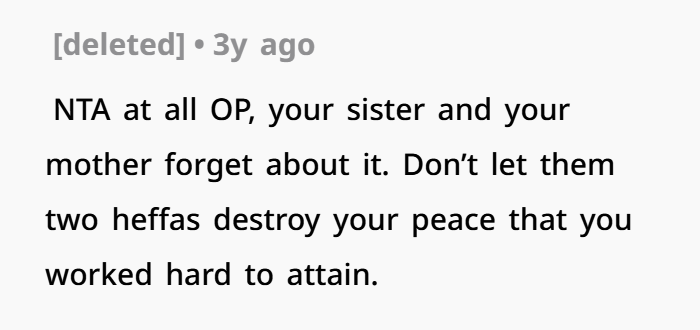
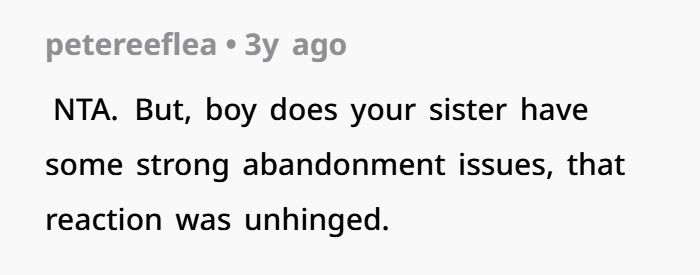
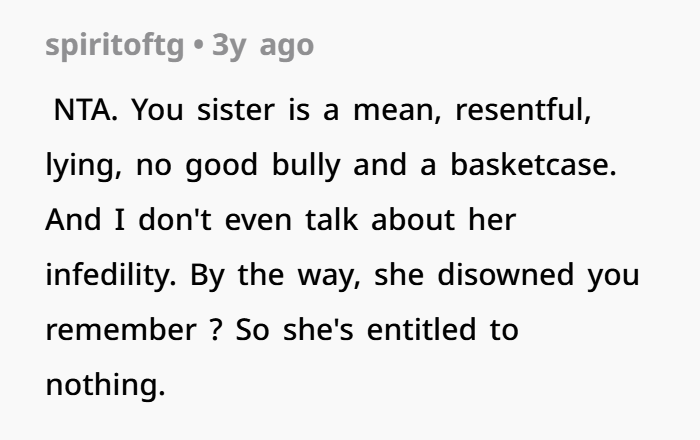
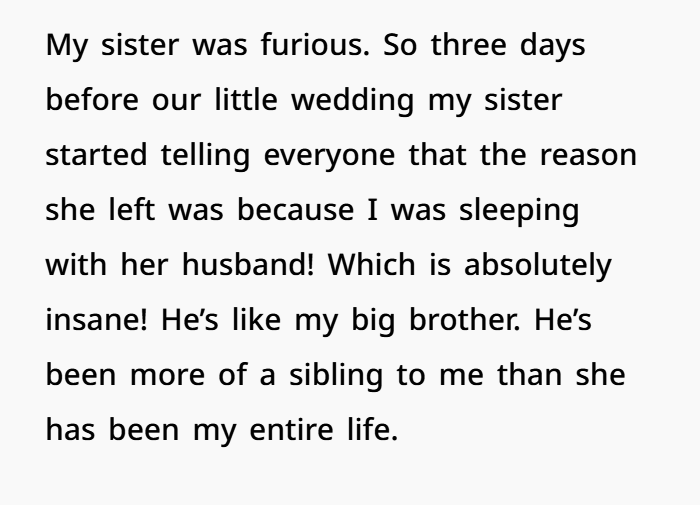
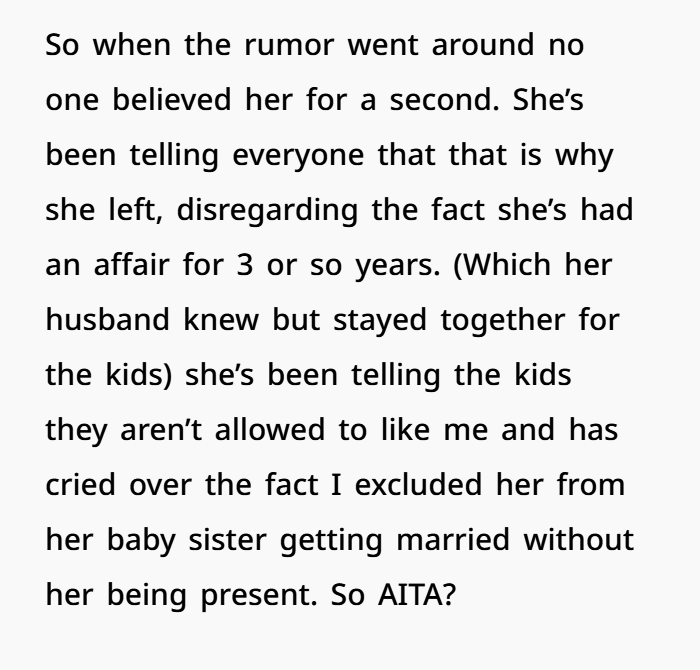
Things started falling apart last year when her sister left her husband after having a long-term affair with his best friend. Despite the messy separation, the sister initially insisted that everyone should keep their relationships the same as before. But that quickly changed once the reality of the divorce hit. When the bride mentioned her long-standing plan to have her brother-in-law’s father walk her down the aisle, her sister exploded. The argument spiraled into blocked social media accounts, public accusations, and intense family conflict. Then, just days before the wedding, the sister dropped a bombshell rumor—telling people she left her husband because the bride had been secretly sleeping with him. According to the bride, the accusation was completely false, and now she’s wondering if excluding her sister from the wedding makes her the bad guy.

Family conflicts involving divorce, accusations of infidelity, and wedding drama can get messy very fast. Situations like this often pull in multiple emotional layers at once—loyalty, reputation, trust, and long-standing sibling dynamics. When you step back and look at what’s happening here, it’s clear this conflict goes far beyond a simple wedding invitation dispute.
One of the biggest triggers in the story is the rumor itself. Accusing someone of having an affair—especially with a family member’s spouse—isn’t just a small insult. It can seriously damage someone’s reputation and relationships. In legal terms, spreading a false statement that harms someone’s reputation can even fall under defamation or slander laws in many jurisdictions. While family members rarely take each other to court over rumors, these accusations can still cause very real emotional and social harm.
In this case, the timing of the accusation is also important. The sister reportedly began spreading the rumor only three days before the wedding ceremony. From a psychological standpoint, that timing suggests the accusation may have been motivated by anger, jealousy, or a desire to regain control of the narrative surrounding her divorce.
Divorces involving infidelity can often create what psychologists call reputation defense behavior. When someone leaves a marriage because of their own affair, they may experience strong social pressure or shame. To protect themselves from judgment, some people try to shift the blame onto someone else. That doesn’t mean every accusation is false, of course, but experts who study interpersonal conflict say these kinds of narrative reversals happen surprisingly often.
Another important piece of context here is the role of extended family relationships. When couples stay together for many years—like nine years in this case—their families become deeply connected. Siblings, in-laws, cousins, and even family friends form bonds that don’t just disappear overnight after a divorce.
Family therapists frequently point out that when a marriage ends, relatives on both sides can feel stuck in the middle. People may feel pressure to “pick sides,” even when they’ve built genuine friendships with both partners. The bride in this story clearly maintained strong ties with her brother-in-law’s family, which makes sense considering how long they had been in each other’s lives.
But from the sister’s perspective, that continued closeness might feel like betrayal. After a breakup, especially one involving cheating or complicated emotions, seeing your sibling remain close with your ex’s family can trigger feelings of rejection or humiliation. It doesn’t necessarily justify extreme reactions, but it does help explain where some of that anger might come from.
The wedding element adds another layer entirely. Weddings tend to magnify existing family tensions because they’re emotionally symbolic events. They represent commitment, belonging, and the creation of a new family unit. If someone already feels excluded or judged, seeing those relationships celebrated publicly can intensify those emotions.
Then there’s the specific issue of who walks the bride down the aisle. Traditionally, that role is often filled by a father figure. But many modern weddings involve step-parents, mentors, or other meaningful figures instead. In this situation, the bride had apparently planned for years to have her brother-in-law’s father take on that role. To her, it likely represented gratitude and love toward someone who treated her like family.
However, after the divorce, that gesture could look very different to the sister. She might interpret it as the bride “choosing” her ex-husband’s family over her own sister. That perception—whether accurate or not—can make emotions run extremely high.
Another factor worth discussing is the rumor escalation effect. Once a serious accusation spreads through a social network, it tends to grow larger and more dramatic over time. Even when most people don’t believe the claim, the rumor itself can create stress and anxiety for the person being targeted.
Social psychologists have found that people often remember the existence of a rumor even after they learn it was false. This phenomenon is sometimes called the continued influence effect. Basically, once a damaging story enters the conversation, it can leave a lingering mark.
That’s one reason accusations of infidelity within families can be especially destructive. They don’t just affect the two people involved—they ripple through the entire social circle.
The impact on the children mentioned in the story is also significant. Divorce already places emotional strain on kids, especially when they see conflict between adults they love. When parents involve children in family disputes—telling them who they can or cannot like—it can create long-term confusion and emotional stress.
Child development experts consistently warn against putting kids in the middle of adult conflicts. Encouraging children to cut off relationships with relatives as a form of punishment can harm their sense of stability and trust.
Another angle here is the concept of boundary setting. Healthy relationships require boundaries, especially during major life events like weddings. Deciding not to invite someone who is actively spreading harmful rumors isn’t necessarily about revenge—it can be about protecting your mental well-being during an important moment.
Many wedding planners and family counselors even recommend limiting attendance if certain individuals are likely to create conflict or drama. A wedding day is already stressful enough without the added pressure of unpredictable family confrontations.
There’s also a long-standing dynamic hinted at in the story: the bride says her brother-in-law felt more like a sibling than her actual sister did. Statements like that often reveal deeper relationship patterns between siblings. Sometimes one sibling becomes emotionally distant while another relative fills that supportive role instead.
That doesn’t mean the relationship with the sister was doomed from the start, but it may explain why the conflict escalated so dramatically once tensions surfaced.
Ultimately, situations like this rarely have a clean or simple resolution. Family relationships are complicated, and emotions tied to betrayal, loyalty, and reputation can run extremely deep. What begins as a disagreement over wedding plans can quickly turn into something that feels like a fight over identity and belonging.
And when accusations start flying—especially accusations as serious as an affair between siblings—the damage can take a very long time to repair, if it ever fully heals at all.
The Reactions Are In