
How Autonomous Ships Could Change the Future of Global Shipping
More than four-fifths of world trade by volume travels by sea. The ships that carry it are among the largest machines ever built, and almost all of them are run by crews who live on board for months at a time.
Autonomous ships could change that. They are vessels that can navigate, avoid collisions, and dock with little or no crew on board, controlled by software and monitored from shore. The first ones are already sailing, on short routes in Norway, Japan, and Finland.
This article explains how autonomous ships work, who is testing them, where the technology stands today, and what they could mean for global shipping.
What Autonomous Ships Actually Are
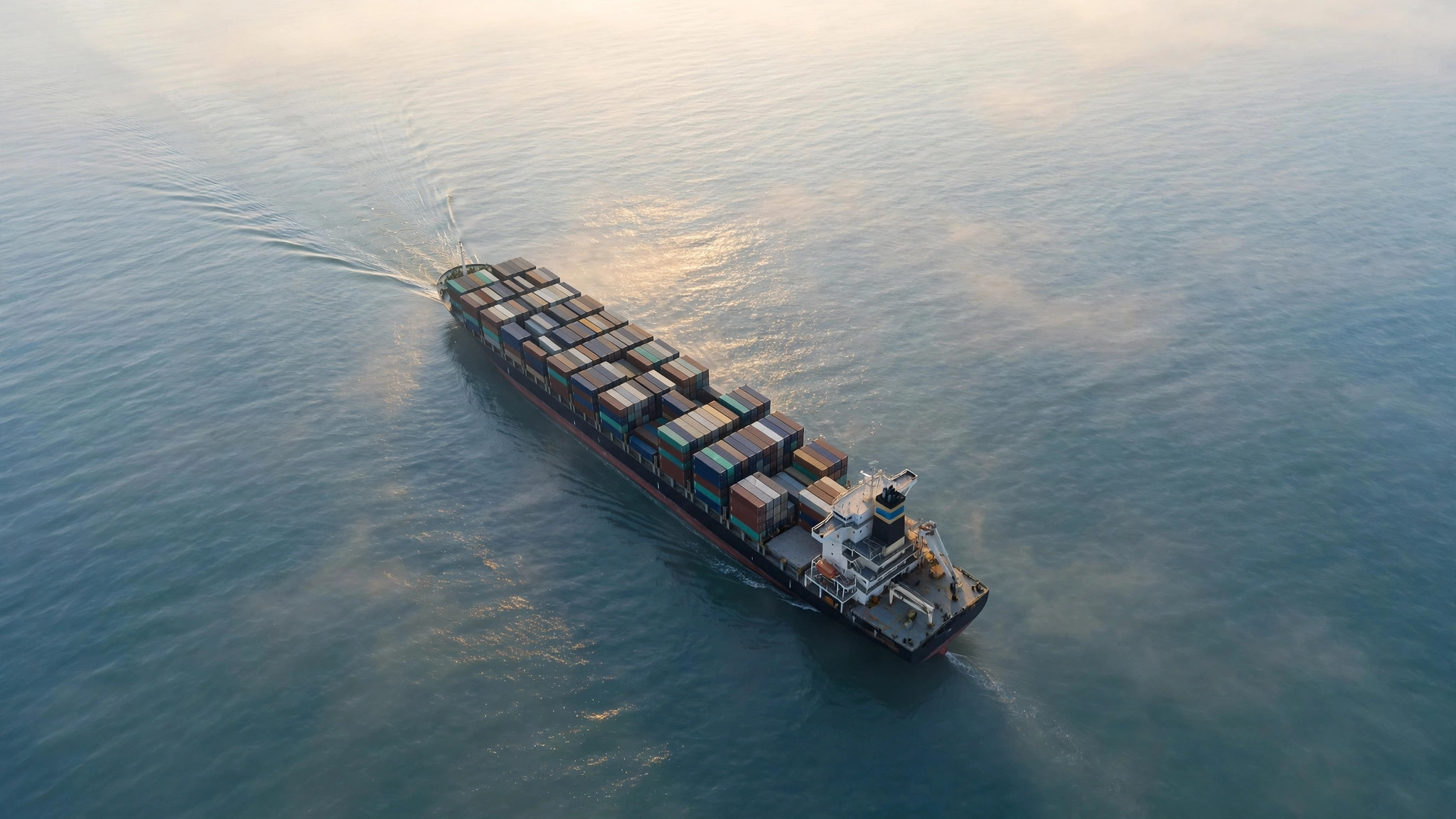
An autonomous ship is a vessel that can carry out some or all of its voyage without a crew on board. The idea covers a wide range: a ship with a crew that is helped by automation is one end of the scale, and a ship with no one on board at all is the other.
The International Maritime Organization, the United Nations body that regulates shipping, calls these vessels Maritime Autonomous Surface Ships, or MASS. It defines four degrees of autonomy, from a ship with automated processes and a full crew, to a ship that is fully autonomous and makes its own decisions.
Most of the work so far is at the middle of that scale. A ship may sail itself between two ports while operators on shore watch its progress and take over if something goes wrong. That is very different from a ship with no human involvement at all, and it is the version most likely to reach regular service first.
It is worth being clear about what autonomy is not. It is not a remote-controlled boat in the way a hobbyist flies a drone. A large ship carries thousands of tonnes of cargo, moves at the speed of a car on a motorway, and cannot stop quickly. Its software has to make decisions with real consequences, in weather that changes by the hour.
How an Autonomous Ship Works
An autonomous ship needs to do three things that a human crew does: know where it is, know what is around it, and decide what to do next.
Position comes first. The ship uses satellite navigation, mainly GPS, to fix its position, and an inertial system that tracks its movement when the satellite signal is weak. It also uses its own speed and heading to predict where it will be in the next few minutes.
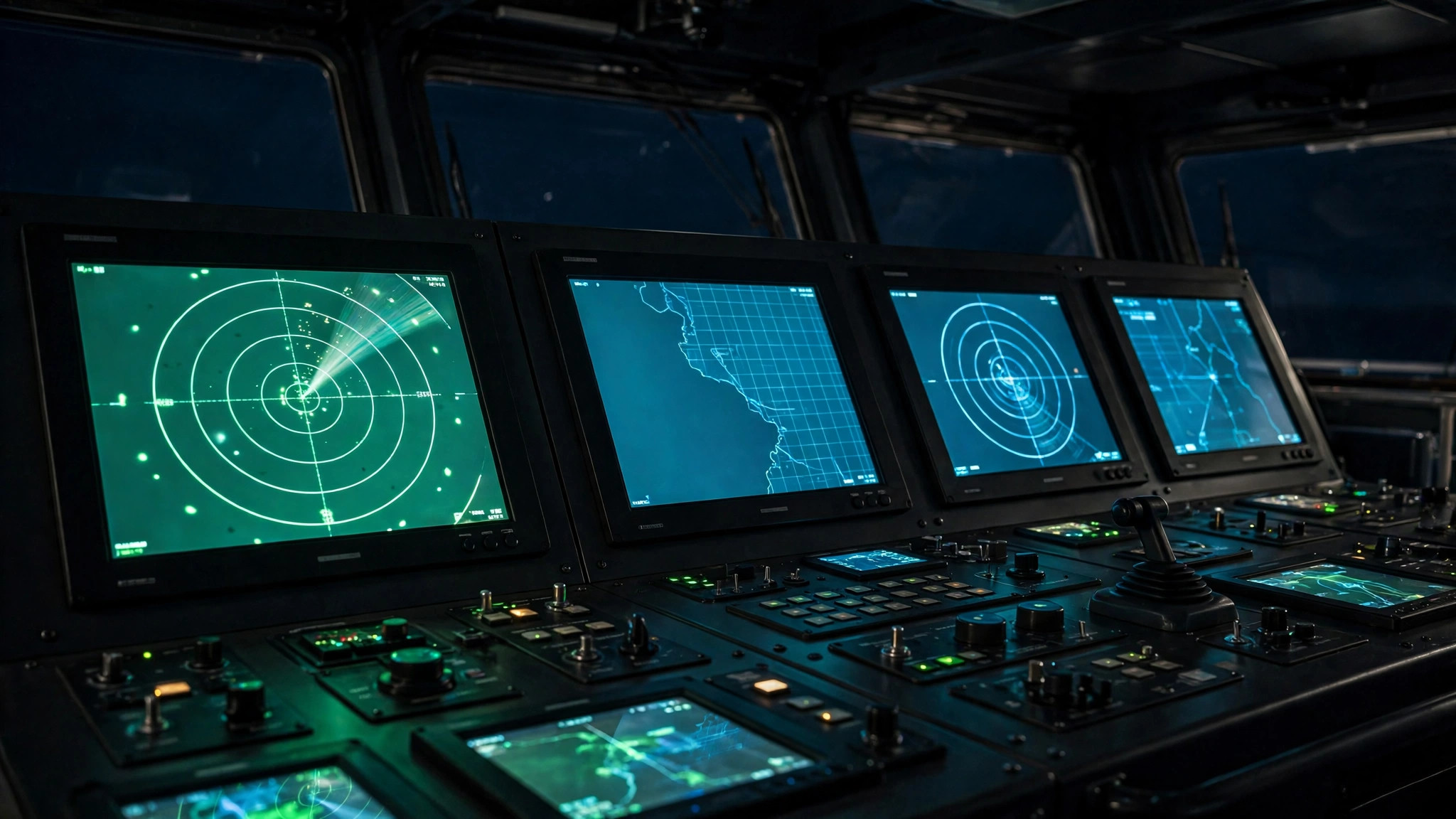
Seeing what is around it is the second job. A modern autonomous ship carries radar, cameras, lidar, and an automatic identification system, known as AIS, which broadcasts the ship’s identity and receives the same information from other vessels. The software combines these into a picture of the surrounding sea: other ships, buoys, land, and anything else in the way.
The third job is deciding what to do. The ship follows a planned route, but it also has to react. If another vessel crosses its path, the software has to decide whether to slow down, change course, or hold its line, following the same collision rules, called COLREGs, that human crews follow. This is the hardest part, because the rules were written for people, and turning them into software means deciding how a machine should interpret them.
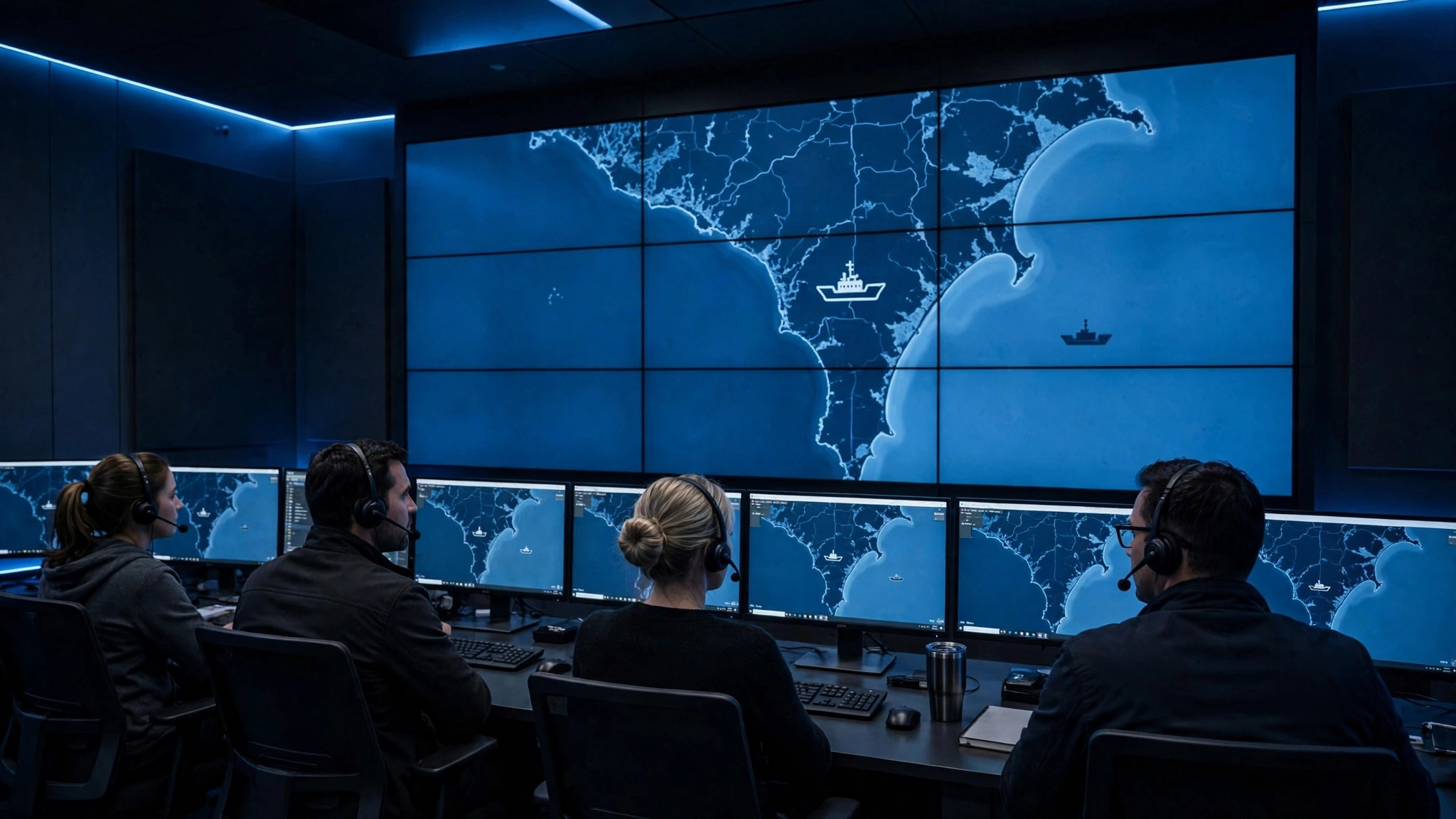
All of this is watched from a remote operations centre on shore. Operators there can see what the ship sees, and they can take control when the situation is unclear. The ship is not truly alone; it is crewed from a distance.
The ship also needs to handle everything a crew normally does: keeping the engines running, managing fuel, and dealing with faults. Sensors throughout the ship monitor the engines, the cargo, and the hull, and report problems to the shore team. In the long term, maintenance itself will need to change, because there is no one on board to fix a broken pump.
Who Is Testing Them
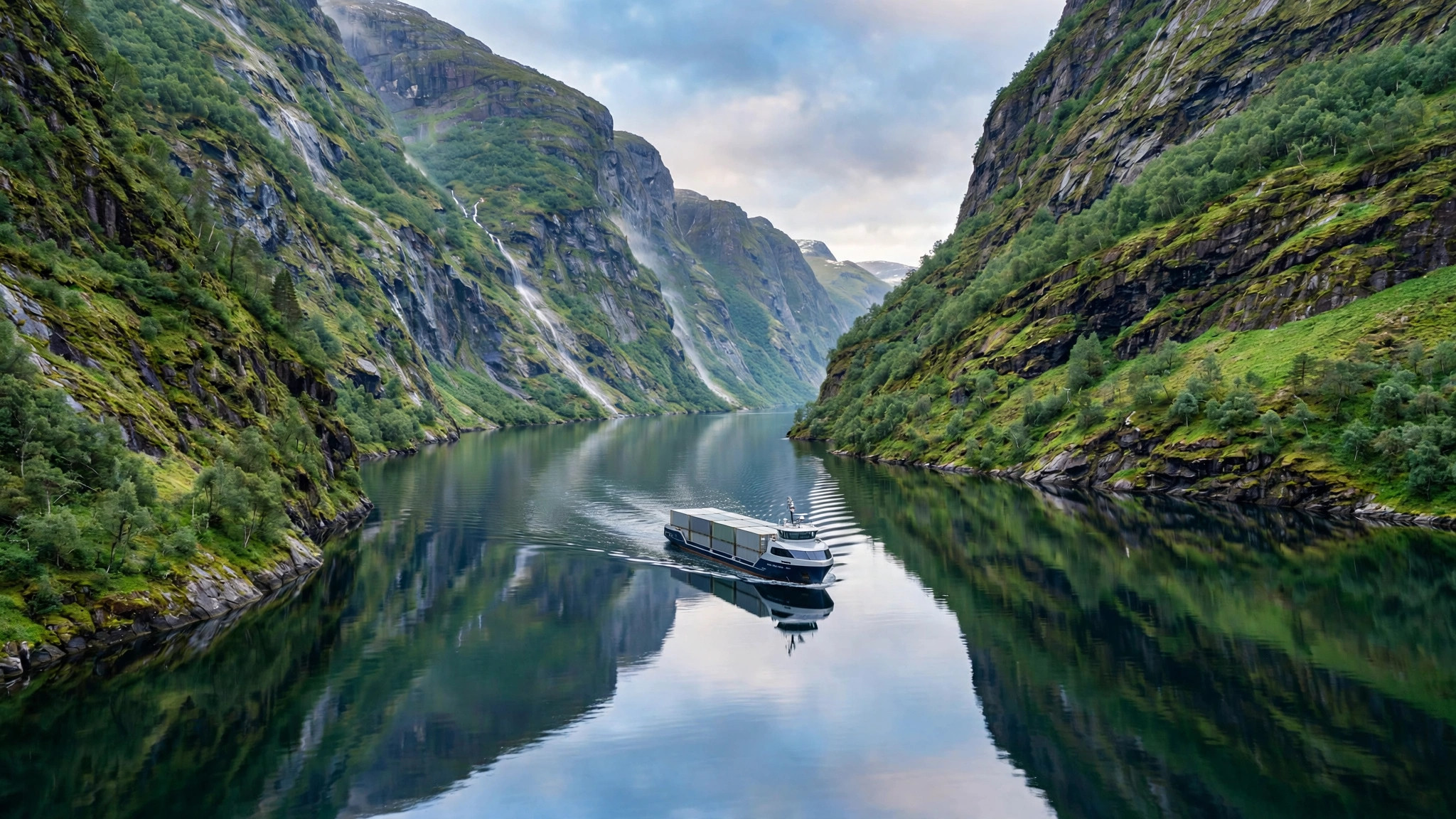
The first fully electric autonomous container ship, the Yara Birkeland, began operating in Norway in 2022. It carries fertiliser between a factory and a port, a short route that replaces lorry journeys. It sails with a small crew for now, and it is designed to become fully autonomous as the technology and the rules allow.
In 2022, the Mayflower Autonomous Ship, built by the marine research organisation ProMare with support from IBM, crossed the Atlantic without a crew. The crossing took about a month, and the ship navigated itself using artificial intelligence, with a team on shore watching. It was a research vessel, not a cargo ship, but it proved that a ship could cross an ocean on its own.
Japan has been active too. The shipping company Nippon Yusen and others have tested autonomous navigation on large vessels, including a car carrier that sailed from China to Japan with much of the voyage under automatic control. The Japanese government has supported these trials as part of a national programme.
Finland has become a centre for testing. The One Sea project, based in Finland, brings together companies including Rolls-Royce, now part of Kongsberg, and the Finnish shipbuilder Meyer Turku, to test autonomous ferries and cargo ships in the Baltic Sea.
Classification societies, the independent bodies that certify ships as safe, are also involved. DNV, one of the largest, has published rules for autonomous ships, and Lloyd’s Register has done the same. Their approval matters, because a ship cannot trade commercially without it.
Where the Technology Stands Today
By 2026, autonomous ships are real, but they are limited. The vessels in service operate on short, predictable routes: a fjord in Norway, a strait in Japan, a ferry crossing in Finland. None of them carries cargo across an ocean on a regular commercial service.
The reason is not only technology. The rules have not caught up. International shipping law assumes a crew on board, and the COLREGs assume a human watchkeeper. The International Maritime Organization has been working on a code for autonomous ships, called the MASS Code, which is expected to become mandatory in the coming years. Until it is in place, most autonomous ships operate under special permission, on routes agreed with the local authorities.
Ports are another limit. A ship that arrives without a crew still needs to be loaded, unloaded, and refuelled, and the port has to be able to talk to the ship’s systems. Some ports are being equipped for this, but most are not.
The technology itself is also still maturing. The sensors work, the software can follow a route, and the remote operations centres work. What is less proven is how the system behaves in bad weather, in busy shipping lanes, or when something unexpected happens, such as another vessel behaving strangely. Those are the situations where a human crew’s judgement matters most, and they are the hardest to automate.
What They Could Mean for Shipping
The most often cited benefit is safety. Most accidents at sea involve human error, and fatigue is a major factor: crews work long hours, and mistakes happen when people are tired. A ship that does not get tired could, in principle, be safer. That is the argument its supporters make, though it is not yet proven in practice.
Cost is the second benefit. A crew is one of the largest costs of running a ship, and a vessel without a crew could be cheaper to operate. It would also have more room for cargo, because the space used for cabins, kitchens, and lifeboats could be used for freight. That matters most on short routes, where crew costs are a larger share of the total.
Emissions are the third. An autonomous ship can be driven more efficiently than a human crew, holding a steady speed and choosing the best route for fuel use. Combined with electric or low-carbon propulsion, it could cut the shipping industry’s emissions, which are a significant share of the world’s total.
There is also the question of who works in shipping. Seafaring is a hard life, and many shipping companies struggle to recruit crews. Autonomous ships would change the jobs rather than remove them: fewer people at sea, more people in remote operations centres on shore. That shift is already visible in other parts of the industry, where robotics innovations are changing how work is done.
The connection to shore depends on reliable communication. A ship in the middle of an ocean needs a constant link to its operations centre, and that link has to work in all weather. Future networks such as 6G are being designed with this kind of use in mind, and satellite systems already provide the backbone.
The Hard Part: Rules, Trust, and the Sea Itself
The first obstacle is the rules. Shipping is one of the most regulated industries in the world, and its rules were written for crewed ships. Changing them takes years of negotiation between countries, and the work is still going on. Until the MASS Code is in force, autonomous ships will operate in a grey area, with permission granted case by case.
The second is trust. A shipping company, an insurer, and a cargo owner all have to believe that a ship with no one on board is safe. That trust will only come from years of safe operation, and from clear answers about who is responsible when something goes wrong. If an autonomous ship collides with another vessel, is the fault with the shipowner, the software maker, or the shore operator? The law has not settled that yet.
Cybersecurity is the third. A ship that is controlled from shore is a ship that can be attacked from shore. The same connection that lets an operator take control could let an attacker do the same. Shipping companies now treat cybersecurity as a core part of ship design, and the International Maritime Organization requires it.
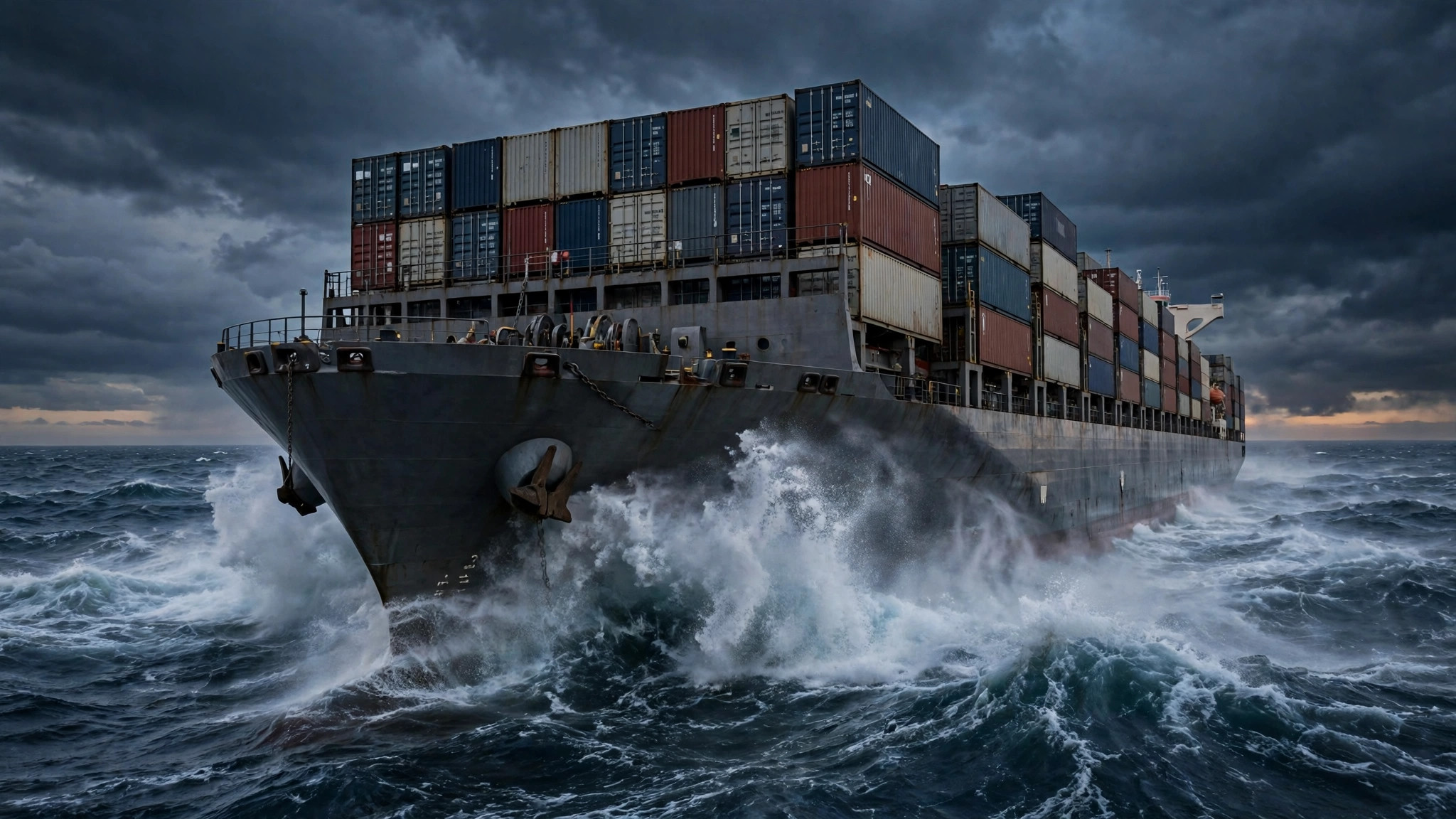
The fourth is the sea itself. The ocean is an unforgiving place, and a ship has to cope with storms, ice, and equipment failures far from help. A crew can improvise. A machine can only do what it was programmed to do. Building a ship that can handle the unexpected, without anyone on board, is the deepest challenge of all.
Finally, there is the cost of the technology. The sensors, the software, and the remote operations centre are expensive, and they have to be maintained. For a large container ship, the savings from removing the crew may be worth it. For a small coastal vessel, they may not.
Practical Tips / Examples / Things to Know
- Autonomous ships are already sailing, but on short, predictable routes, not across oceans on regular services.
- The Yara Birkeland in Norway is the best-known example: a fully electric container ship designed to become autonomous.
- The International Maritime Organization’s MASS Code will set the rules for autonomous ships, and it is still being developed.
- A ship that sails itself still needs people: operators in a remote operations centre watch it and can take over.
- Most accidents at sea involve human error, which is the main safety argument for autonomy, though it is not yet proven in practice.
- If you work in shipping, the change to watch is not fewer jobs, but different jobs: more of them on shore, in operations centres.
Common Mistakes / Considerations / What to Avoid
- Assuming autonomous ships already cross oceans without crews: the vessels in service run short, approved routes.
- Thinking autonomy means no humans at all: remote operators monitor the ship and take over when needed.
- Believing the technology is the only obstacle: the rules, insurance, and liability questions matter just as much.
- Underestimating the sea: storms, ice, and equipment failures are the hardest situations to automate.
- Ignoring cybersecurity: a ship controlled from shore can be attacked from shore, and the industry takes that seriously.
- Expecting crew costs to vanish overnight: the technology, the operations centre, and the maintenance all cost money too.
Final Thoughts
Autonomous ships are coming, but they are coming slowly, route by route, and rule by rule. The technology has already crossed an ocean on its own, and the first cargo ships are already working on short routes. What has not happened yet is the moment when a ship leaves a port, crosses an ocean, and docks at the other side, all without a crew.
That moment will depend less on the sensors and the software than on the rules, the insurance, and the trust of the people who own the cargo. The sea has always been a place where new ideas are tested slowly, because the cost of getting it wrong is high. Autonomous shipping will be no different, and that caution is probably the right approach.