My Brother Married My Cheating Ex… and Now I’m the Bad Guy?
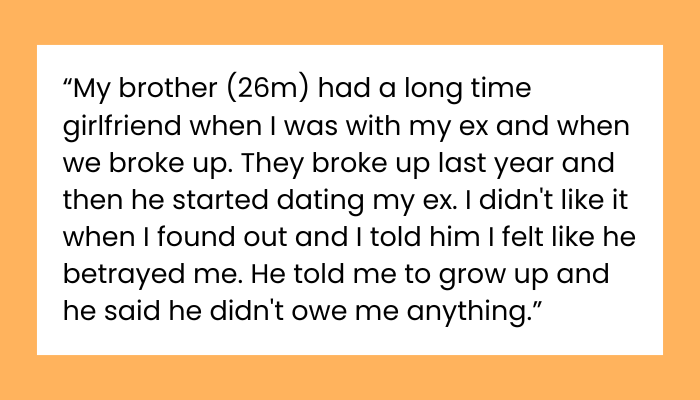
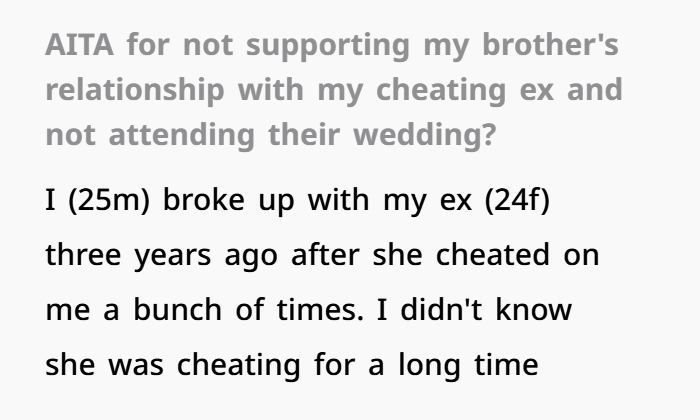
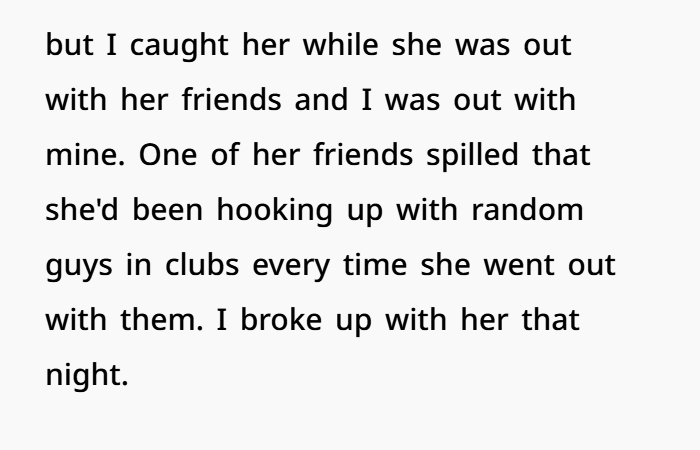
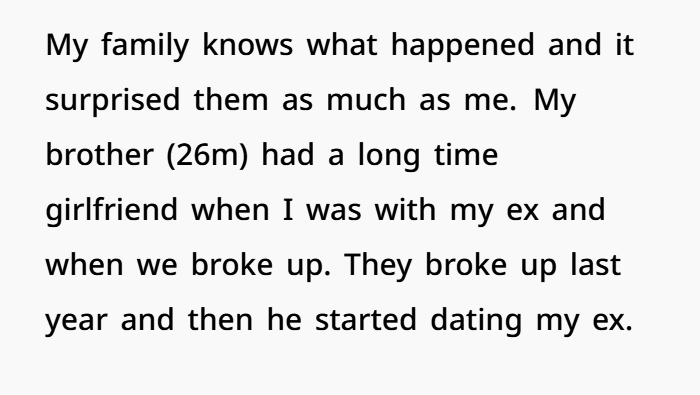
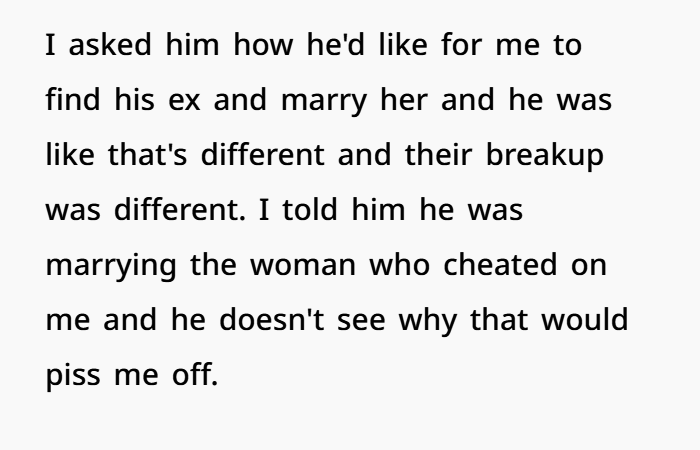
This story hits that uncomfortable spot between family loyalty and personal boundaries. A 25-year-old guy finds himself in a situation most people wouldn’t even imagine—his older brother starts dating, and eventually plans to marry, the very same woman who cheated on him multiple times during a five-year relationship. The breakup itself wasn’t mutual or peaceful either. It ended in betrayal, humiliation, and the kind of emotional damage that doesn’t just fade with time. So when his brother not only pursued her but doubled down with a wedding, it felt less like coincidence and more like a personal violation.
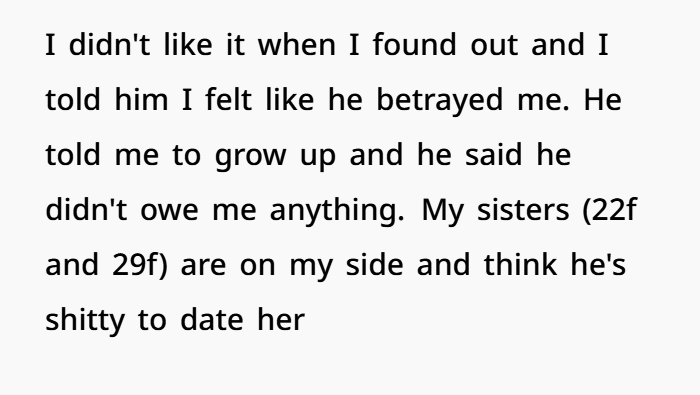
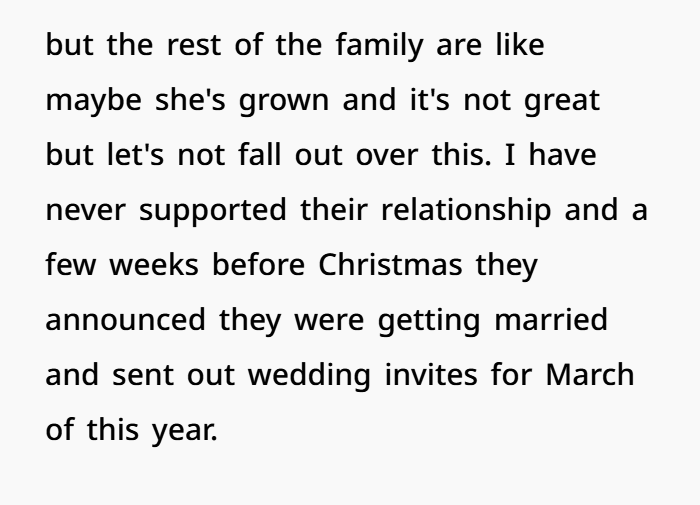
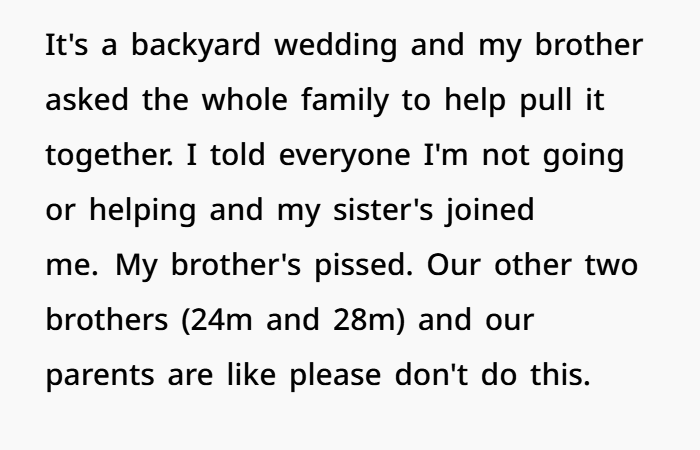
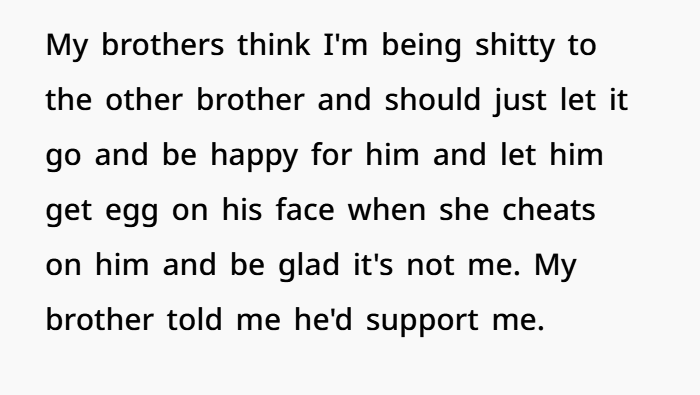
The family is split. His sisters are firmly on his side, calling the brother out for crossing a line you just don’t cross. But the rest of the family is pushing for peace, brushing it off as “people change” and “don’t let this divide us.” Meanwhile, the brother getting married refuses to acknowledge any wrongdoing and even tells him to “grow up.” Now the big question: is he wrong for refusing to attend the wedding—or is this one of those rare cases where standing your ground actually makes sense?


Alright, let’s unpack this because there’s a lot going on here—emotionally, socially, and even psychologically. And honestly? This situation is way more layered than a simple “AITA” yes or no.
First off, let’s talk about betrayal trauma, because that’s really what’s at the core here. When someone cheats repeatedly, especially over a long-term relationship, it’s not just about the act itself—it’s about the repeated deception. This wasn’t a one-time mistake. This was a pattern. Week after week, while planning a future together, she was living a completely different reality behind his back. That kind of thing messes with your trust, your confidence, even your ability to believe in relationships later on.
Now fast forward three years. Time has passed, sure—but emotional wounds don’t operate on a fixed schedule. Healing isn’t linear. And just when things are probably settling down, boom—your own brother starts dating that same person. Not just casually either. We’re talking full-on relationship, leading to marriage.
This brings us to a big concept in family dynamics: unwritten loyalty rules. Every family has them, even if no one says them out loud. One of the most universal ones? You don’t date your sibling’s ex. Especially not one who cheated. It’s kind of like an unspoken boundary that most people respect without needing it explained.
Why? Because it’s not just about the relationship—it’s about respect. It’s about acknowledging that your sibling went through something painful, and choosing not to reopen that wound.
So when the brother says, “I don’t owe you anything,” technically… sure. He’s right in a very literal sense. Adults can date who they want. But relationships aren’t just legal contracts—they’re emotional ecosystems. Just because you can do something doesn’t mean it won’t have consequences.
And that’s where this situation really shifts.
Because now it’s not just about the past relationship—it’s about ongoing emotional impact. Imagine family dinners. Holidays. Birthdays. Every gathering now includes the person who betrayed you. You’re expected to smile, act normal, maybe even welcome her as “family.”
That’s not just uncomfortable—that’s borderline emotional gaslighting if people expect you to be okay with it.
Now let’s look at the family’s response. This is where things get even more interesting. You’ve got two clear camps:
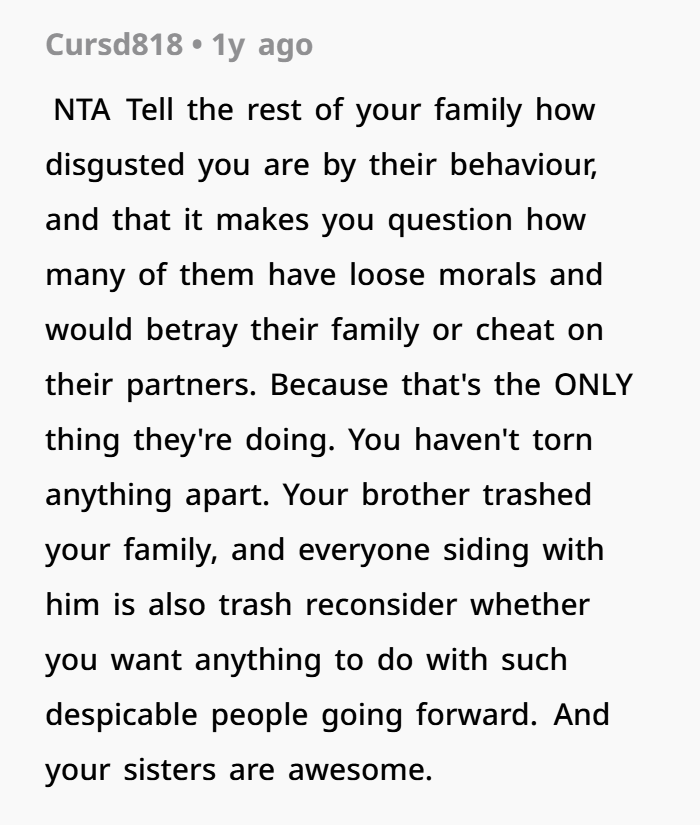
- The Sisters (Support System): They recognize the emotional weight of the situation. They’re validating his feelings and standing in solidarity. That’s huge. Having even a small support system can make a massive difference in situations like this.
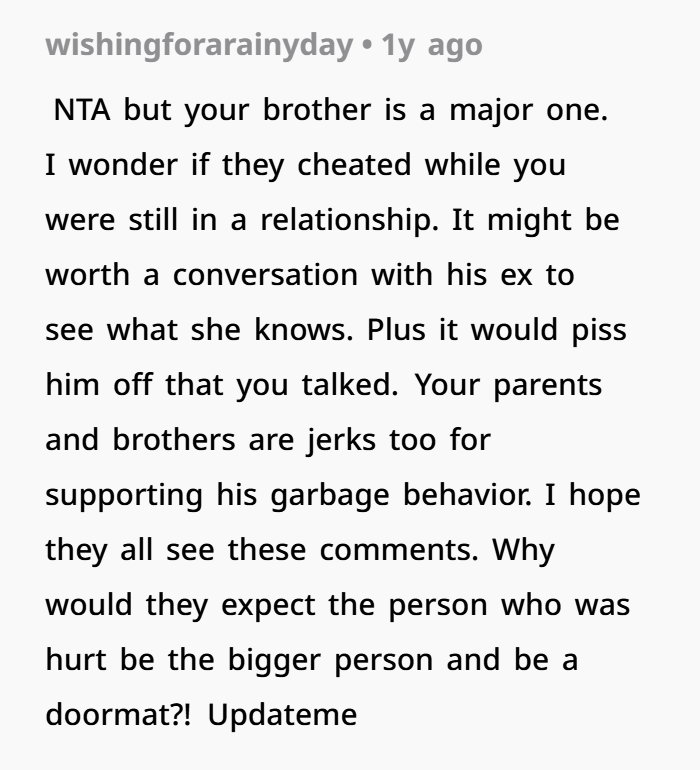
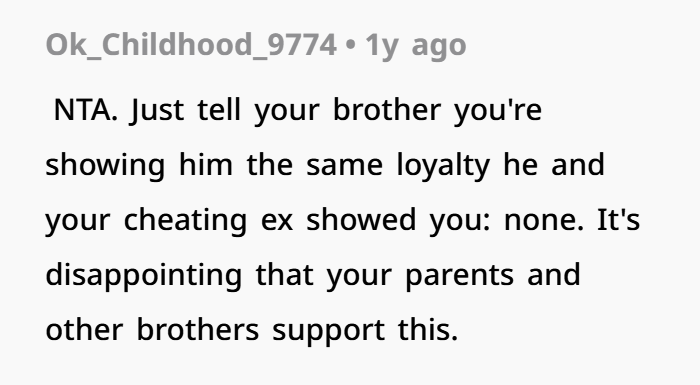
- The Parents & Other Brothers (Peacekeepers): Their approach is more about avoiding conflict than addressing the issue. Phrases like “maybe she’s changed” or “don’t let this tear the family apart” sound reasonable on the surface, but they often dismiss the actual hurt involved.
This is a classic case of conflict avoidance vs emotional accountability. It’s easier for them to ask one person to “just let it go” than to confront the uncomfortable truth that one family member made a deeply questionable choice.
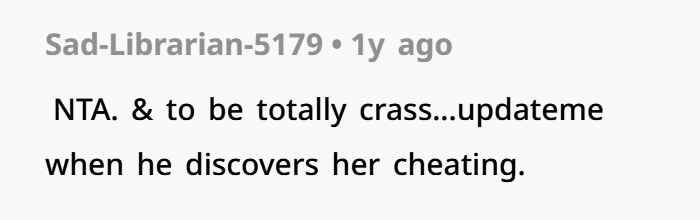
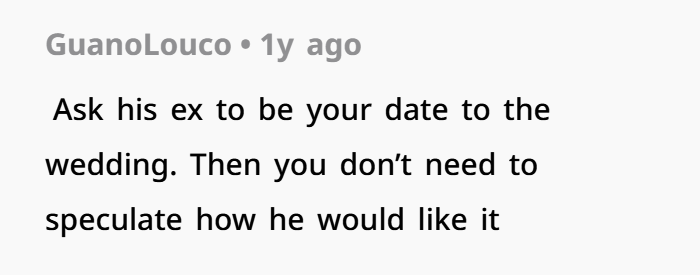
And then there’s the argument: “Just let him get egg on his face when she cheats again.”
This might sound logical, but it completely ignores the emotional reality. This isn’t a reality show where you grab popcorn and watch things unfold. This is his life. His family. His space. Waiting for karma to play out doesn’t erase the discomfort happening right now.
Also, let’s not ignore the psychological angle here—boundary setting.
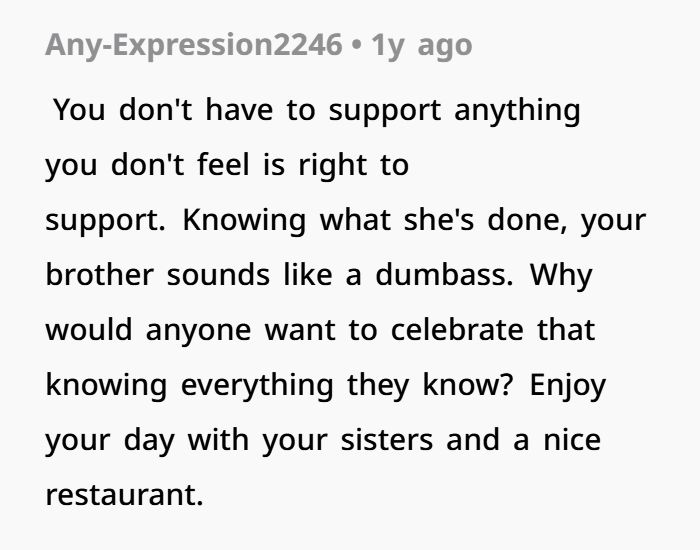
Refusing to attend the wedding isn’t about revenge. It’s about drawing a line. It’s saying: “I won’t participate in something that directly hurts me.” And honestly, that’s a pretty healthy boundary.
People often confuse boundaries with punishment. But they’re not the same. He’s not stopping the wedding. He’s not demanding they break up. He’s simply choosing not to be involved.
That’s actually a very mature response, even if it doesn’t feel like it to everyone else.
Now, let’s flip perspectives for a second.
What about the brother getting married?
From his point of view, he might genuinely believe the relationship is different. Maybe she treats him better. Maybe he thinks she’s changed. And people can change—sure. But here’s the catch: even if she has changed, that doesn’t erase what she did to his brother.
And choosing to overlook that? That’s where the issue lies.
It’s not just about falling in love—it’s about who you’re willing to hurt in the process.
And his response—telling his brother to “grow up”—doesn’t exactly scream empathy. If anything, it shows he’s minimizing the impact of what happened.
Now let’s talk about the wedding itself.
Weddings are symbolic. They’re not just parties—they’re public declarations of support. When you attend someone’s wedding, you’re essentially saying, “I stand by this union.”
So if he showed up, smiled, and celebrated… that would feel dishonest. Almost like betraying himself.
And that’s the key point a lot of people miss.
This isn’t about holding a grudge. It’s about self-respect.
Finally, let’s address the big question: Is he the asshole?
Honestly? No.
Could he handle things differently? Maybe. There’s always room for more communication, more calm discussions, maybe even therapy if the family wanted to go that route.
But at its core, his reaction is human. It’s understandable. And it’s rooted in protecting his own emotional well-being—not in trying to control anyone else.
If anything, the real issue here isn’t that he won’t attend the wedding.
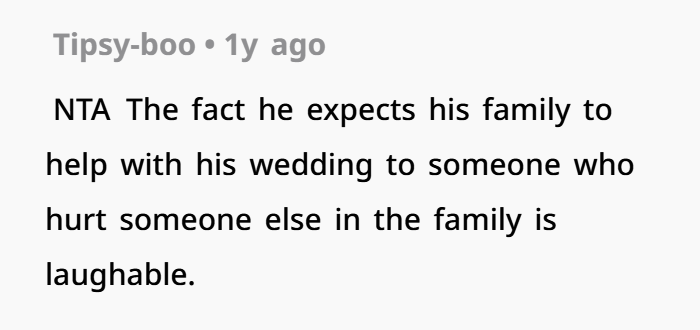
It’s that his brother made a choice knowing full well it would hurt him—and then expected him to just be okay with it.
And that’s where things stopped being about love… and started being about respect.
Comments You Can’t Miss