Aunt Finally Confronts Uncle Over Fake “Dream Vacation” Gifts
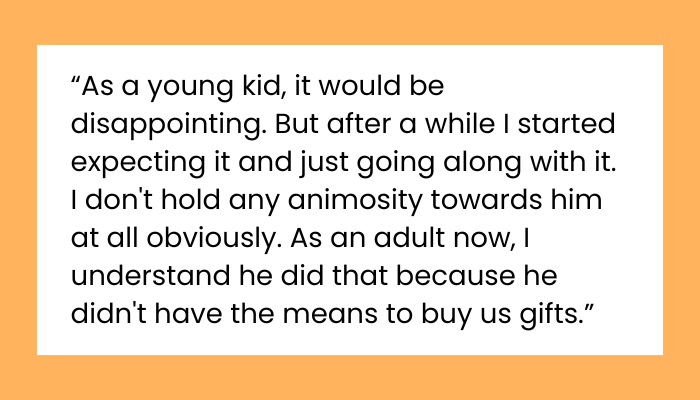
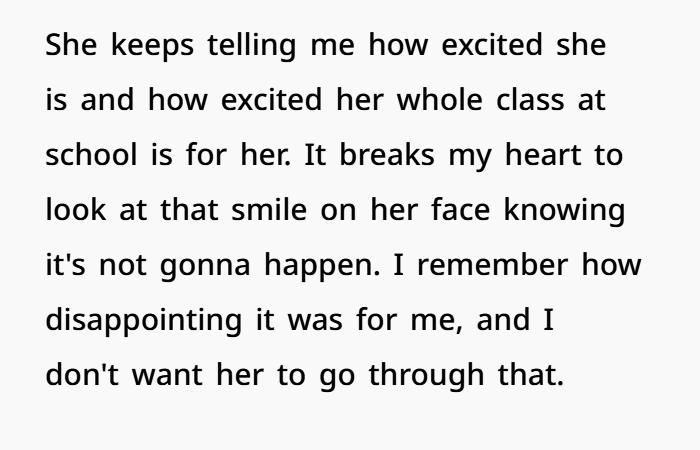
One woman believed she was finally ending a difficult family habit when she kindly asked her uncle to stop giving her daughter gifts that promised trips that never happened. When she was growing up, her uncle often gave children birthday and holiday cards with pictures of exciting places like theme parks, zoos, and aquariums. He would talk about fun vacations and special family trips, but those plans never became reality. As a child, she often felt disappointed when the promised outings did not happen. As an adult, she realized her uncle’s actions were probably connected to family finances and financial challenges rather than bad intentions, so she never felt angry with him. However, seeing the same situation happen with her own 5-year-old daughter made her view things differently.
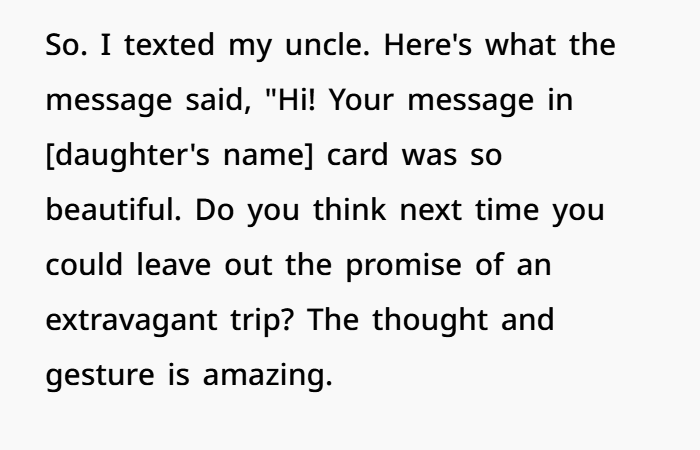
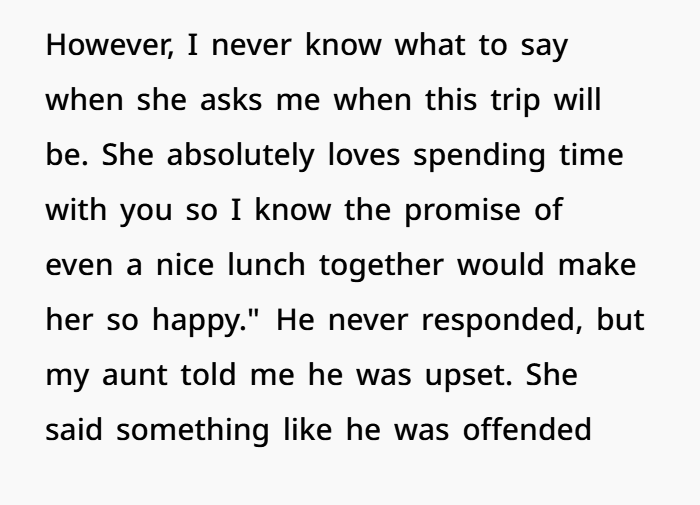
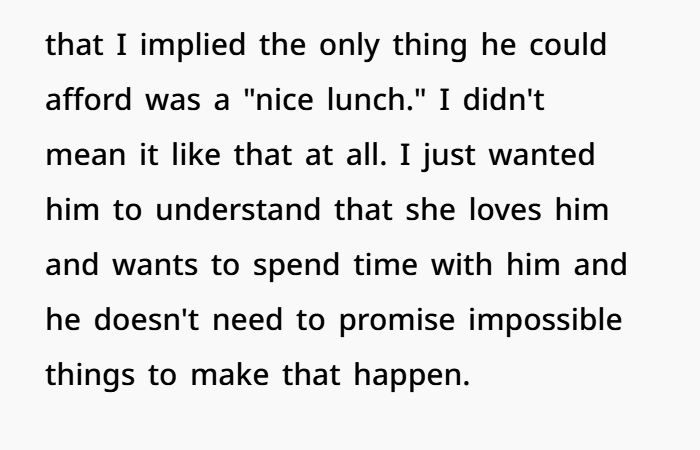
After her daughter received a birthday card describing a big weekend trip to a theme park with hotels, food, rides, and family fun, the little girl became very excited. She spent days talking about the upcoming adventure and sharing the news with friends and relatives. Her mother worried about the emotional impact if her daughter later learned that the trip was never actually planned. Wanting to handle the situation respectfully, she sent her uncle a message suggesting that future gifts focus on spending quality time together instead of promising expensive vacations. Unfortunately, her uncle felt hurt by the conversation and believed she was criticizing his financial situation. Now she is left wondering whether she was wrong for speaking up about a family pattern that everyone else had quietly accepted for years.



This story is difficult because it seems like good intentions are mixed with a situation that still causes disappointment.
That is what makes it complicated.
The uncle likely does not want to hurt anyone. He may genuinely believe he is giving children something fun to look forward to. Perhaps when he first started giving these gifts, he hoped the trips would happen someday. Over time, financial challenges may have made those plans impossible, but the tradition continued. Situations like this can happen in families, especially when someone wants to be generous but struggles with family finances.
However, good intentions do not always prevent disappointment.
When promises are made again and again but never happen, children can still feel hurt, even if nobody meant to cause that feeling.
Young children often take things very seriously. A five-year-old does not think about future possibilities or financial planning. She hears that she is going to a theme park and believes it is really happening. She imagines the rides, the hotel, the food, and all the fun activities. In her mind, the trip already feels real.
That is what makes the situation so sad.
The mother is not upset because she wants expensive gifts. She never asked her uncle to pay for a vacation. She did not criticize his financial situation. In fact, she understands that there may be reasons behind his actions. What she is really trying to protect is her daughter’s trust and emotional well-being.
This is important because children learn from repeated experiences.
Over time, children may start believing:
They should not fully trust promises.
They should avoid getting too excited.
Disappointment is something they should expect.
Promises may not always be reliable.
Feeling let down is a normal part of life.
When this happens repeatedly, some children stop showing excitement because they are trying to protect themselves from future disappointment. The woman in this story remembers doing exactly that when she was younger because she had already learned the trips were unlikely to happen.
That is not the type of childhood memory most parents hope their children will have.
Another important part of the story is that nobody in the family addressed the issue for many years. Even the woman’s mother admitted she wished she had spoken up sooner. Families sometimes allow uncomfortable situations to continue because they do not want to hurt anyone’s feelings or create conflict.
This can happen especially when money is involved.
Financial insecurity can be difficult for many people. Some individuals try to make up for financial limitations by offering exciting ideas or big promises. Often, this comes from a desire to make others happy rather than from bad intentions.
The challenge is that children usually do not understand the adult circumstances behind those promises.
They only know whether something happened or did not happen.
The message the mother sent to her uncle sounded respectful and thoughtful. She started by appreciating the kind words he wrote in the birthday card. Then she gently suggested focusing on realistic experiences, such as spending time together, instead of discussing expensive vacations that might not happen.
That is not the same as criticizing someone’s finances.
In fact, she was trying to show that her daughter values quality time and family relationships more than expensive gifts. Still, when people feel sensitive about money, even kind suggestions can sometimes feel personal.
That may explain why the uncle reacted defensively.
Something as simple as suggesting lunch together may have sounded different to him than it was intended. He may have felt embarrassed or worried that others were judging his financial situation. For some people, providing gifts is closely connected to their sense of self-worth.
Even so, his reaction does not automatically mean the mother was wrong.
Parents have a responsibility to support their children’s emotional health as well as their physical well-being. Part of that responsibility is helping children avoid unnecessary disappointment whenever possible.
There is also another challenge that often gets overlooked. Situations like this create extra stress for parents.
Now the mother may have to answer questions like:
“When are we going?”
“What rides will we go on?”
“Can I tell my friends about it?”
“What should I bring?”
“Why hasn’t Uncle talked about the trip again?”
If the trip never happens, she may eventually have to explain the situation to her daughter. That can be emotionally difficult, especially because she remembers feeling the same disappointment herself as a child.
In many ways, the situation became more personal once it involved her own daughter.
Many adults overlook things that happened during their own childhood. But when they see the same experiences affecting their children, they often look at those situations differently. They begin to realize that some family traditions may not have been as harmless as they once believed.
That does not mean the uncle is a bad person.
Based on the story, it seems like he genuinely wants the children in his family to feel loved and special. The problem may simply be that he believes exciting promises are the best way to show that love. The mother’s point was that children often value real experiences and genuine connection much more than grand plans.
Sometimes a simple afternoon spent together becomes a treasured childhood memory.
On the other hand, unrealistic promises can create excitement at first but disappointment later.
The unfortunate part is that this situation might have been avoided if someone had talked about it honestly years ago. Instead, the family quietly accepted the pattern. Adults understood the trips were unlikely to happen, but children continued believing they were real.
In many ways, that silence protected the adults more than it protected the children.
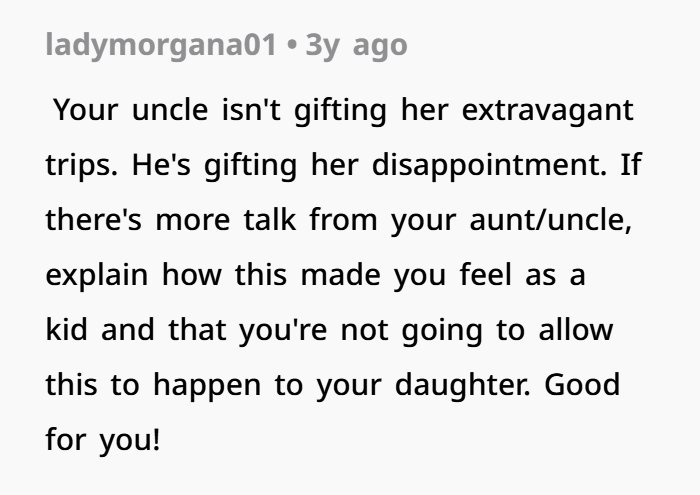
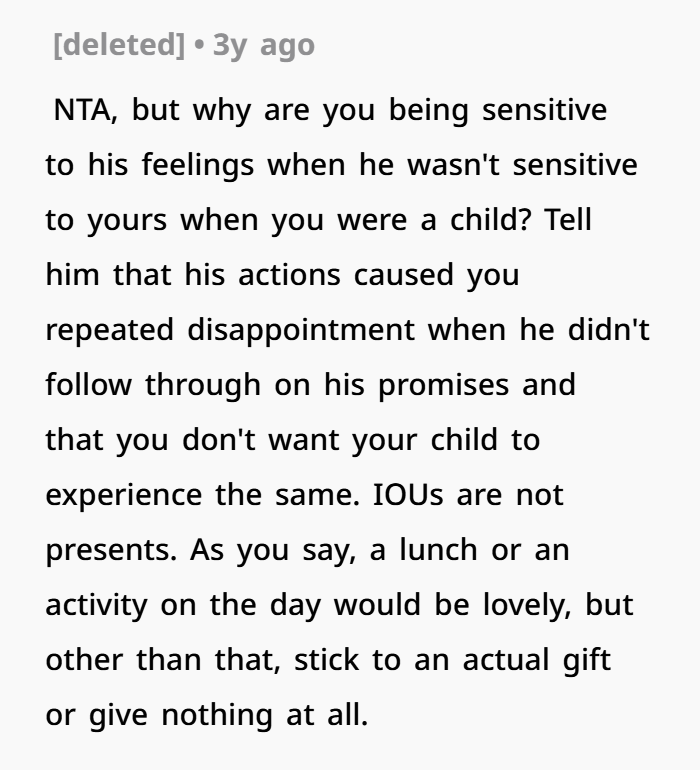
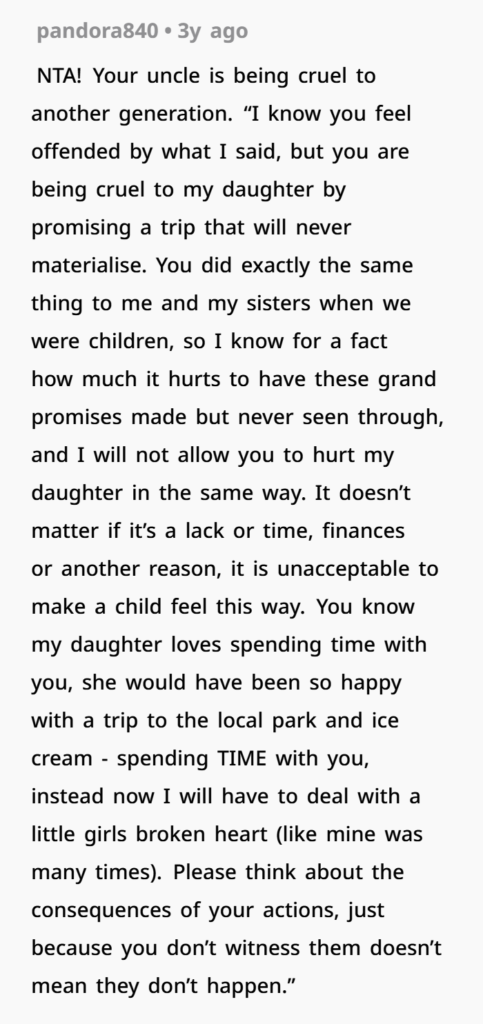
At the end of the day, the mother did not embarrass her uncle. She did not call him dishonest or demand expensive presents. She simply asked him not to make promises that may be difficult to keep because she wants to protect her daughter’s trust, emotional wellness, and childhood happiness.
And in many ways, that is simply part of good parenting.
Readers’ Comments Speak Out