
My Husband’s Family Has Lived in Our Apartment for Over a Year—Now I’ve Given Him Until Friday to Choose
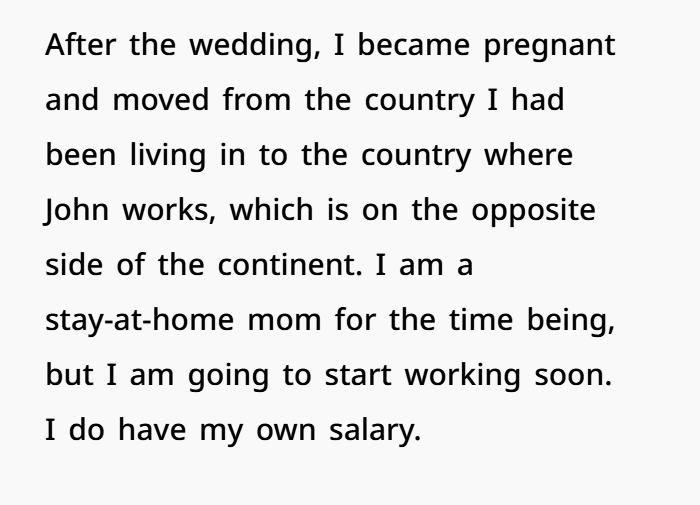
A 36-year-old woman is feeling stressed because her husband’s family members keep staying at their home. She and her husband, John, have been together for ten years and married for two. Soon after their wedding, she became pregnant and moved to another country where John works. She left her friends, family, and familiar life behind to start a new chapter with him. Now, she is a stay-at-home mom caring for their young son and planning to return to work. John spends around 10 to 12 hours a day at his job, leaving her to manage most of the household responsibilities alone.
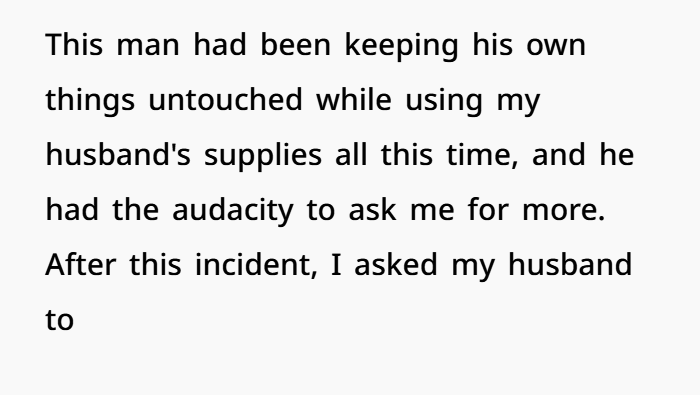
The couple lives in a small two-bedroom apartment, but their extra bedroom is almost always occupied. John’s father, cousin, and sometimes his uncle take turns staying with them. As soon as one person leaves, another arrives. For more than a year, the woman has been cooking, cleaning, washing clothes, changing bedsheets, and buying groceries for everyone. The guests do not help with household expenses or contribute to the grocery budget. She also has to pay for everyday items like shampoo, shower gel, and deodorant. She became especially upset when she discovered that John’s cousin was using the toiletries she bought while saving his own supplies. When he ran out of deodorant, he simply asked her to buy more.
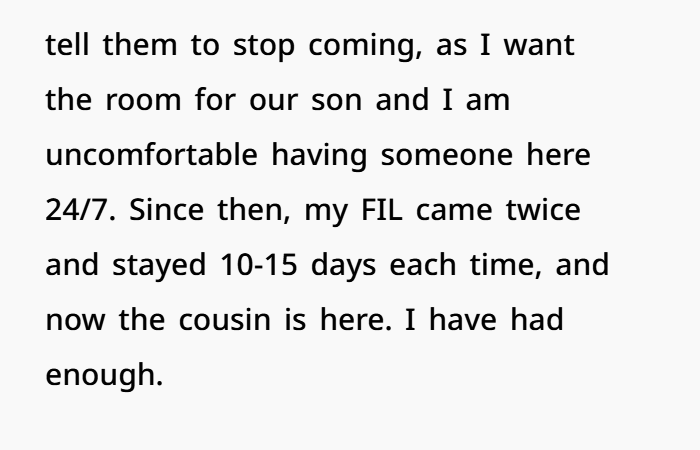
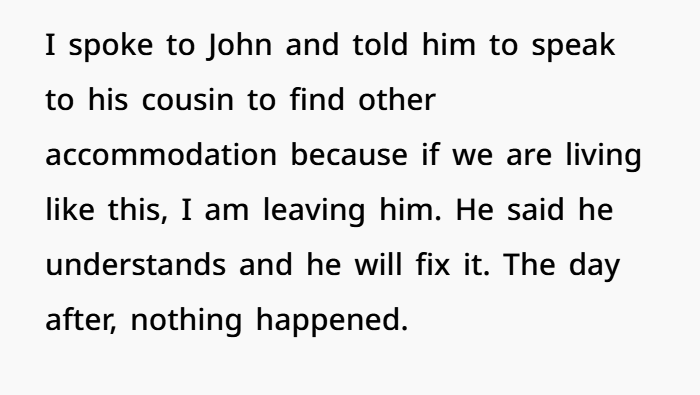
Things became even worse when the cousin drank an entire carton of milk that she had bought for her little boy. This small moment was the final straw after months of frustration. She was already tired of having no privacy, spending extra money on household supplies, and doing all the work for guests who rarely helped. She asked John to tell his cousin to find another place to stay. Although John promised to handle the problem, nothing changed. She felt that her concerns about family boundaries, living expenses, and their limited apartment space were not being taken seriously.
Now, the woman has given her husband a clear deadline. She told him that if his relatives are still staying in their apartment by Friday, she will leave and not come back. She does not want to stop John from having a relationship with his family, but she wants their home to feel like their own again. With a young child to raise and a return to work ahead of her, she needs more privacy and support from her husband. She believes marriage should involve teamwork, shared household responsibilities, and respect for each other’s needs. Still, she wonders whether her decision is too harsh or whether she has simply reached her limit after being ignored for so long.






Wife Asks Husband’s Family to Move Out After More Than a Year of Constant Visits
Having family stay at your home can be lovely. You get to share meals, spend time together, and enjoy each other’s company.
But what happens when the visits never seem to end?
One woman found herself dealing with this problem after her husband’s relatives began staying at their small apartment almost all the time.
At first, she tried to be understanding. She knew her husband wanted to help his family.
But after more than a year, she was tired of cooking, cleaning, buying groceries, and sharing her home with extra adults.
She was also raising a young son and wanted more privacy.
When she finally told her husband that his relatives needed to find somewhere else to stay, the disagreement became serious.
The real question was not whether she should welcome family members.
It was whether she should have to keep hosting them when the arrangement was making her unhappy.
The Family Visits Had Become Almost Permanent
The woman lived with her husband, John, and their young son in a two-bedroom apartment.
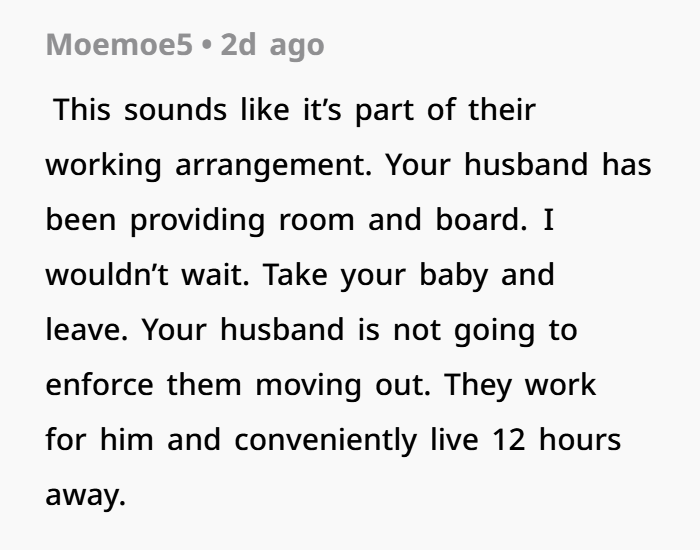
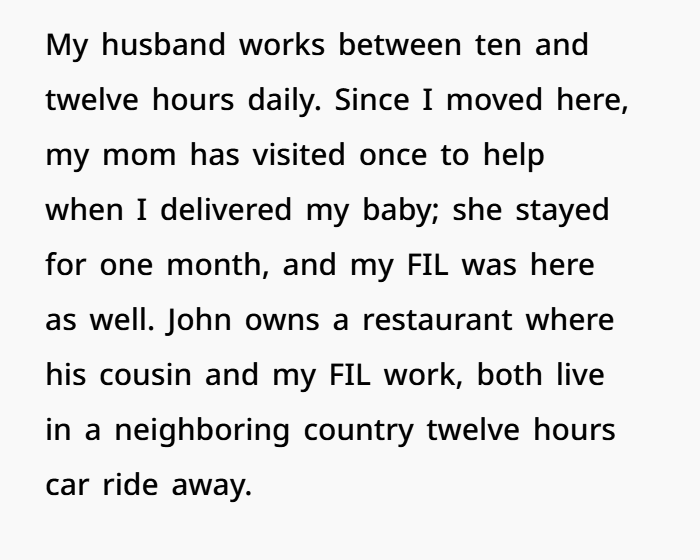
John owned a restaurant where his father and cousin worked.
Both relatives normally lived in another country, around twelve hours away by car.
Because of their work, they often stayed at John’s apartment.
But these were not normal weekend visits.
According to the woman, even during a good month, she might have only ten days without guests. Those days were not always together.
That meant she rarely had a full week alone with her husband and child.
She had moved across the continent to build a life with John.
Instead of enjoying a quiet home, she felt like she was constantly hosting visitors.
She did not want to stop her husband from seeing his family.
She simply wanted their apartment to feel like their own home again.
She Was Doing Most of the Extra Housework
Having guests means extra work.
There are more dishes to wash, more meals to prepare, and more clothes to clean.
The bathroom needs attention more often, and household supplies run out faster.
When someone visits for a few days, these extra chores may not be a big deal.
But when guests stay regularly for over a year, the work adds up.
The woman said she was handling much of it herself.
She already had a young child to care for.
Now she was also cooking, cleaning, shopping, and doing laundry for the adults staying with them.
She felt that the guests were enjoying the benefits of staying there without taking on enough responsibility.
This kind of unpaid household work is easy to overlook.
The International Labour Organization discussed this issue in its 2018 report, Care Work and Care Jobs for the Future of Decent Work.
The report estimated that women performed about 76.2% of unpaid care work hours worldwide.
That does not mean every household is the same. But it helps explain why sharing housework fairly is important.
In this situation, the woman was tired of being the person everyone seemed to depend on.
The Guests Were Using Household Products Without Replacing Them
One of the woman’s biggest complaints was how quickly bathroom products disappeared.
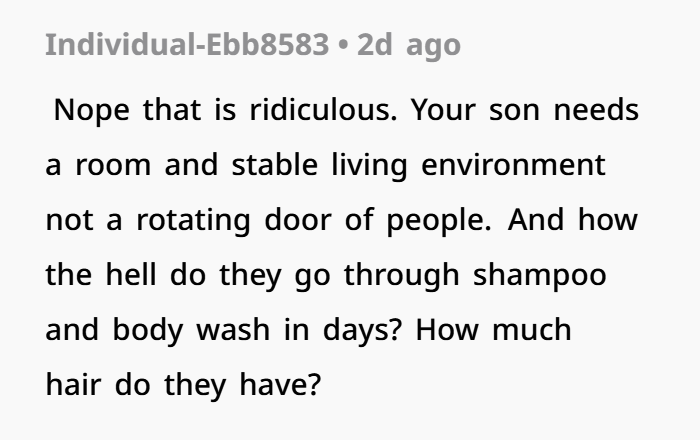
She said shampoo sometimes lasted only three days.
Shower gel could be empty after four days.
With extra adults staying in the apartment, she had to buy these products much more often.
The guests apparently did not make much effort to replace what they used.
Then John’s cousin asked her to buy more deodorant.
That request upset her.
According to her account, she later discovered that he had his own deodorant but was saving it while using products bought for the household.
She felt that he expected her to shop for him.
The cost of one bottle of deodorant may not seem important.
But when someone is already paying for extra groceries, cleaning products, and personal care items, those small costs can add up.
Managing a household budget becomes harder when extra people use supplies without contributing.
For the woman, it was not just about money.
It was about feeling that her time and effort were being taken for granted.
The Empty Milk Carton Made Her Even More Upset
Another problem involved milk that was meant for the couple’s young son.
The woman discovered that the milk was gone.
On its own, an empty milk carton might not seem like a major issue.
But she had already spent months dealing with missing groceries and household supplies.
She felt that the guests were not thinking about the needs of the people who lived there.
There is no clear evidence that the cousin intentionally used the child’s milk to cause a problem.
He may not have known it was being saved.
Still, the mother was frustrated.
Parents already have to think about meals, childcare, and grocery shopping.
When extra adults use things without replacing them, it creates another task for the person managing the home.
The empty milk carton became the final reminder that the current arrangement was not working for her.
A Two-Bedroom Apartment Was Feeling Too Small
The family lived in a two-bedroom apartment.
The woman, John, and their son shared one bedroom.
The visiting relatives used the other.
That left very little private space for the couple and their child.
As their son grew older, they also needed to think about giving him his own bedroom.
But that was difficult when the second room was regularly occupied.
Living in a small apartment can work well when everyone agrees on how the space is used.
The problem begins when one person feels they have no say.
The woman wanted to relax in her living room without always having guests around.
She wanted quiet evenings with her husband.
She also wanted to create a comfortable daily routine for their son.
Those are normal things for a family to want.
Her Husband Was Not Home Most of the Day
John worked long hours at his restaurant.
According to the woman, he was often away for ten to twelve hours a day.
That meant he did not spend as much time dealing with the guests at home.
While he was working, his wife was caring for their son and managing the apartment.
She also handled much of the extra work created by the visitors.
John may have thought the arrangement was manageable.
But his wife was experiencing it very differently.
She said she had spoken to him about the problem several times.
He reportedly promised to make changes.
However, she did not see any real improvement.
Over time, hearing that things would get better without seeing action made her even more frustrated.
Helping Relatives Should Be a Shared Decision
There is nothing wrong with wanting to help family.
John’s father and cousin worked at his restaurant, and their travel arrangements may have made staying at his apartment convenient.
But when a married couple shares a home, both partners should have a say in major household decisions.
That includes deciding who can stay, how often they can visit, and how long they can remain.
In this story, the woman felt she had little control.
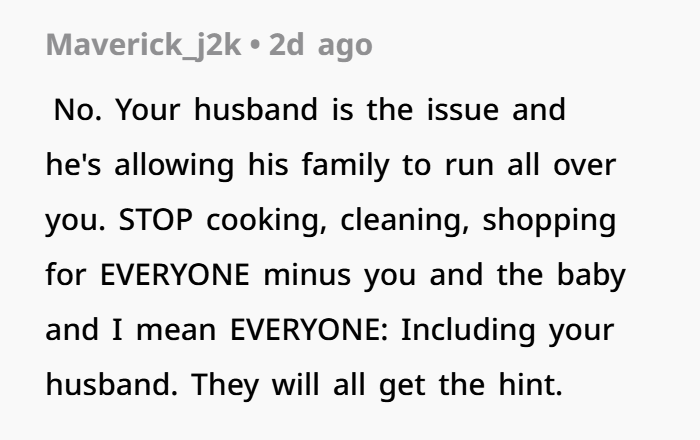
She was expected to manage the extra work, but she did not seem to have much influence over the visiting arrangements.
That created an unfair situation.
John was helping his relatives, but much of the responsibility was falling on his wife.
Family support works better when everyone involved agrees to the arrangement.
It should not depend on one person giving up their privacy and doing most of the work.
The Extra Guests Were Affecting the Family Budget
Having more people in a home usually means higher living expenses.
Grocery bills increase.
Laundry and cleaning supplies run out faster.
Water and electricity use may also rise.
For a family raising a child, those extra costs can make monthly budgeting more difficult.
The woman said she was regularly buying groceries and toiletries for the guests.
She did not describe any clear agreement about how much they would contribute.
This can create resentment, especially when one person is doing most of the shopping.
A fair arrangement might include guests paying for their own personal care products or helping with shared grocery costs.
It may also help to create a simple household budget that shows how much everyone is spending.
Financial planning does not have to be complicated.
Sometimes, clear expectations about everyday expenses can prevent bigger disagreements.
But in this case, the woman wanted more than help with the bills.
She wanted the long-term visits to stop.
Was She Wrong to Give Her Husband an Ultimatum?
After more than a year, the woman told John that his relatives needed to find another place to stay.
She had already tried discussing the problem.
She was tired of hearing promises that did not lead to change.
An ultimatum can create tension in a marriage.
But there is a difference between trying to control your spouse and setting a limit about your own living situation.
The woman was not asking John to stop loving his father or cousin.
She was not telling him to end contact with them.
She wanted them to stop using the apartment as a regular place to stay.
That is an important difference.
Her concern was about privacy, household responsibilities, and having a comfortable home for her child.
She was asking John to take those needs seriously.
Could Marriage Counseling Help the Couple?
Disagreements about extended family can be difficult.
One partner may feel responsible for helping relatives.
The other may feel that their own needs are being ignored.
Marriage counseling or couples therapy can sometimes help couples talk about these problems.
A counselor may help them discuss family boundaries, communication, and shared responsibilities.
However, not every disagreement needs professional help.
The couple could start by having a calm conversation about what needs to change.
They could agree on how often relatives can visit, how long they can stay, and what responsibilities guests should handle themselves.
John could also help his father and cousin look for separate accommodation during their working visits.
The most important thing is that both partners feel heard.
A promise to change things only matters when it is followed by action.
What Would a Fair Solution Look Like?
A fair solution would consider the needs of everyone involved.
John may want to continue supporting his father and cousin.
His relatives may need somewhere to stay while working at the restaurant.
But his wife and son also need privacy and enough space.
One possible solution would be for the relatives to find another place to stay.
Another would be to agree on shorter visits that both spouses are comfortable with.
If guests do stay, they should understand what is expected of them.
That could include buying their own toiletries, helping with cleaning, and contributing to groceries.
John should also take responsibility for arrangements involving his relatives.
It should not be left entirely to his wife.
A shared home needs shared decisions.
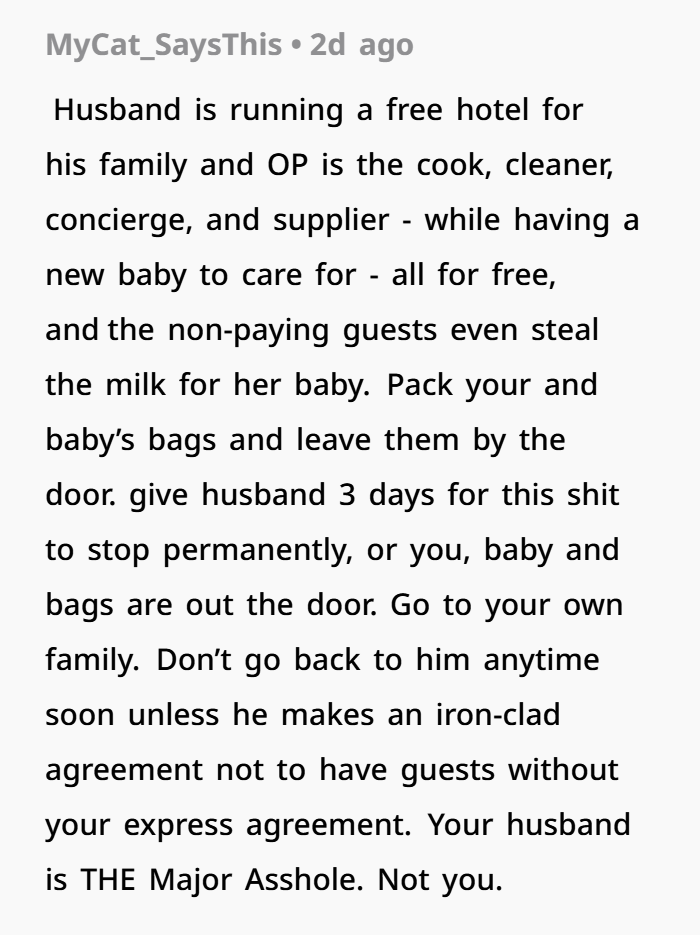
Reddit Verdict: Not the A-Hole (NTA)
Based on the woman’s account, her request is understandable.
She had welcomed her husband’s relatives for more than a year.
During that time, she handled extra cooking, cleaning, laundry, and grocery shopping while caring for a young child.
She also had very little privacy in their small apartment.
When she spoke to John about the problem, he reportedly promised to help but did not make meaningful changes.
Asking the relatives to find somewhere else to stay was not unreasonable.
John may have good reasons for wanting to help his father and cousin.
But those reasons do not mean his wife should have to manage their daily needs.
She was not asking him to abandon his family.
She was asking him to remember that his wife and son needed his attention, too.
The Bigger Lesson About Family Boundaries
This disagreement was never really about shampoo, deodorant, or milk.
Those were small problems that made a much bigger issue impossible to ignore.
The woman wanted a home where she could relax, raise her son, and enjoy time with her husband.
Instead, she felt like she was constantly looking after extra adults.
Family hospitality can be a wonderful thing.
But it works best when everyone respects the people who live in the home.
John can continue helping his relatives without expecting his wife to host them almost every day.
In the end, a happy household needs privacy, fair responsibilities, and decisions that both partners agree on.
Helping extended family matters, but the needs of the people who live in the home every day matter just as much.
Top Comments From Readers