
Laid Off, Then Blamed When the System Crashed
Losing a job is never easy. For one senior software developer, the situation became even more frustrating when he was later blamed for problems that happened after he left the company. He had spent nearly four years building and maintaining an important internal tracking system for a logistics business. During that time, he often worked extra hours and repeatedly warned management that the system needed better documentation and long-term planning. However, company leaders focused mainly on new feature releases and short-term business goals. Eventually, as part of a company restructuring effort, his position was eliminated, and he was let go despite his years of work and contributions to the organization.
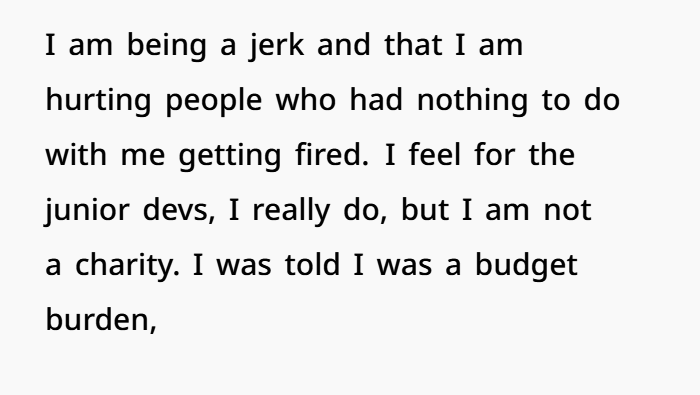
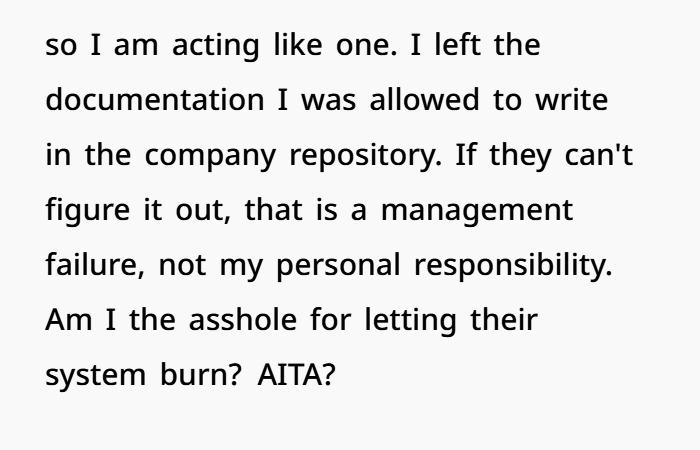
A few weeks after his departure, the company’s system experienced major technical issues following a server update. Suddenly, the same employee who had been viewed as a cost-saving target became the person management wanted help from. His former manager contacted him and asked if he could assist the remaining development team with fixing the problem. Rather than providing free support, the former developer offered professional IT consulting services at a rate of $250 per hour with a four-hour minimum contract. His response led to criticism from some people, who accused him of being uncooperative and blamed the system’s design. The situation raised important questions about business operations, project management, knowledge transfer, and whether companies should invest more in proper documentation, employee retention, and enterprise technology planning before making major staffing decisions.


This story connects with many people in the technology industry because situations like this happen more often than many realize. Some companies depend heavily on one experienced employee to manage important systems. When that employee raises concerns about documentation, system maintenance, or technical debt, those warnings are sometimes ignored. Later, when problems appear after the employee leaves, the company may look for someone to blame instead of examining its own decisions.
At that point, the issue is no longer just about teamwork. It becomes a question of business planning and responsibility.
In this case, the developer was not refusing to do his job while he was employed. He actually asked management for time to properly document the system before he left. That detail is important because documentation is a key part of software development and enterprise technology management. It helps future employees understand how systems work and reduces risk when staff changes happen.
Unfortunately, documentation is often pushed aside when companies focus only on short-term goals, deadlines, and new features.
This creates a common problem in the technology world known as a “bus factor.” The bus factor measures how many people can leave a project before it becomes difficult to maintain. If only one person understands a critical system, the risk becomes very high.
That is usually a business and project management issue, not just an employee issue.
Many people outside the technology field assume any software developer can easily take over any system. In reality, large software platforms grow over many years. They contain updates, integrations, business rules, and technical decisions that require time to fully understand.
Even well-designed systems can be difficult for new team members to learn without proper documentation and training.
Another important point is that systems are often criticized only after the original developer is gone.
The former manager’s comments about the code seem especially unfair because management reportedly declined requests for additional documentation work. When a company chooses not to invest in long-term planning, it is difficult to place all responsibility on one employee later.
In many ways, the company appears to be facing the results of earlier business decisions.
It is possible leadership believed they could reduce costs by eliminating a senior developer position and relying on less expensive resources. In some organizations, that strategy works when systems are fully documented and processes are well established.
However, it becomes much more difficult when important business operations depend on specialized knowledge.
Now that technical problems have appeared, management is under pressure to restore services quickly. Instead of acknowledging planning mistakes, some leaders may focus on finding a simple explanation for a complex problem.
That is why the request for help became so important.
From a professional standpoint, offering consulting services was a reasonable response.
Once employment ends, specialized expertise becomes a professional service. Companies regularly hire IT consultants, software engineers, and technology experts to solve urgent business problems.
In the world of enterprise software, consulting rates can be very high when the work is specialized and time-sensitive.
The developer’s consulting fee reflected several factors:
He originally built the system.
He understood the technical architecture.
The issue was business-critical.
The company needed urgent assistance.
He was no longer an employee.
This was no longer a workplace favor. It was professional IT consulting.
The situation also highlights challenges faced by junior developers. After layoffs, less experienced employees are often asked to manage systems they did not build and may not fully understand.
That can create stress and pressure throughout a technology team.
However, staffing decisions, training plans, and knowledge-sharing processes are usually management responsibilities.
The former employee did not decide company staffing levels. He did not approve layoffs. He did not reject documentation requests. Those decisions were made by leadership.
Another reason many people relate to this story is the discussion around unpaid overtime.
In software engineering careers, employees often spend extra hours solving problems, maintaining systems, and supporting business operations. Many do this because they care about the products they build and want the company to succeed.
But when layoffs happen, employees often realize that loyalty alone does not guarantee job security.
That can change how people view professional relationships.
Once a company ends someone’s employment, the relationship becomes different. It is difficult to expect free access to specialized knowledge after deciding that role is no longer necessary.
There is also an important distinction between refusing unpaid work and causing problems intentionally.
The developer did not damage the system. He did not remove access, delete information, or create technical issues. According to the story, he left documentation in place, requested additional documentation time, and responded professionally when asked for help.
That is not sabotage.
It is simply a business transaction.
One lesson many companies learn is that experienced software engineers often provide value that is not immediately visible in financial reports. Their knowledge, problem-solving skills, and understanding of business systems can be difficult to replace.
When organizations focus only on reducing costs without considering operational risks, unexpected challenges can follow.
Now the company must decide whether the savings from the layoff were worth the system downtime, project delays, productivity losses, and consulting expenses that followed.
Ultimately, that is a business decision for leadership to evaluate.
And if management truly believes the system was poorly designed, it naturally raises another question: if the code was so easy to criticize, why was the company so eager to ask the original developer for help when problems appeared?