Still Married, Living With My Boyfriend, and Trying for a Baby Am I the Villain Here?
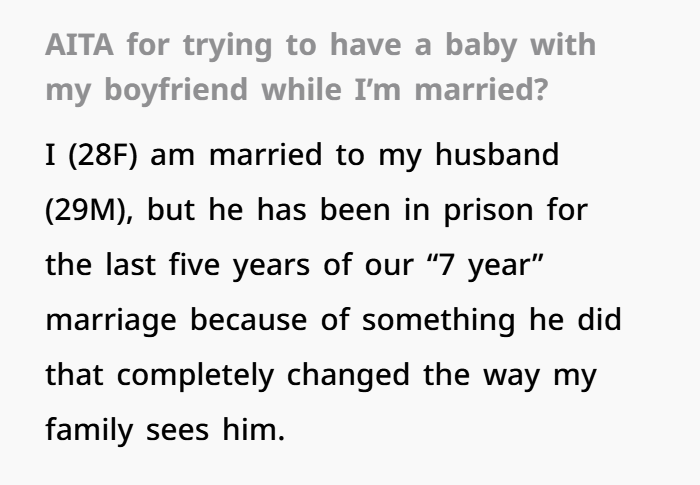
Relationships are messy. Add prison, divorce delays, and a new serious partner into the mix and things can get complicated fast. One woman recently found herself in the middle of a moral dilemma that sparked heated debate online. She’s still legally married to her husband, who has been incarcerated for five years, but emotionally their relationship ended long ago. Now she’s living with her boyfriend and even thinking about starting a family. The question is simple but heavy: is she wrong for moving on before the divorce is finalized?
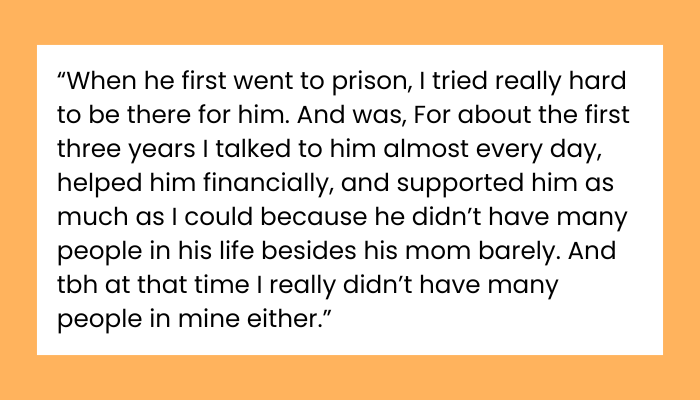
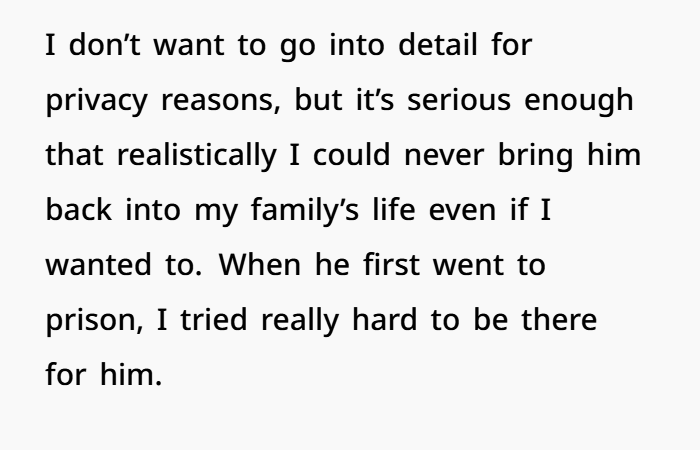
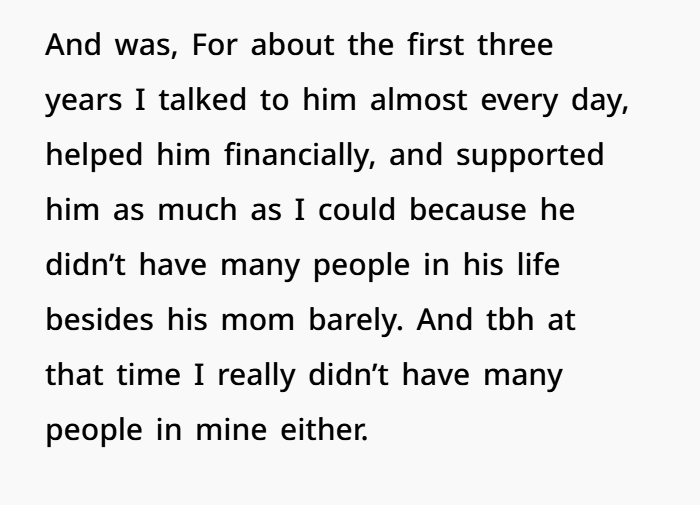
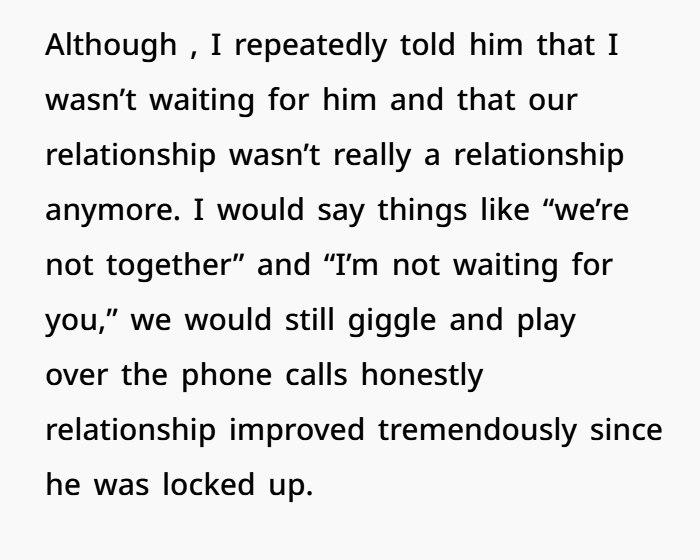
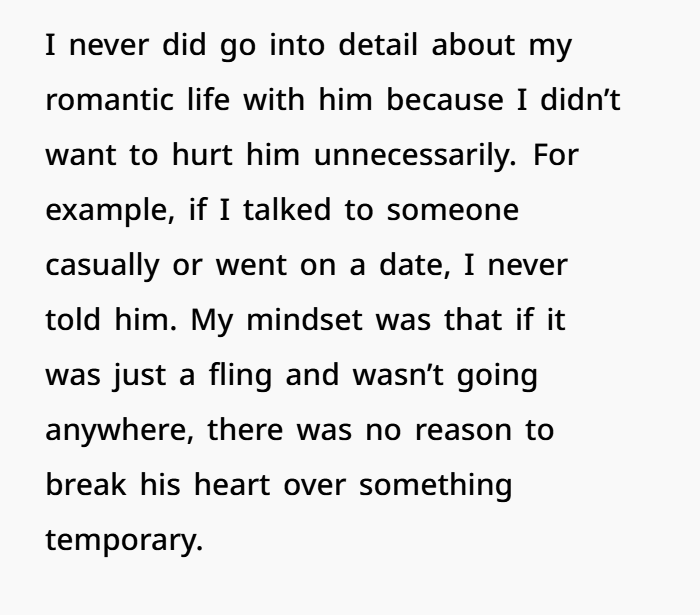
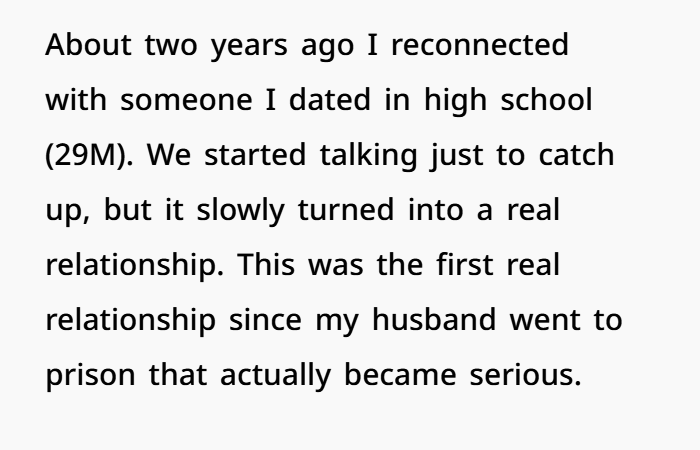
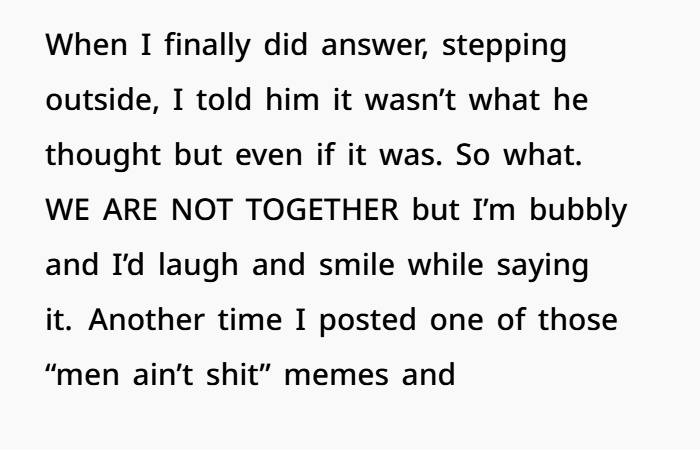
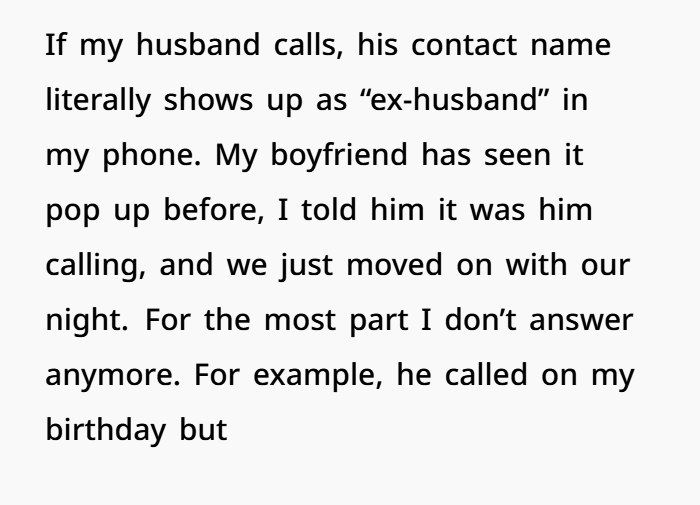
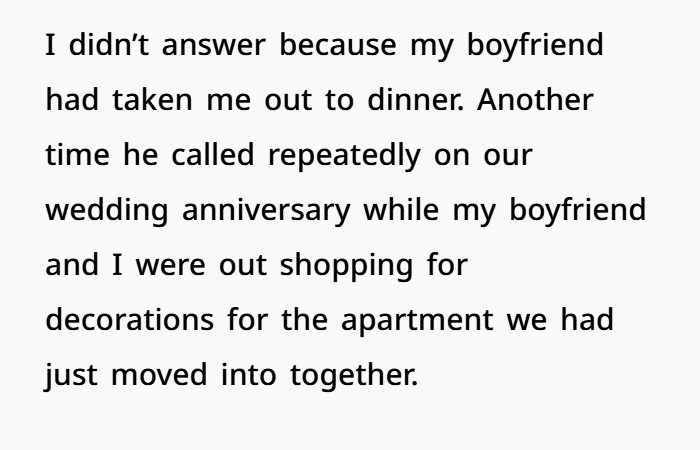
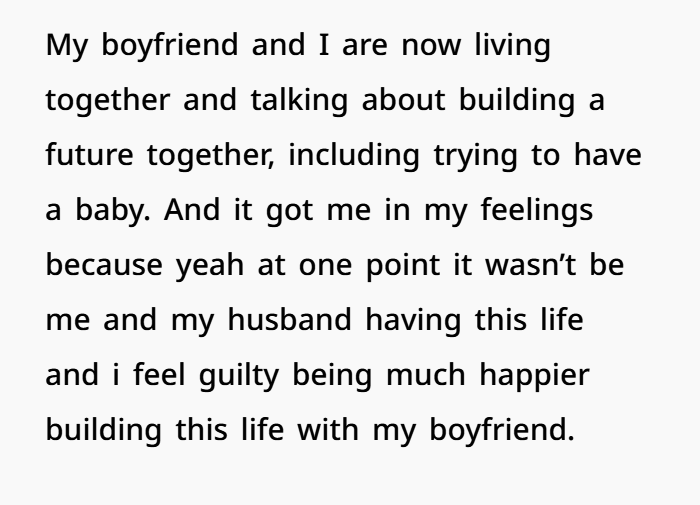
The woman explained that when her husband first went to prison, she tried to stay loyal and supportive. For about three years she spoke with him almost daily, helped him financially, and remained emotionally present in his life. But over time things changed. She repeatedly told him she wasn’t waiting for him and that their relationship was basically over. Eventually she reconnected with an old high school boyfriend, and that relationship grew into something serious. Now they live together and are planning a future — including having a baby. The only thing still tying her to the past is the legal paperwork of a divorce she never finished filing.

Situations like this hit a weird intersection of marriage law, relationship ethics, and emotional reality. On paper it sounds simple: if you’re still legally married, starting a new family with someone else might look wrong. But real life rarely works in neat legal boxes. When incarceration, emotional separation, and delayed divorce enter the picture, things get messy very quickly.
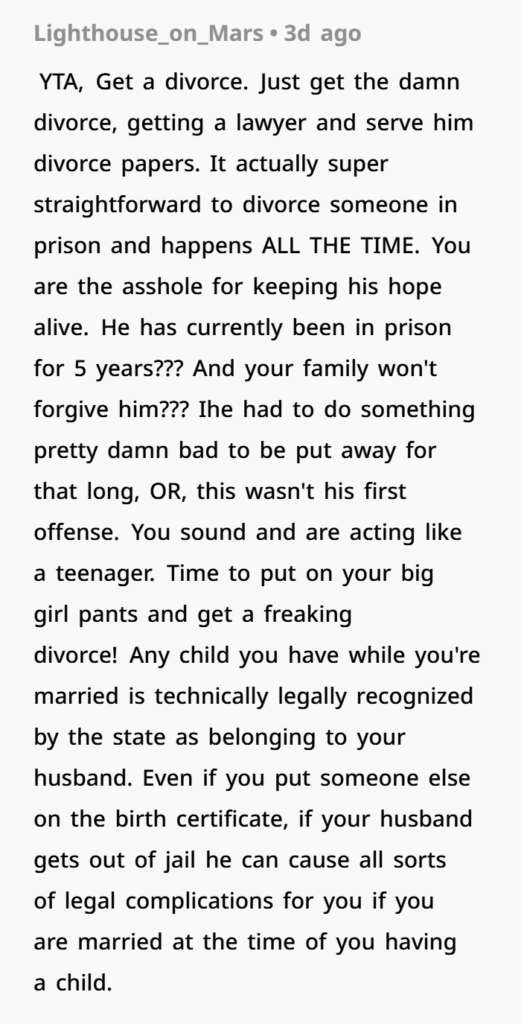
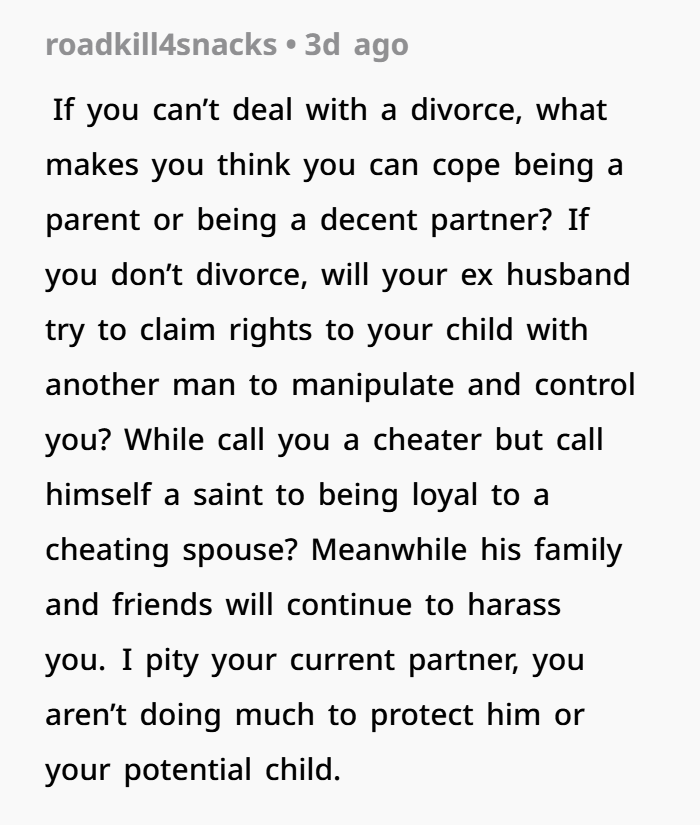
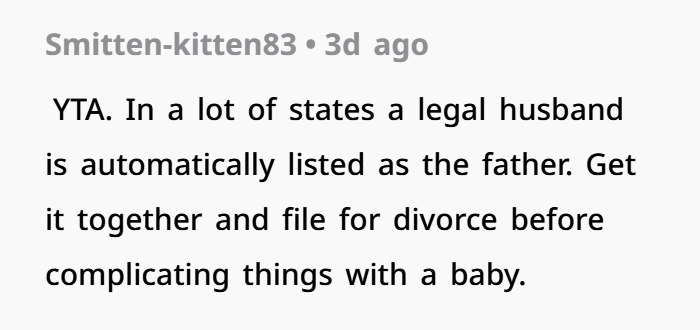
Let’s start with the legal side of things because that’s often what people focus on first. In many countries and U.S. states, legal marital status matters a lot when it comes to children, paternity rights, and divorce settlements. If a married woman has a baby, the law in some places automatically assumes the legal husband is the father, even if the biological father is someone else. This can create complicated situations involving paternity tests, family court cases, and child custody rights. Family law attorneys deal with these cases more often than people realize.
That’s one reason lawyers who specialize in divorce law, family court, and child custody disputes often advise people to finalize a divorce before starting a new family. It’s not necessarily about morality. It’s about preventing legal headaches later. Imagine having a baby and then needing to prove in court that your incarcerated husband isn’t the father. It can turn into months of paperwork, hearings, and expensive legal fees.
But legal technicalities don’t fully explain why this situation makes people uncomfortable. A lot of the reactions come from the emotional side of the story.
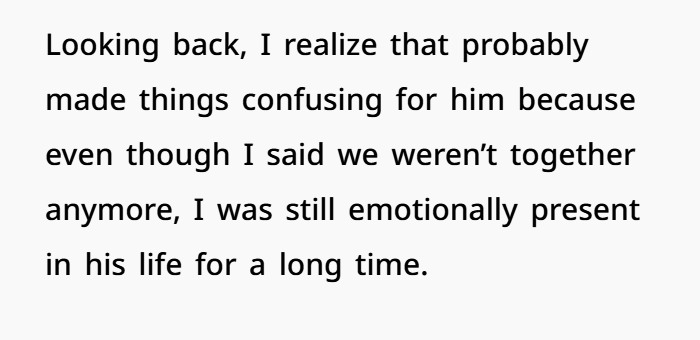
For the first few years of her husband’s incarceration, the woman stayed deeply involved in his life. She talked to him almost every day, supported him financially, and stayed emotionally connected. That kind of relationship pattern can create mixed signals, even if someone verbally says “we’re not together anymore.”
Psychologists often talk about something called emotional continuity in relationships. Basically, when two people maintain regular emotional contact, the brain continues to process the relationship as active. Even if one person says the relationship is over, the daily phone calls, jokes, and conversations keep reinforcing the bond.
In this case, the husband likely experienced exactly that. From his perspective, his wife was still calling regularly, laughing with him, and staying involved in his life. So even if she occasionally said she wasn’t waiting for him, her actions may have told a different story.
That doesn’t necessarily make her malicious. Many people stay emotionally supportive out of guilt, loyalty, or habit. Especially in cases involving incarceration. Partners of incarcerated individuals often struggle with something researchers call “ambiguous loss.” It’s a situation where someone is physically gone but still emotionally present.
You’re technically free to move on, but emotionally it feels complicated. You’re not really together, but you’re also not fully separated. That gray area can last for years.
Another layer here is social pressure. When her husband first went to prison, she said she was encouraged to stay loyal by her estranged father. He even told her that if her husband harmed himself after she left, it would be her fault. That kind of pressure can trap someone in a relationship long after it has emotionally ended.
Psychologists often call this guilt-based obligation, and it’s surprisingly powerful. People stay in situations they no longer want simply because they feel responsible for someone else’s wellbeing.
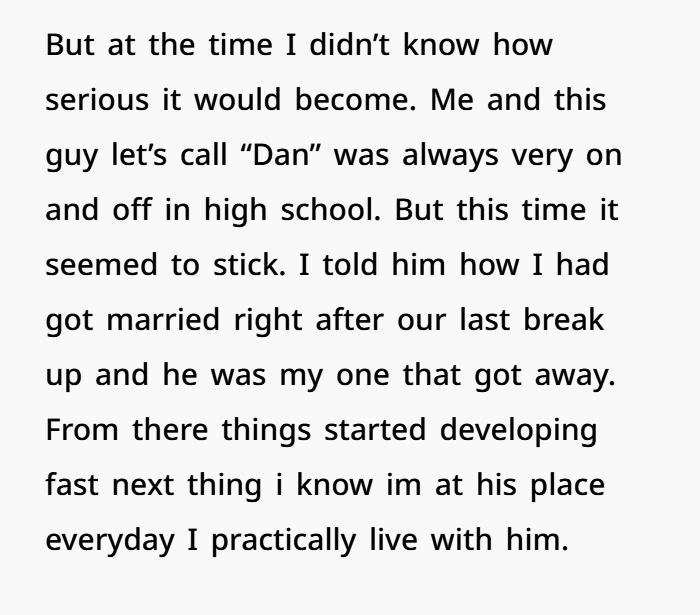
Over time, though, her life started changing. She reconnected with family, rebuilt parts of her support system, and eventually reconnected with someone from her past — a high school boyfriend.
That relationship slowly turned serious. What started as catching up eventually became a full relationship. Before she realized it, she was spending nearly every day at his place and eventually moved in with him. From her perspective, that relationship became her real life.
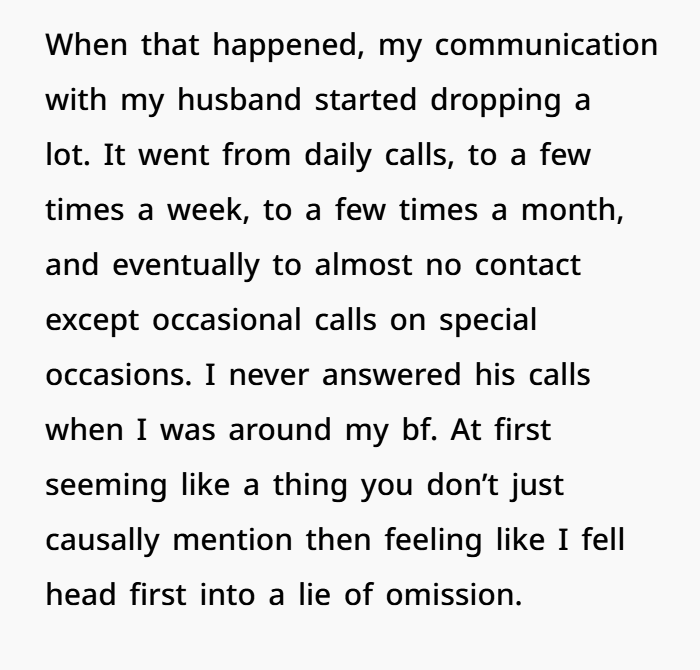
At that point, the calls with her husband became less frequent. Daily conversations turned into occasional calls, then eventually almost none at all.
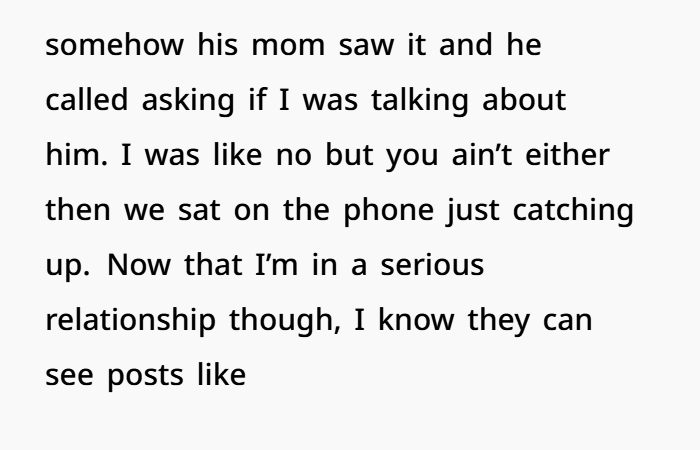
But the husband wasn’t completely out of the picture. Family members — specifically his cousin and mother — were still monitoring her social media and reporting things back to him. That added another layer of tension.
Social media surveillance between families in broken relationships is more common than people think. Studies about digital relationship monitoring show that people often rely on mutual friends or relatives to keep track of an ex-partner’s life. It’s messy, emotional, and almost always makes healing harder.
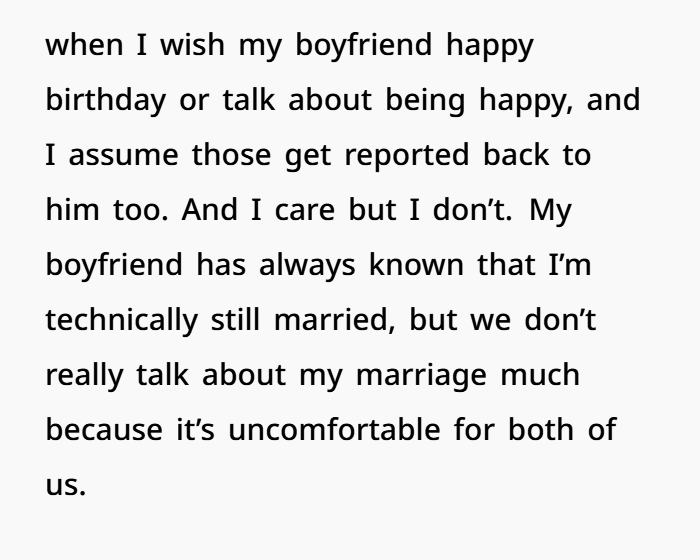
Every time she posted something — a picture, a meme, or even a birthday message to her boyfriend — it risked triggering another emotional reaction from her husband in prison.
Now fast forward to the present situation. She’s living with her boyfriend and planning a future together. They’re talking about long-term plans like starting a family, financial stability, and building a home together.
That’s where the ethical conflict really hits.
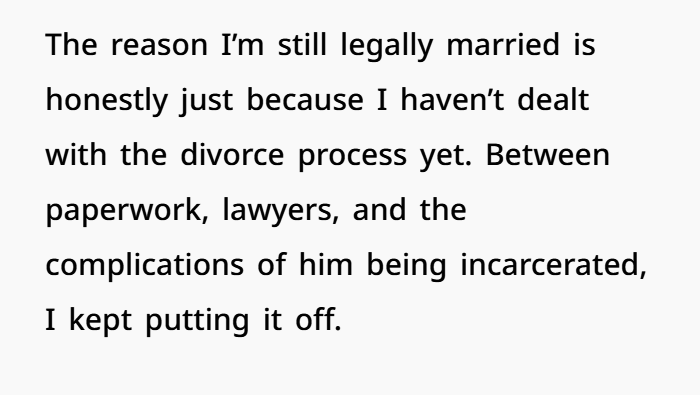
From her point of view, the marriage ended years ago emotionally. The only reason it still exists is because she never completed the divorce paperwork. Anyone who has gone through divorce proceedings or family court filings knows how overwhelming they can be — especially when one spouse is incarcerated.
There are often extra legal steps, delays with signatures, and complications with prison communication systems.
So procrastination happens. A lot.
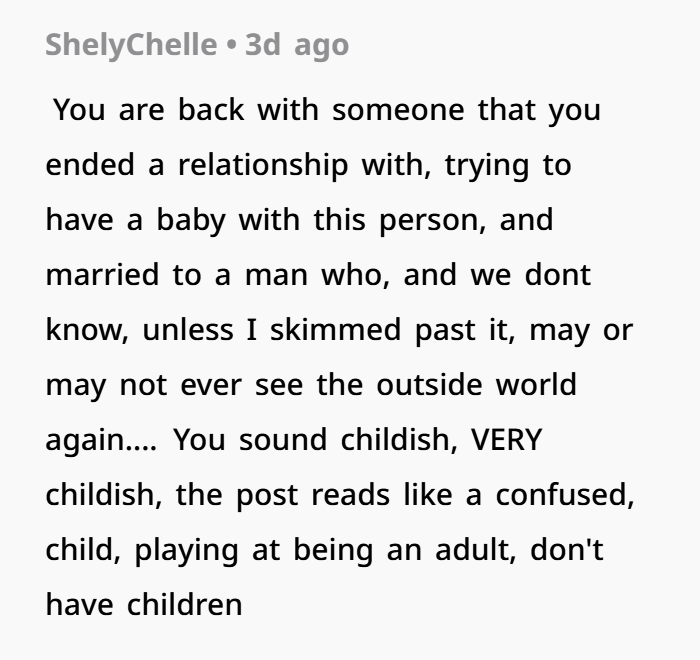
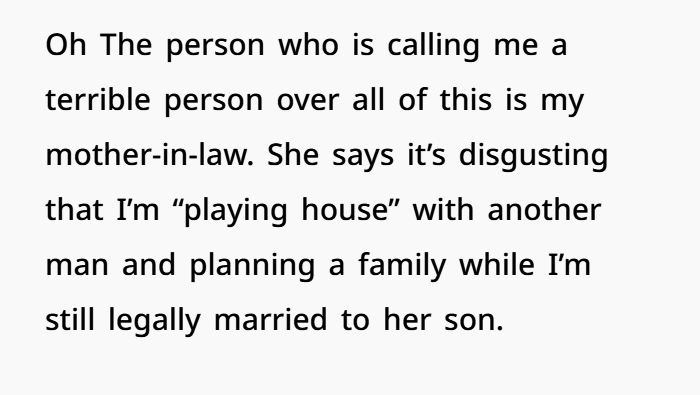
But from the outside looking in, the optics look rough. She’s still legally married while living with another man and planning a baby. For her mother-in-law, that looks like betrayal.
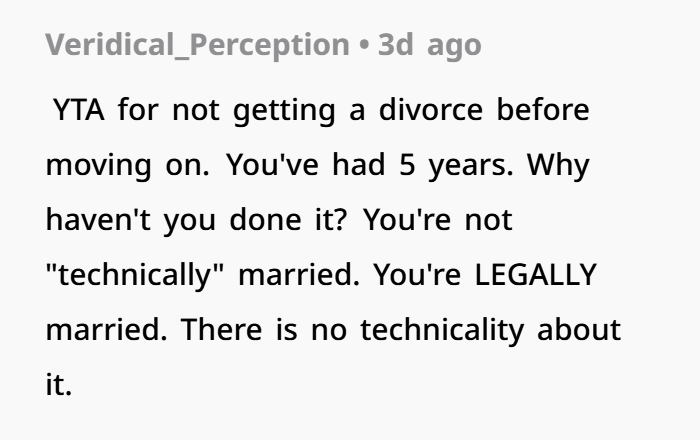
In reality, it’s more of a delayed administrative breakup rather than an active marriage. Emotionally she moved on years ago. Legally she didn’t.
That difference between legal status and emotional reality is where most of the debate comes from.
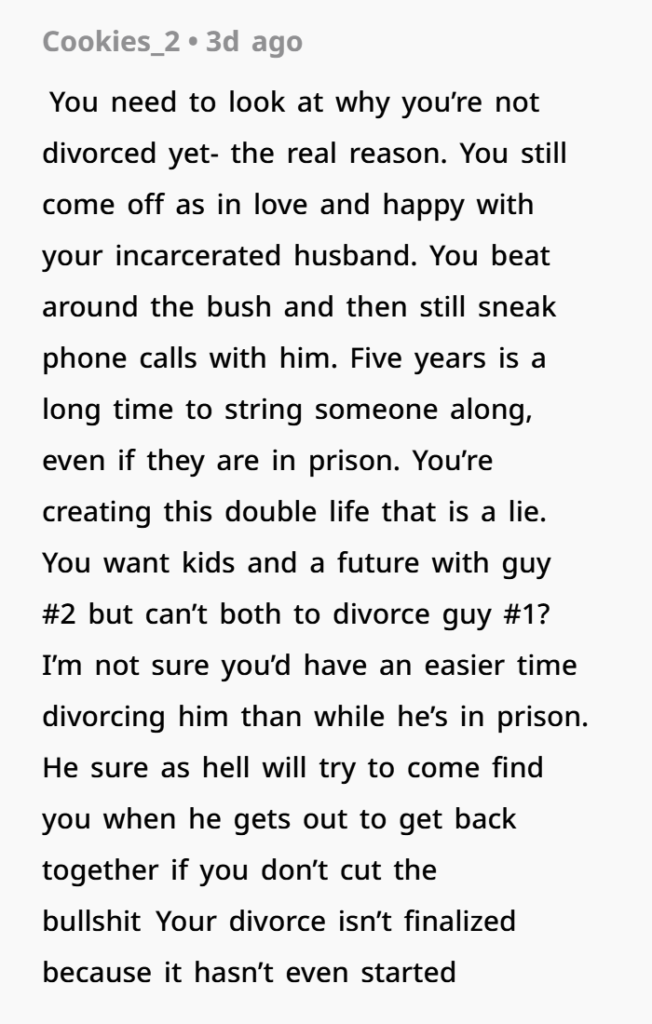
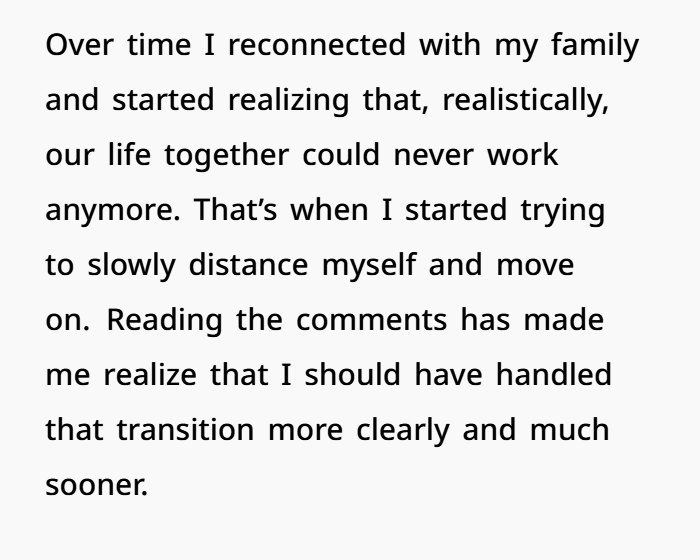
And interestingly, the woman herself acknowledged some responsibility after reading feedback. She admitted that she probably should have made a cleaner break earlier and communicated more clearly.
Instead of slowly fading out while staying emotionally connected, a firm separation conversation might have prevented years of confusion.
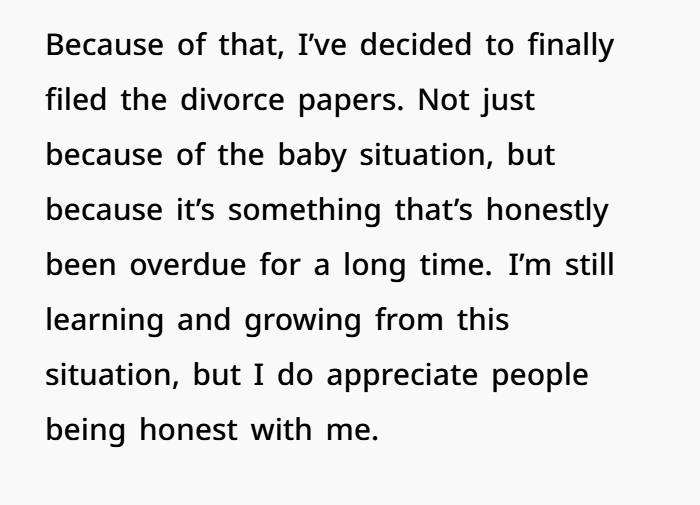
The biggest turning point in the story is that she ultimately decided to file for divorce. Not just because of the baby plans, but because she realized it should have happened long ago.
That step changes the entire trajectory of the situation. Once divorce proceedings start, the legal and emotional paths finally line up.
At the end of the day, the real issue here isn’t simply about cheating or loyalty. It’s about how hard it can be to leave complicated relationships — especially when guilt, prison, family pressure, and emotional history are all tangled together.
And sometimes the hardest part of moving forward isn’t falling in love with someone new.
It’s finally closing the door on a life that technically ended years ago but never got the paperwork to prove it.
Top Comments From Readers