

My Son Cheated on His Wife with Her Best Friend, and I Told Him He Was a Disappointment
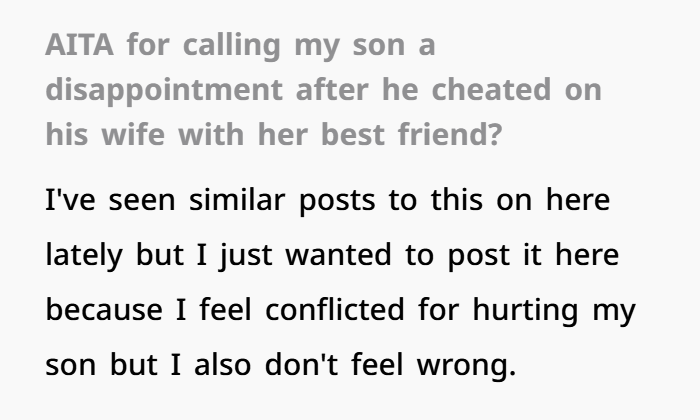
Infidelity in relationships often brings complicated emotions, especially when it involves someone you love deeply. A mother’s heartache takes center stage in this situation, where a mother calls her son a “disappointment” after learning that he cheated on his wife, Isabella, with her best friend. Despite Joseph’s remorse and his attempts to make things right, the mother struggles to reconcile her love for her son with her deep disappointment in his actions. This post reveals the intricate layers of emotions between family, morality, and betrayal.
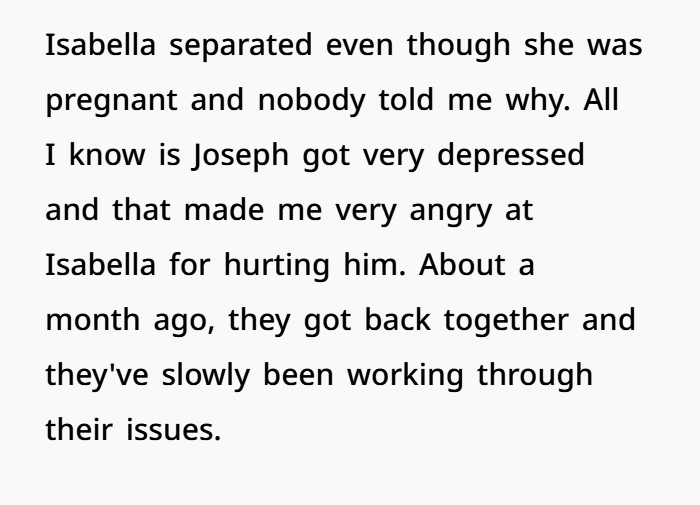
The backstory sets the stage: Joseph, the 25-year-old son, had been married to Isabella, whom his mother adored. After a brief separation, Joseph confessed to the infidelity, which led to a dramatic confrontation with his mother. The mother, feeling betrayed, lashed out and voiced her hurt by calling him a disappointment, which left her conflicted as she questioned if her reaction was justified. Was she wrong for holding her son accountable, or was her anger and disappointment a natural response to his actions?







Infidelity is a deep betrayal in any relationship, and the emotional fallout often goes far beyond the couple involved. For a mother, the heartbreak of seeing her child hurt the person they loved can feel like an added layer of pain. In this case, Joseph’s affair with his wife’s best friend wasn’t just a personal betrayal between him and Isabella — it struck at the heart of a mother’s trust and her understanding of what’s right and wrong in relationships.
When Joseph admitted to his mother that he had cheated, the confession likely shook her to the core. As a mother, she had raised him, loved him, and supported him through tough times. She had always felt a deep connection to Isabella, who she considered a kindred spirit and loved as her own. To learn that her son, someone she had invested so much emotional energy into, had caused such hurt to someone she cared for, understandably triggered a strong reaction.
From a psychological standpoint, betrayal in close relationships often leads to feelings of anger, disbelief, and hurt. In fact, studies show that betrayal trauma can create intense emotional turmoil, especially when a loved one’s actions directly conflict with the values you hold dear. For many mothers, the instinct to protect their child’s partner or family can sometimes cloud the judgment of their own child’s actions, but when that child is the one who caused the pain, it becomes a major ethical dilemma.
The mother’s reaction was intense. She called her son a “disappointment,” a word that clearly struck a nerve with Joseph. While that may seem harsh, it’s important to consider her emotional state. In a lot of family dynamics, a mother’s feelings of betrayal often stem from a desire to uphold values of loyalty, integrity, and respect. She likely saw her son’s actions as a reflection of her parenting — wondering if she had failed him in some way. She had spoiled him and supported him through life’s struggles, and to her, this was a sharp slap in the face. For many mothers, trust in their children’s character is a fundamental aspect of their relationship, and when that trust is violated, it can feel like a profound loss.
The son’s admission of cheating with Isabella’s best friend, though, was a different kind of betrayal. For the mother, it may have been hard to process why her son would have taken such a reckless step, especially when she thought so highly of Isabella. This deepened her sense of disappointment, as it wasn’t just infidelity, but infidelity with someone so close to Isabella. And yet, Joseph’s remorse was genuine. He acknowledged his selfishness, recognized his wrongdoings, and promised to make things right. This remorse showed that Joseph was at least taking responsibility for his actions.
It’s important to remember that people’s reactions to cheating differ significantly. Some believe in offering unconditional support to family members, regardless of their behavior, while others take a firmer stance on upholding moral integrity. The mother’s approach was rooted in a strong moral compass that didn’t excuse cheating. While she admired Isabella’s stance on working through issues rather than resorting to divorce, she likely felt that Joseph had betrayed that same principle of loyalty. For her, this wasn’t just about the marriage; it was about the values she had hoped to instill in her son.
However, calling Joseph a “disappointment” was a sharp critique. When people are deeply hurt, they often say things they don’t fully mean in the heat of the moment. The term “disappointment” can linger in a person’s mind, leading to self-doubt and shame. The words a parent uses toward a child are often more impactful than they realize, and even though the mother was frustrated and hurt, this language may have caused even more emotional harm than she intended. Joseph’s emotional state was fragile, and while his actions were unforgivable in many ways, his journey of atonement was important. He was trying to repair his marriage and earn back the trust he had broken. But his mother, in her own grief, may have lost sight of this in the midst of her anger.
At the same time, though, many people would argue that tough love is sometimes necessary. Holding someone accountable for their actions, especially when those actions hurt others, is an essential part of personal growth. Accountability in relationships is an important life lesson, and Joseph’s mother, by calling him a disappointment, was likely trying to instill a sense of responsibility in him. She didn’t want him to think that cheating could be excused or justified — that’s why she reacted so strongly.
As for the husband’s perspective, it’s possible he saw his wife’s actions as too harsh because of the emotional vulnerability involved. When someone is already feeling low, adding judgment from a loved one can feel like kicking someone when they’re down. While he may have wanted to protect his wife from guilt or shame, his approach shows how people can respond differently to emotional challenges. Some prefer to console, while others want to hold their loved ones accountable for their mistakes.
There’s no one-size-fits-all answer to this situation. The mother’s decision to voice her hurt through anger isn’t uncommon in emotionally charged situations like this, but it’s important to weigh the long-term effects of these words. They might have pushed Joseph further away when what he needed was guidance and support.
Joseph’s actions were selfish, but his efforts to redeem himself — through transparency with Isabella, agreeing to accountability measures like allowing her to track him, and working toward regaining her trust — show his willingness to grow and fix his mistakes. It’s clear that Joseph is in a process of change. What remains to be seen is how his mother will respond in the long term, whether she will embrace his efforts to rebuild his marriage or continue to hold his actions against him.
The Comments Are In






At the end of the day, the most important thing in this situation is communication. The mother may have been deeply hurt, but for Joseph’s sake, they need to move forward with open dialogue and understanding. Her disappointment, though valid, can be channeled into supporting his efforts to become a better person while ensuring he understands the weight of his actions.