
What Is Physical AI and Why Is It Important for the Future of Robotics?
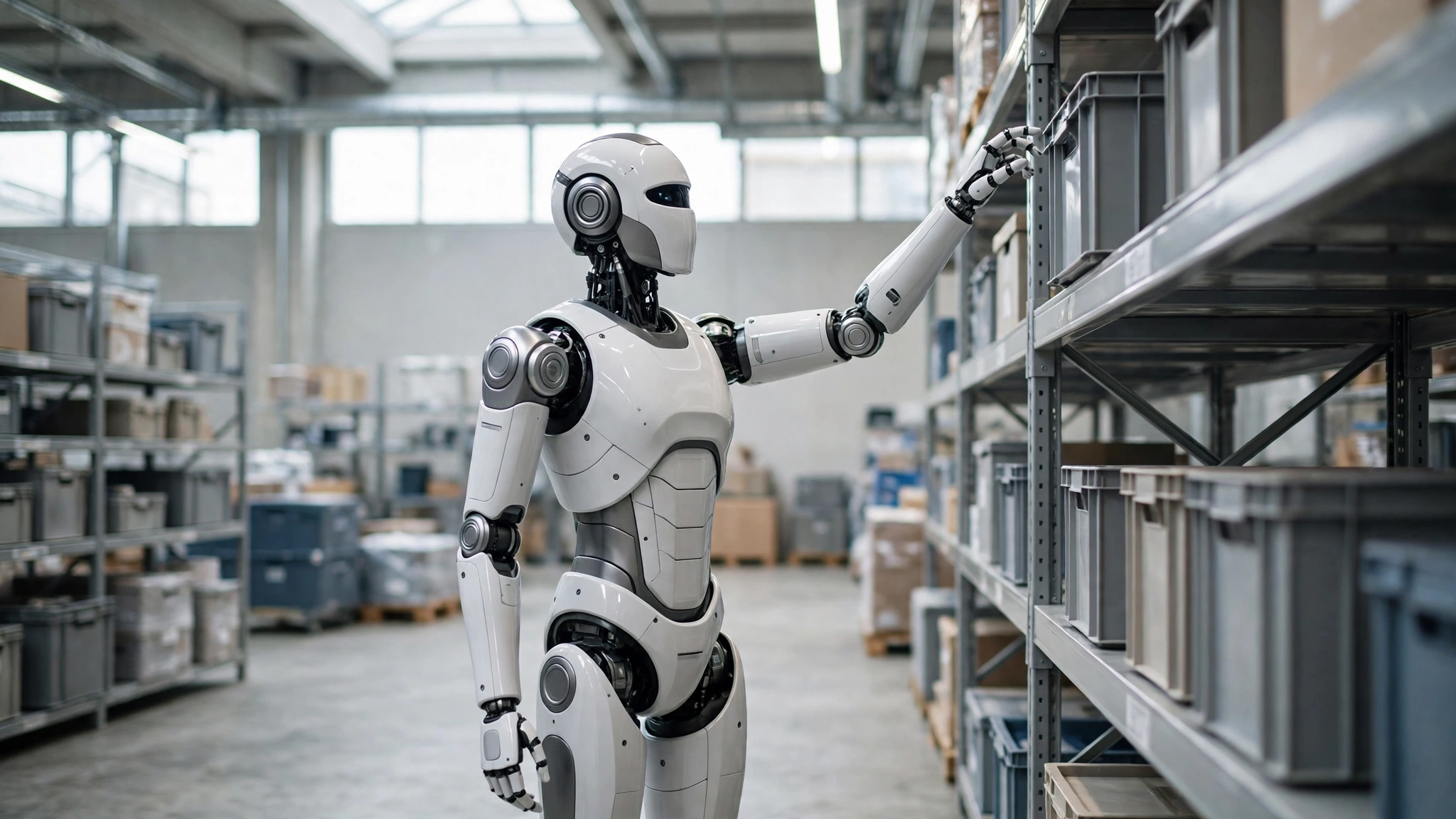
Physical AI is the name for artificial intelligence that lives in the real world, not only on a screen. It is the intelligence inside robots, self-driving cars, and machines that can see, move, and touch things. Where a chatbot answers a question with words, a physical AI system answers with action: it picks up an object, walks across a room, or steers a vehicle through traffic.
The term gained wide attention in January 2025, when NVIDIA chief executive Jensen Huang used it in his keynote at CES in Las Vegas to describe the next stage of AI. His point was simple. AI had learned to understand language and images. The next step was for AI to understand the physical world well enough to act in it. This article explains what physical AI means, how it works, where it is already being used, and why it matters for the future of robotics.
What Physical AI Actually Means
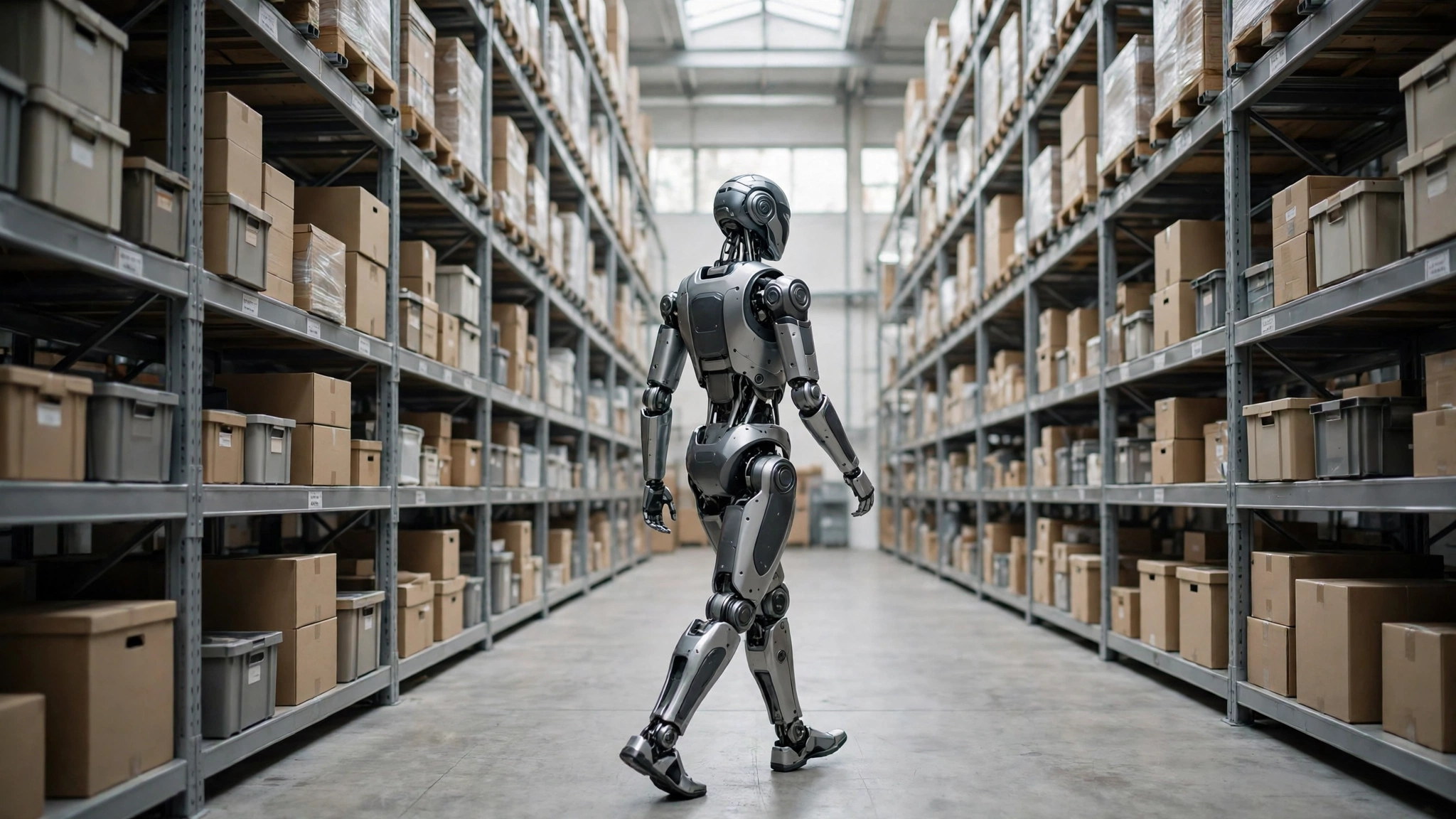
Physical AI refers to AI systems that are embodied in machines that interact with the physical world. The word “embodied” matters here. A language model lives in a data center and deals with text. A physical AI system lives in a body — a robot arm, a humanoid, a drone, or a car — and deals with gravity, friction, weight, and moving people. It must sense its surroundings, decide what to do, and then move safely.
This is harder than it sounds. The physical world is messy and unpredictable. A cup can be full or empty, a floor can be wet, a person can step into the robot’s path without warning. Software that works perfectly in a simulation can fail the first time it meets a real room. Physical AI is the field trying to close that gap between what AI can plan and what a machine can actually do.
It helps to see physical AI as three ideas working together. First, the machine must perceive the world through cameras, depth sensors, and touch. Second, it must reason about what it sees, using AI models trained on huge amounts of data. Third, it must act through motors and grippers, turning a decision into movement. When those three parts work together, a robot can do useful work without constant human control.
The idea is closely related to agentic AI, which we covered in our guide to agentic AI. An AI agent plans and completes multi-step tasks in software. Physical AI takes that same idea and gives it hands, wheels, and a body. The agent does not only send an email or update a spreadsheet. It also walks to a shelf, picks up a box, and puts it where it belongs.
How Physical AI Systems Work
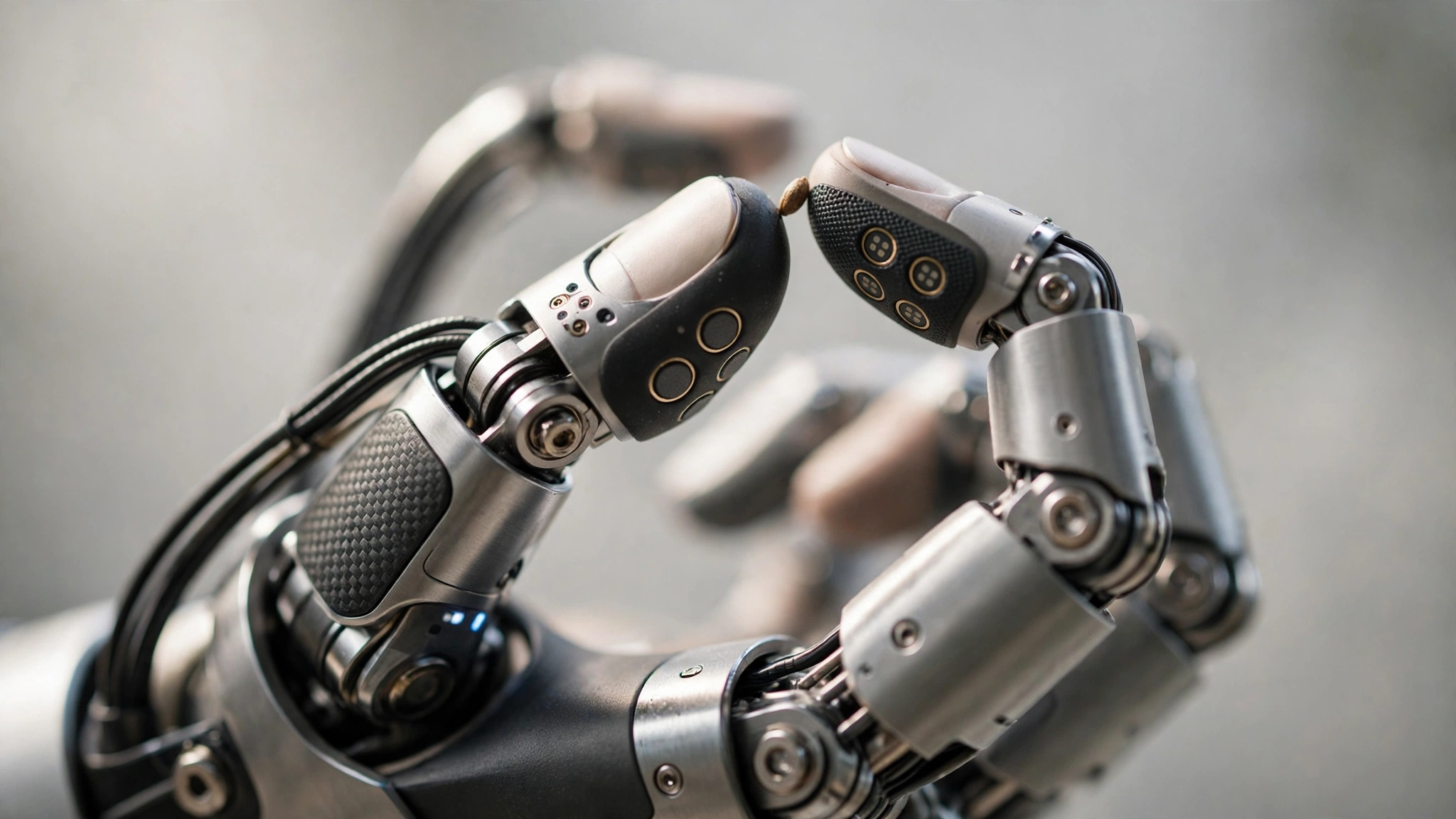
A physical AI system starts with perception. Cameras give it a view of the scene, depth sensors measure distance, and lidar builds a three-dimensional map of the surroundings. Touch sensors in a gripper tell it how firmly it is holding an object. Together, these sensors build a live picture of the world that updates many times per second.
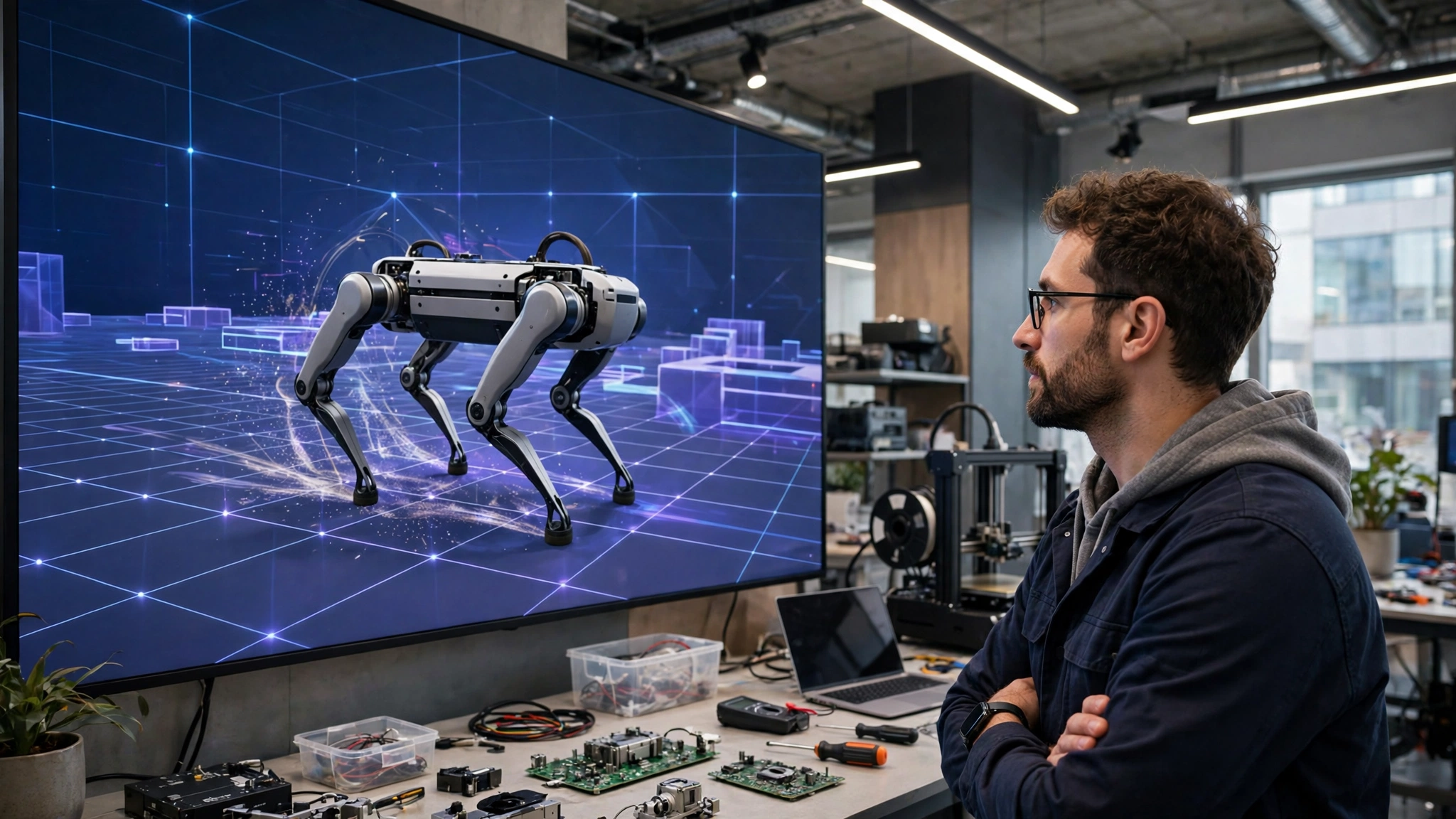
That picture feeds into AI models that have been trained to understand scenes and objects. One important advance is the world model, a model that learns how the physical world behaves. It learns that a ball rolls when pushed, that a glass breaks when dropped, and that a door swings on a hinge. With a world model, a robot can predict what will happen next before it acts. It can also practise in simulation, trying thousands of actions in a virtual world before it tries one in the real world.
Training in simulation is central to the field. In January 2025, NVIDIA introduced Cosmos, a set of world foundation models built to generate realistic video of physical scenes for robot training. The idea is to give robots far more training data than real-world testing could ever provide. A robot can learn to handle a slippery floor or a crowded aisle in a virtual copy of a warehouse, and then carry that learning into the real one.
The final step is control. The AI sends commands to motors, joints, and grippers, and the sensors report back on what actually happened. This feedback loop runs constantly. If a grip slips, the robot tightens it. If a wheel loses traction, the robot slows down. Good control is what separates a robot that looks smart in a video from one that works reliably on a factory floor.
| Building block | What it does | Example |
|---|---|---|
| Perception | Senses the world through cameras and sensors | Cameras, lidar, depth sensors, touch sensors |
| World models | Predicts how objects and scenes behave | NVIDIA Cosmos, simulation in Isaac Sim |
| Planning | Decides the steps to reach a goal | Path planning, grasp planning, task planning |
| Control | Turns decisions into smooth, safe movement | Motor control, balance, force feedback |
The table above shows how the parts of a physical AI system fit together. Perception feeds the world model, the model supports planning, and control turns the plan into movement. A weakness in any one part limits the whole system.
Where Physical AI Is Already Being Used
Humanoid robots are the most visible example. Tesla has been developing Optimus, a general-purpose humanoid meant to handle factory tasks. Figure AI showed its Figure 02 humanoid in 2024, and Boston Dynamics replaced its hydraulic Atlas with a fully electric version in April 2024. These robots are still early in their working lives, but they are already being tested in warehouses and factories, doing simple jobs such as moving boxes and sorting parts.
Warehouses are a natural first home for physical AI. Robots already move shelves, pick items, and sort packages in large fulfilment centers run by companies such as Amazon. The newer systems add more intelligence to that work. Instead of following a fixed path painted on the floor, a robot can see an obstacle, plan a way around it, and keep working. Vision-guided picking, covered in our article on AI vision systems, lets a robot arm find and grasp objects it has never seen before.
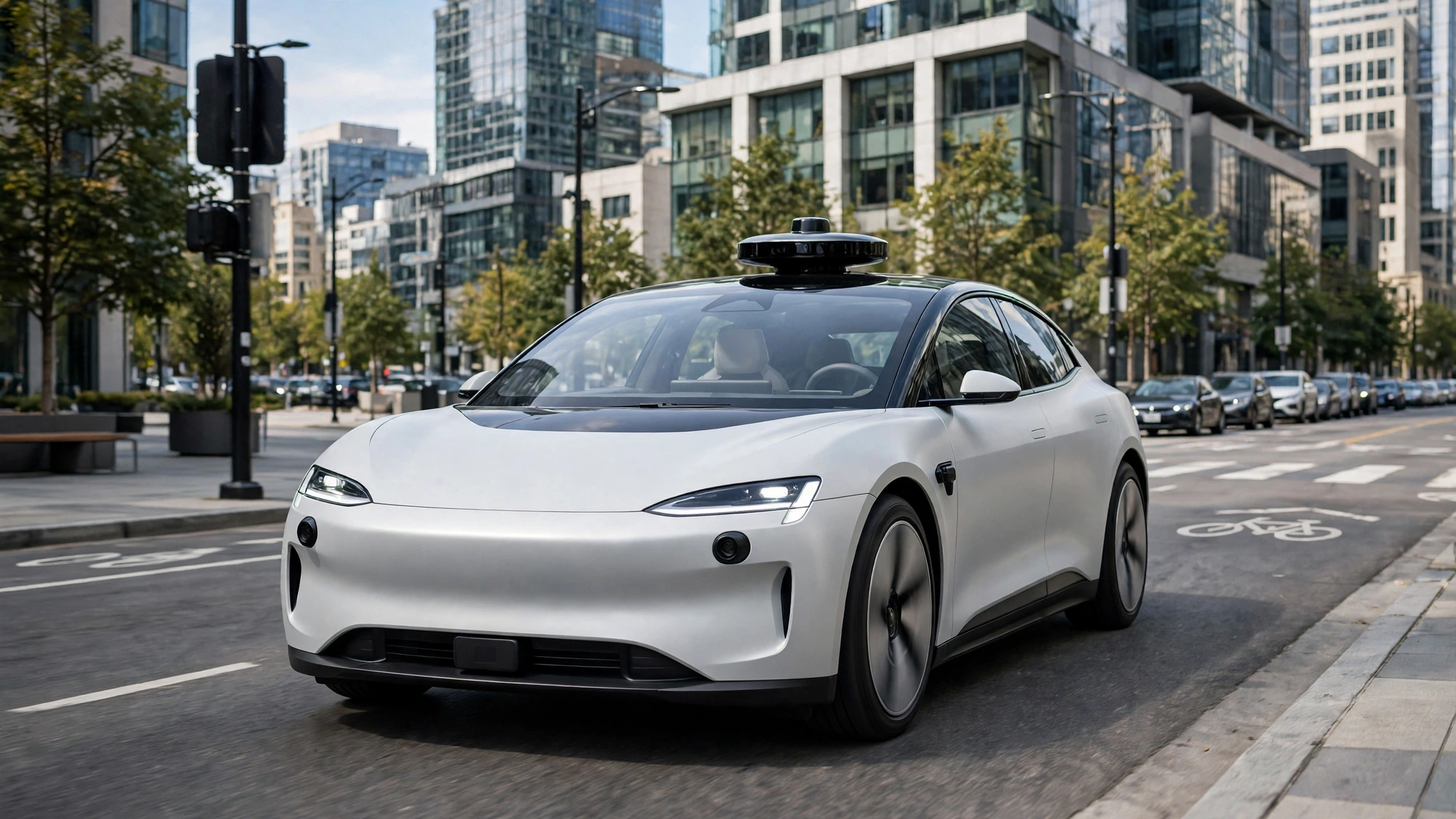
Self-driving vehicles are another form of physical AI. Waymo’s driverless cars have been carrying paying passengers in Phoenix, San Francisco, and Los Angeles, and the company expanded into more cities through 2024. A self-driving car is a robot that must read the road, predict what other drivers will do, and make safe choices in real time. It is one of the hardest physical AI problems, and also one of the most tested.
Healthcare and agriculture are quieter but growing areas. Surgical robots assist doctors with precise movements. Farm robots use cameras to tell crops from weeds and spray only where needed. In each case, the value is the same: a machine that can sense, decide, and act in a world that does not stand still.
Why Physical AI Matters Now
Three things have come together to make this the right moment. First, the AI models got better. The same kind of large model that learned language can now learn from video and sensor data, and that gives robots a much richer understanding of the world. Second, the hardware got cheaper and stronger. Better sensors, faster chips, and lighter motors make capable robots affordable for more companies. Third, simulation got good enough to train robots at scale, so a robot can practise for years of virtual time before it touches a real object.
The stakes are also practical. Many industries face a shortage of workers for physical jobs. Warehouses, farms, and factories all need people for tasks that are repetitive, heavy, or done in difficult conditions. Robots with physical AI will not replace every worker, but they can take on the most repetitive parts of the job and let people focus on work that needs judgment and care.
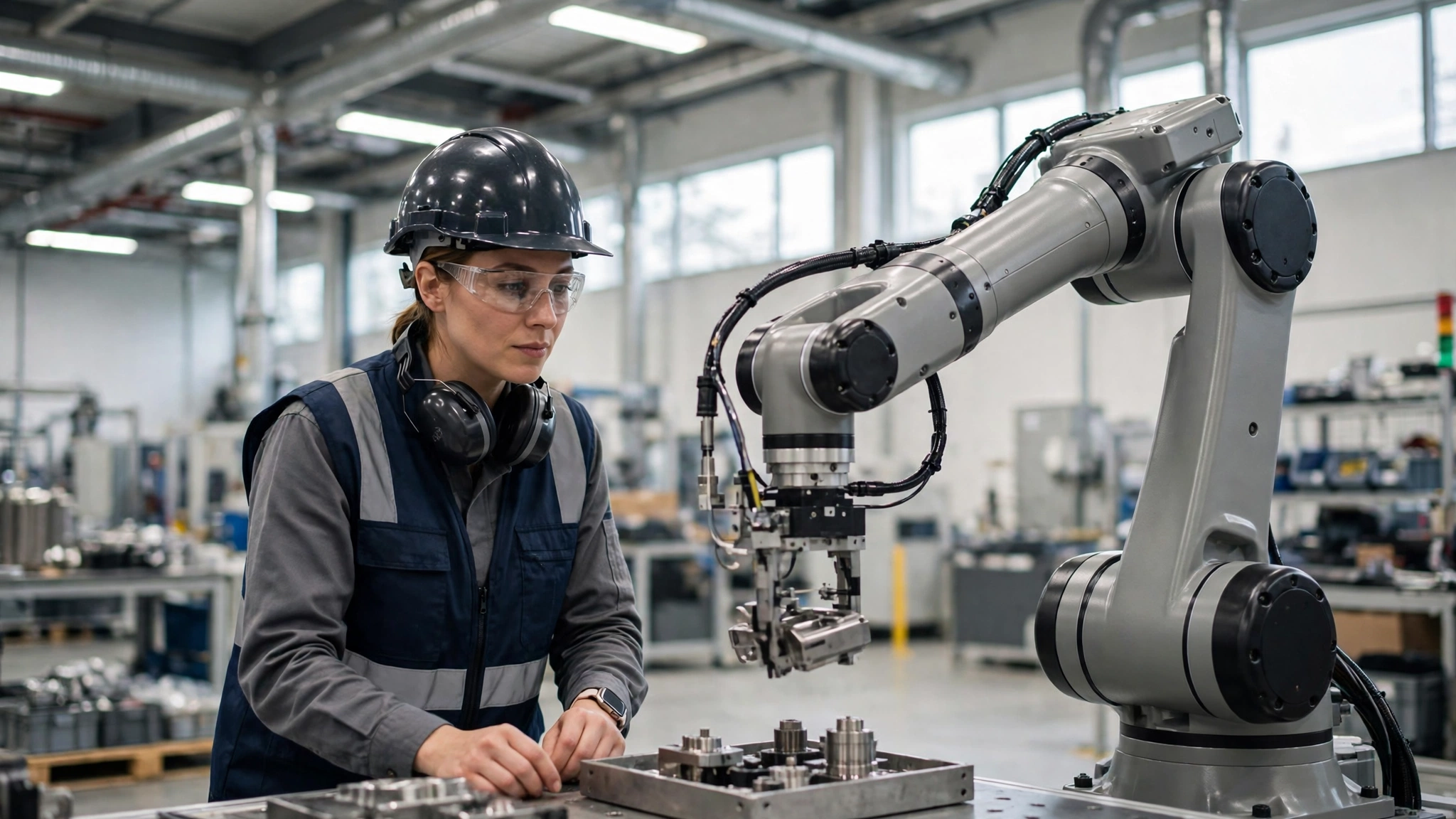
There is a safety angle too. A robot that understands its surroundings can work beside people without cages or barriers. That idea, of robots sharing space with humans, is what collaborative robots are built for, as explained in our guide to collaborative robots. Physical AI makes that cooperation safer and more flexible, because the robot can slow down, stop, or change course when a person comes close.
Challenges and Limits to Keep in Mind
Physical AI is still young, and the gap between a demo and a dependable product is wide. A robot that works well in a test lab can struggle in a real home or warehouse, where lighting changes, floors are uneven, and objects are never in quite the same place twice. Reliability in the real world is the field’s biggest test.
Cost is a real limit. A humanoid robot with advanced sensors and computing is expensive to build and to maintain. For many businesses, the numbers do not yet work for everyday tasks. Prices will fall as production grows, but for now physical AI makes most sense where the task is high volume, dangerous, or hard to staff.
Safety rules are still catching up. A robot that moves among people needs clear standards for how fast it may move, how much force it may use, and what it must do when something goes wrong. Regulators, companies, and researchers are still working out those rules. Until they are settled, many robots work in fenced areas or with a human nearby.
There is also the question of data. Training a physical AI system needs huge amounts of video and sensor data from the real world. Collecting that data takes time, and it raises questions about privacy when robots record video in homes, hospitals, and workplaces. Companies will need clear rules about what their robots record and who can see it.
Practical Tips / Examples / Things to Know
- Start with a single, repeatable task, such as moving boxes between two fixed points, before asking a robot to handle varied work.
- Test a robot in the real space where it will work, not only in a lab, because lighting, floors, and clutter change everything.
- Use simulation to train and test first, so the robot has practised a task thousands of times before it tries it in the real world.
- Keep a human in the loop for new tasks, and let the robot take on more only after it has proved reliable.
- Check the total cost, including maintenance, charging, and software updates, not only the purchase price.
- Set clear safety rules for shared spaces, such as speed limits and stop distances, before a robot works beside people.
- Ask vendors for real performance data from sites like yours, not only demonstration videos.
Common Mistakes / Considerations / What to Avoid
- Expecting a robot to handle every variation of a task on day one, when it has only been trained on a few examples.
- Buying a humanoid robot for a job a simpler machine, such as a wheeled cart, could do better and cheaper.
- Skipping safety planning and assuming the robot will always stop in time on its own.
- Ignoring the cost of maintenance, spare parts, and software updates when budgeting for a robot.
- Training a robot only in simulation and being surprised when it struggles in a real room.
- Collecting video and sensor data without clear rules on privacy and who can access it.
- Treating a demonstration video as proof that a robot is ready for daily work.
Final Thoughts
Physical AI is the step that takes artificial intelligence out of the screen and into the world. The models are better, the hardware is cheaper, and simulation lets robots practise at a scale that was not possible a few years ago. Humanoid robots, self-driving cars, and smart warehouses are the first signs of what this technology can do. The work ahead is less about showing off a clever demo and more about making robots reliable, safe, and affordable in real places. Companies that start with a clear task, test carefully, and keep people in charge of the decisions will be best placed to benefit as physical AI moves from the lab into everyday work.