
How Soft Robotics Could Change Healthcare and Manufacturing
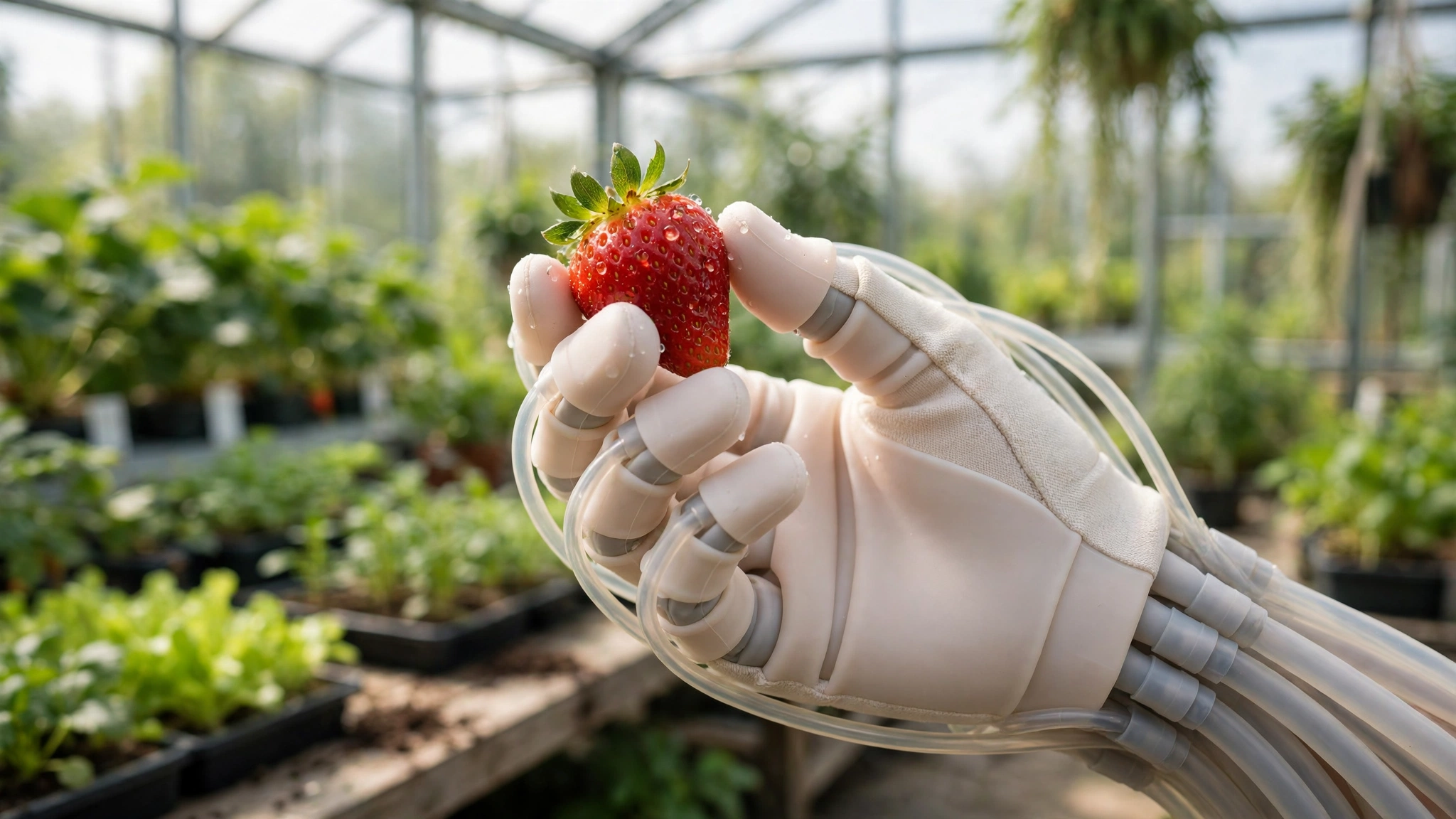
Soft robotics is a field that builds robots from flexible materials instead of rigid metal. Rather than the stiff arms and hard joints of a traditional industrial robot, a soft robot bends, stretches, and squeezes. It can grip a strawberry without bruising it, help a stroke patient move a hand, or slide through the body during surgery.
The idea has grown from a research curiosity into a practical technology. Labs at Harvard, MIT, and other universities have spent the last decade proving that soft materials can do real work. Companies are now putting soft grippers on factory lines and soft gloves in rehabilitation clinics. This article explains how soft robotics works, where it is being used in healthcare and manufacturing, and what still needs to be solved.
What Soft Robotics Actually Is
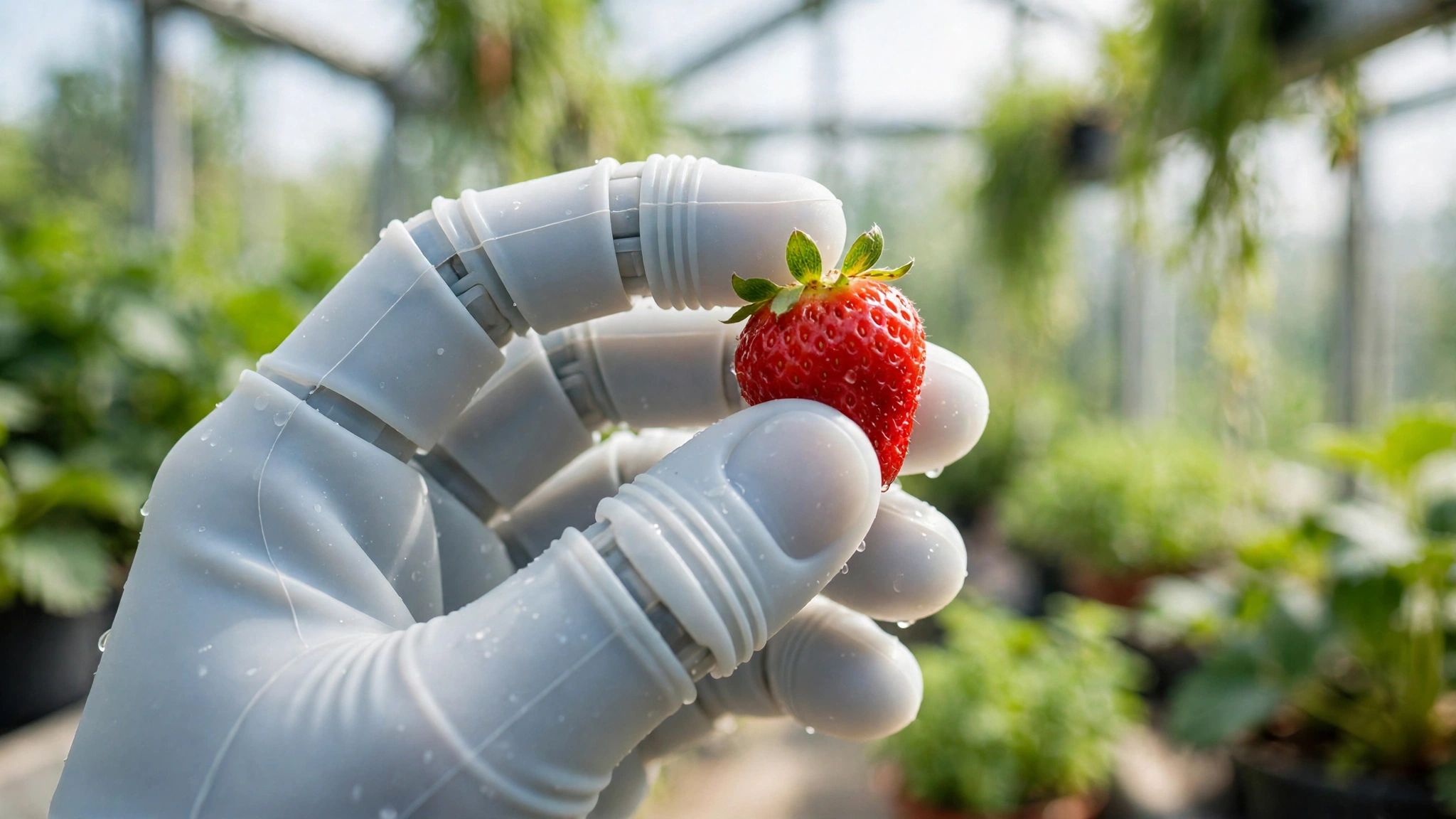
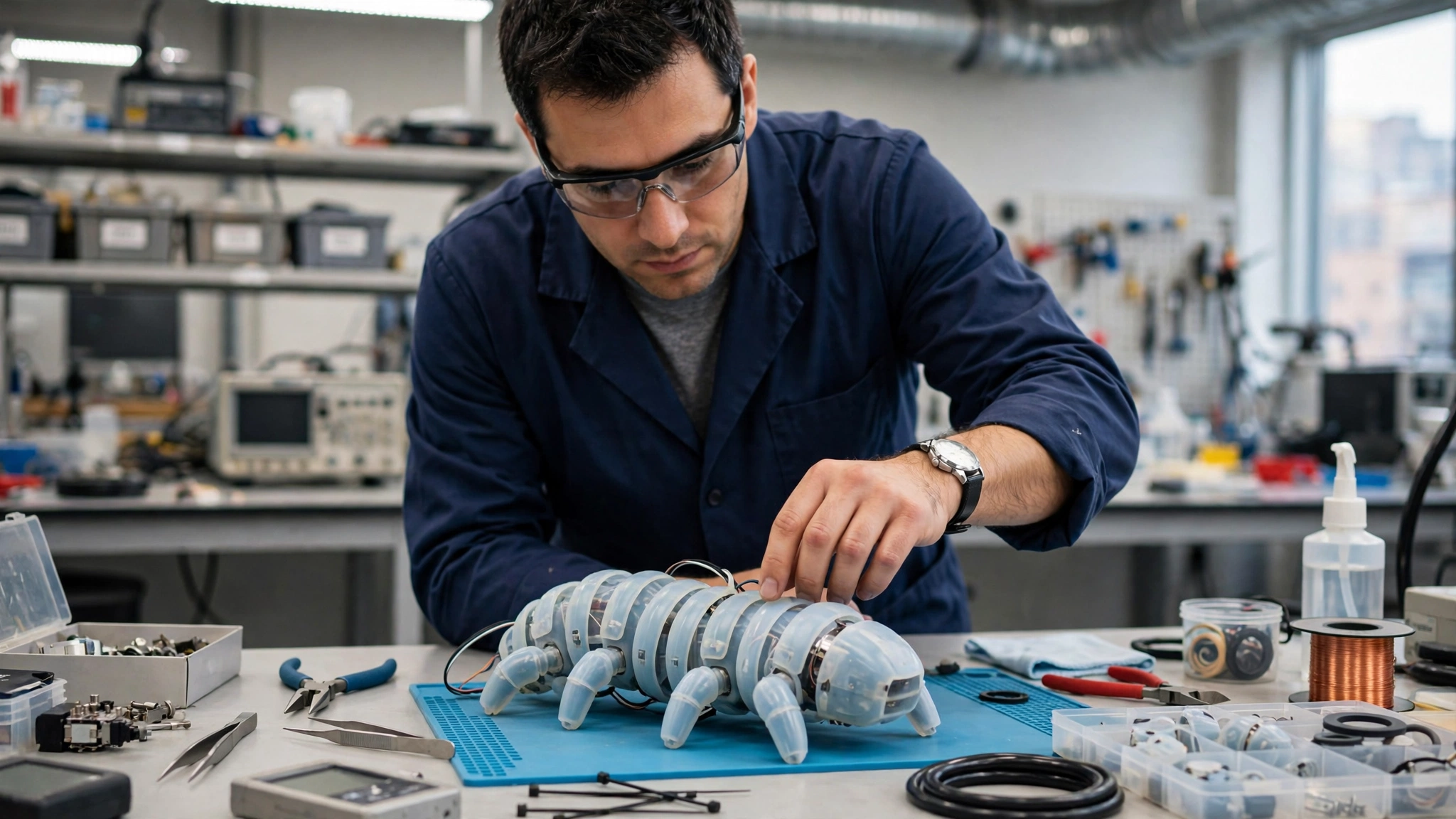
Soft robotics is the design of robots built mainly from soft, flexible materials such as silicone, rubber, and fabric. A traditional robot is made of metal links joined by motors. A soft robot is often made of chambers that fill with air or fluid, and it moves when those chambers inflate and deflate. The result is a machine that behaves more like a muscle than a motor.
The difference shows in how the robot handles contact. A rigid robot needs careful programming to avoid crushing what it touches. A soft robot is naturally gentle, because the material itself gives way. That makes soft robots safer around people and better at handling delicate things, from fruit to human tissue.
Soft robots are part of the wider move toward machines that work safely beside people. That idea is shared with collaborative robots, covered in our guide to collaborative robots, and with the embodied machines described in our article on physical AI. The difference is the material: soft robots do not only sense and decide safely, they are built to be safe by design.
How Soft Robots Work
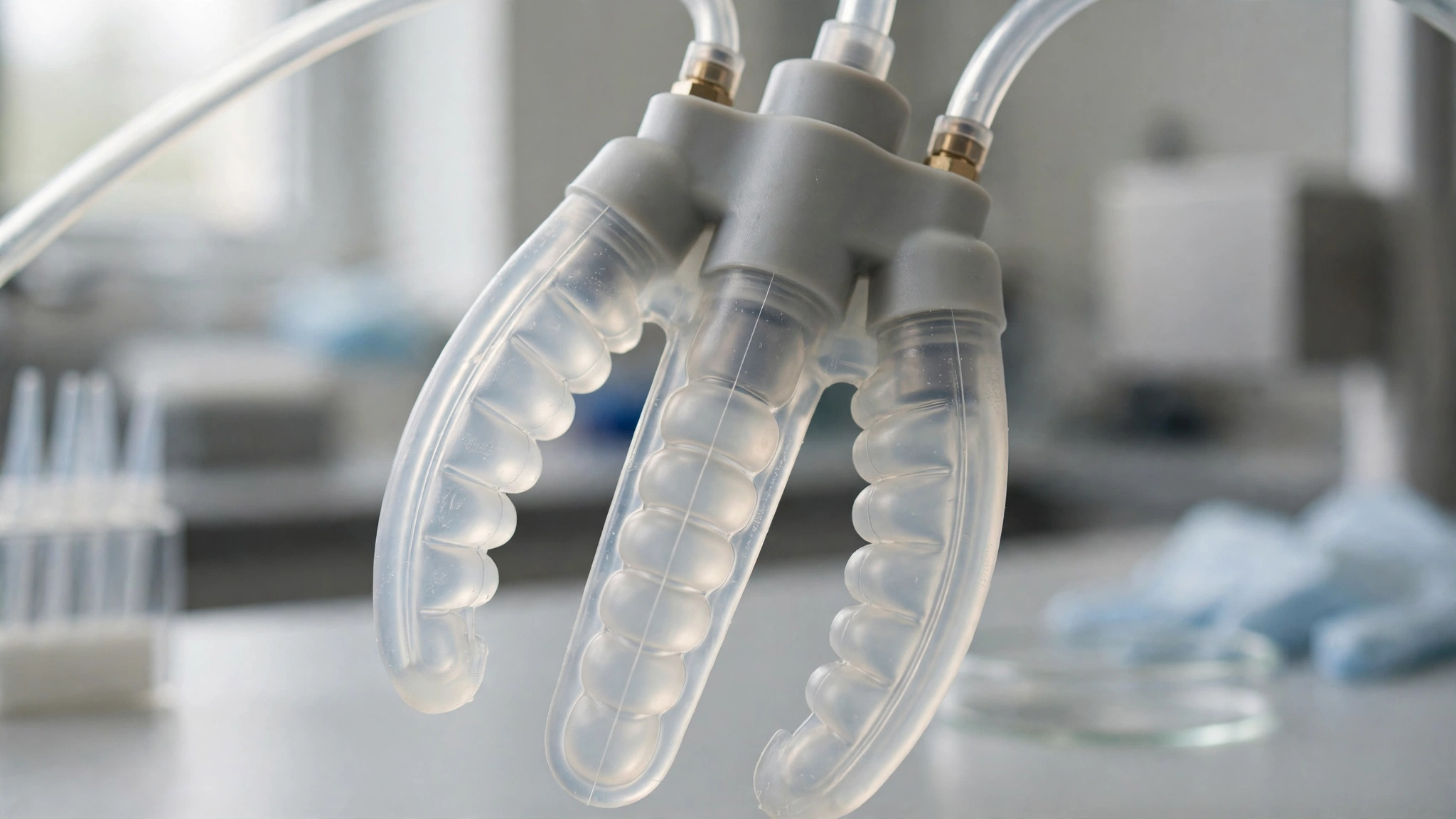
Most soft robots are powered by air. A network of hollow chambers inside a silicone body fills with compressed air, and the chambers expand in a controlled way. By inflating one side and not the other, the robot bends. By inflating in sequence, it can crawl, grip, or walk. The control is simple in principle, but getting smooth, accurate movement takes careful design and good sensors.
Some soft robots use other methods. Shape-memory alloys change shape when heated. Electroactive polymers bend when a voltage is applied. Hydrogels, materials that hold a lot of water, can swell and shrink in response to temperature or acidity. Researchers are still exploring which of these methods works best for each job, and many soft robots combine more than one.
Sensing is a challenge. A rigid robot knows where its arm is because its joints have encoders that measure angle. A soft robot bends everywhere at once, so measuring its shape is harder. Researchers have built stretchable sensors into the silicone itself, using conductive materials that change resistance as they stretch. Cameras and AI models are also used to track the robot’s shape from the outside, a task that draws on the same vision systems described in our article on AI vision systems.
Control is the third piece. Because a soft body has no fixed joints, the usual maths of robot control does not apply. Researchers use models that treat the robot as a continuous curve, and they are increasingly using machine learning to learn control from experience. The robot tries a movement, measures the result, and adjusts. Over many trials, it learns to grip, crawl, or walk reliably.
| Soft robot type | How it moves | Best suited for |
|---|---|---|
| Pneumatic soft gripper | Air chambers inflate to close fingers | Picking fruit, food handling, fragile parts |
| Soft exosuit | Fabric and cables assist the wearer’s muscles | Rehabilitation, walking assistance |
| Soft surgical tool | Flexible tube steered by cables or air | Minimally invasive surgery, endoscopy |
| Crawling soft robot | Sequential inflation moves the body | Inspection in tight spaces, search and rescue |
The table above shows the main kinds of soft robots and what each one is best at. Pneumatic grippers lead in factories, while exosuits and surgical tools lead in healthcare.

Soft Robotics in Healthcare
Rehabilitation is the most advanced medical use. A stroke patient who has lost strength in a hand can wear a soft robotic glove that helps the fingers open and close. The glove is light, comfortable, and safe to wear for long sessions, which matters because recovery needs many repetitions. Harvard’s Wyss Institute has worked on soft gloves and soft exosuits for years, and similar devices are now being tested in clinics.
Exosuits are another area. A soft exosuit is worn like clothing, with cables and fabric that assist the wearer’s muscles. It can help a person walk further or lift with less strain. Unlike a rigid exoskeleton, it is light and flexible, so the wearer can put it on and take it off easily. These suits are being tested for people with mobility problems and for workers who lift heavy loads all day.
Surgery is a longer-term use. A soft robotic tool can bend and snake through the body, reaching places a rigid instrument cannot. That could make some operations less invasive, with smaller cuts and faster recovery. Researchers have built soft endoscopes and soft catheters that move gently through blood vessels. These devices are still mostly in the lab, but early tests show they can navigate delicate tissue more safely than rigid tools.
Prosthetics are also changing. A soft prosthetic hand can grip a cup or a key with a gentle, adaptive hold, and it can be made to fit the wearer’s body more comfortably than a rigid one. The cost is lower too, because soft parts can be molded rather than machined. For people who need a prosthetic in places where money is short, that lower cost matters.
Soft Robotics in Manufacturing
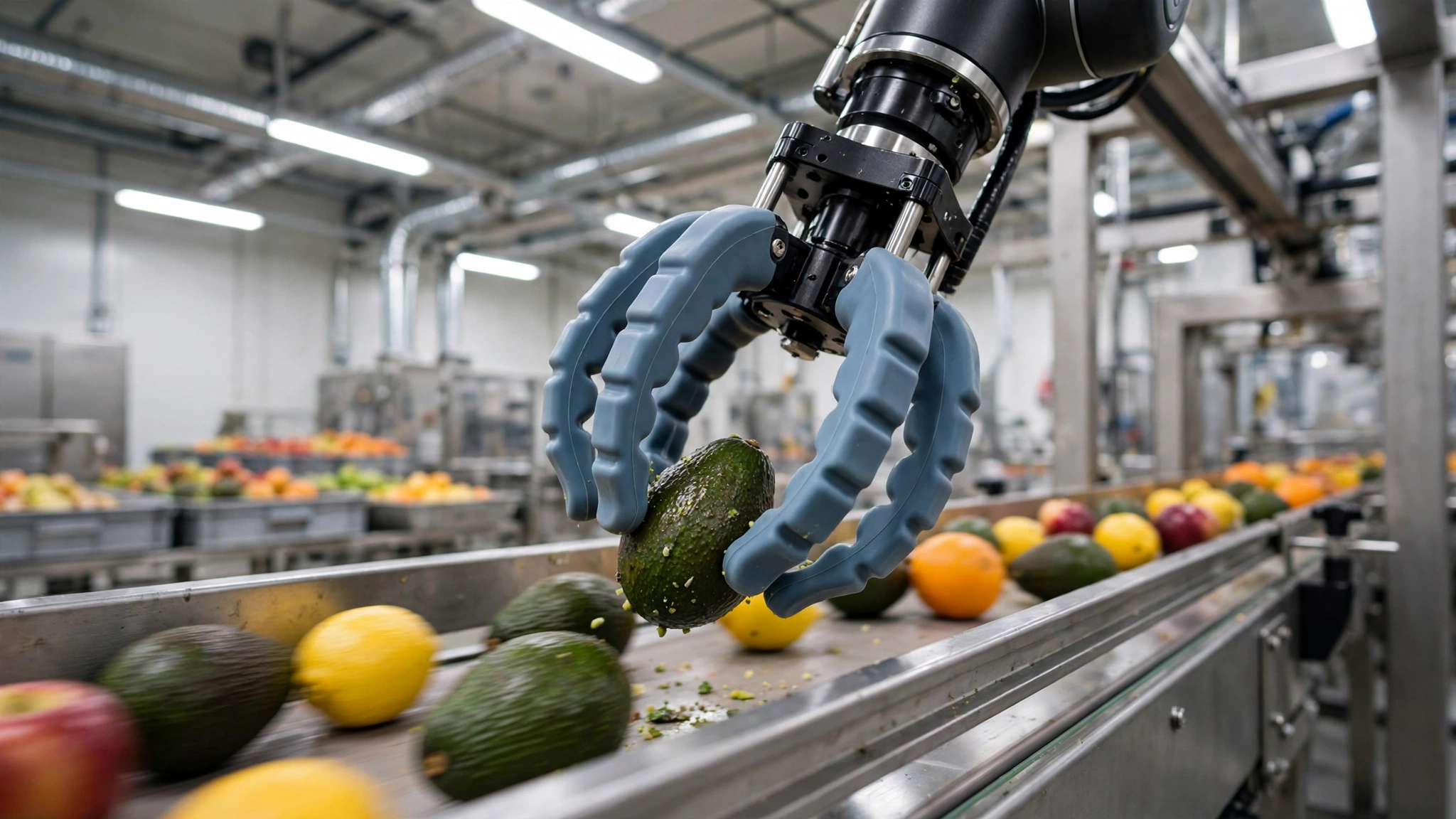
Food handling is the clearest factory use. A rigid gripper can crush a strawberry or bruise a peach. A soft gripper, made of silicone fingers that wrap around the fruit, can pick it up without damage. Companies such as Soft Robotics Inc. have sold soft grippers for food packing, where the same gripper must handle items of many shapes and sizes. The gripper adapts to each item instead of needing a new tool for every product.
Electronics assembly is another use. Soft grippers can handle fragile parts such as glass screens and thin circuit boards without scratching or cracking them. The gripper’s soft touch removes the need for precise force control, which makes the system simpler and cheaper to run.
Warehouses and logistics are a growing area. A soft gripper can pick up a bag, a box, or a bottle with the same tool, which suits warehouses where the items change all day. Combined with vision systems, a soft gripper can find an item on a shelf, judge its shape, and pick it up without a human telling it exactly where to grab.
Inspection and maintenance are more specialised uses. A soft robot can crawl through a pipe, a vent, or a tight space where a rigid robot cannot fit. It can carry a camera and report back on cracks or blockages. This is useful in power plants, aircraft, and buildings, where the spaces are small and the cost of a failure is high.
Challenges and Limits to Keep in Mind
Strength is the main limit. A soft robot cannot lift heavy loads the way a steel arm can. The materials are weak by design, and that limits what soft robots can do in heavy industry. Researchers are working on stronger soft materials and on hybrid designs that combine a soft gripper with a rigid arm, so the system gets the best of both.
Precision is another challenge. A soft body bends in ways that are hard to predict, so a soft robot is less accurate than a rigid one. For jobs that need millimetre accuracy, such as placing a chip on a board, a soft robot may not yet be the right tool. Better sensors and better control models are closing this gap, but it is not closed yet.
Durability is a concern too. Silicone and rubber wear out, tear, and degrade over time, especially in hot or dirty environments. A soft gripper in a factory may need replacing more often than a metal one. The cost of replacement has to be weighed against the savings from gentler handling.
Finally, most soft robots are still built by hand in a lab. There is no standard way to mass-produce them, and no standard control software that works for every design. Until the field settles on common parts and methods, each soft robot is a custom job, and that keeps prices high and progress slow.
Practical Tips / Examples / Things to Know
- Start with a task where gentleness matters, such as handling food or helping a patient, because that is where soft robots beat rigid ones.
- Test a soft gripper on your real products, not only on test objects, because shape and surface matter.
- Combine a soft gripper with a rigid arm if you need both reach and a gentle touch.
- Plan for replacement parts, because soft materials wear out faster than metal.
- Work with a clinician when you test a soft device on patients, and follow the medical rules for your country.
- Use vision and sensing to guide a soft robot, since its shape is hard to predict from motors alone.
- Try a soft exosuit in a short trial first, and measure whether it actually reduces strain before you buy more.
Common Mistakes / Considerations / What to Avoid
- Choosing a soft robot for a heavy lifting job it cannot do, when a rigid robot would be better.
- Expecting millimetre precision from a soft body that bends in many directions.
- Ignoring wear and tear, and being surprised when a soft gripper tears after weeks of use.
- Using a soft robot in a hot or dirty environment without checking whether the material can handle it.
- Treating a soft rehabilitation device as a replacement for a therapist, rather than a tool the therapist uses.
- Skipping safety and medical approval for a soft device that will be used on patients.
- Buying a custom soft robot without a plan for maintenance, spare parts, and software updates.
Final Thoughts
Soft robotics is still young, but it has already found jobs that rigid robots cannot do. In healthcare, soft gloves and exosuits are helping patients move again. In manufacturing, soft grippers are handling food and fragile parts without damage. The limits are real: soft robots are weaker, less precise, and shorter-lived than metal ones. But the direction is clear. As materials get stronger, sensors get better, and designs become standard, soft robots will move from labs and trials into more clinics and factories. The future of robotics is not only harder and faster. It is also softer, and that softness is what lets robots work safely with people and with the delicate things people care about.