Stage Kiss or Too Far? The Night a “Performance” Turned Personal
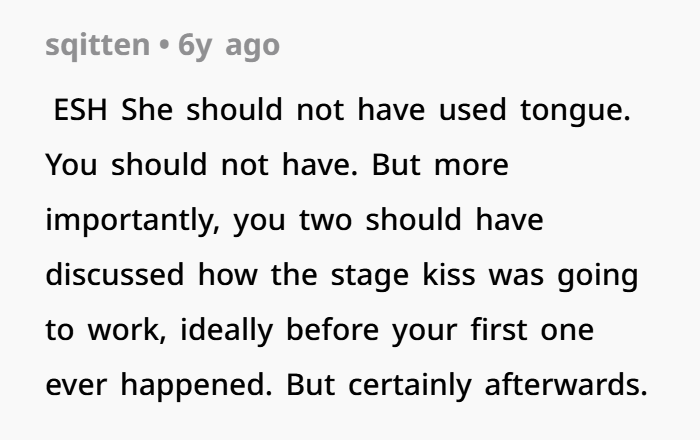
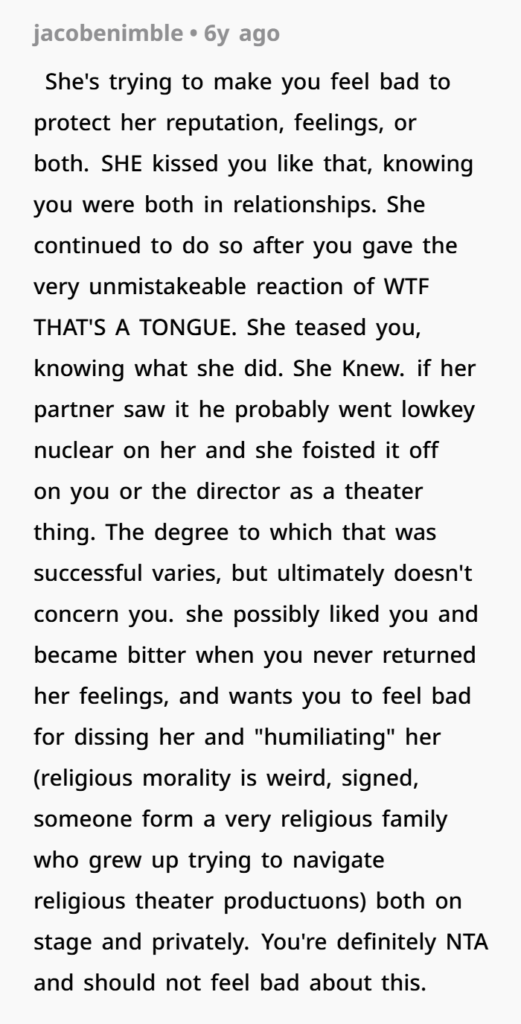
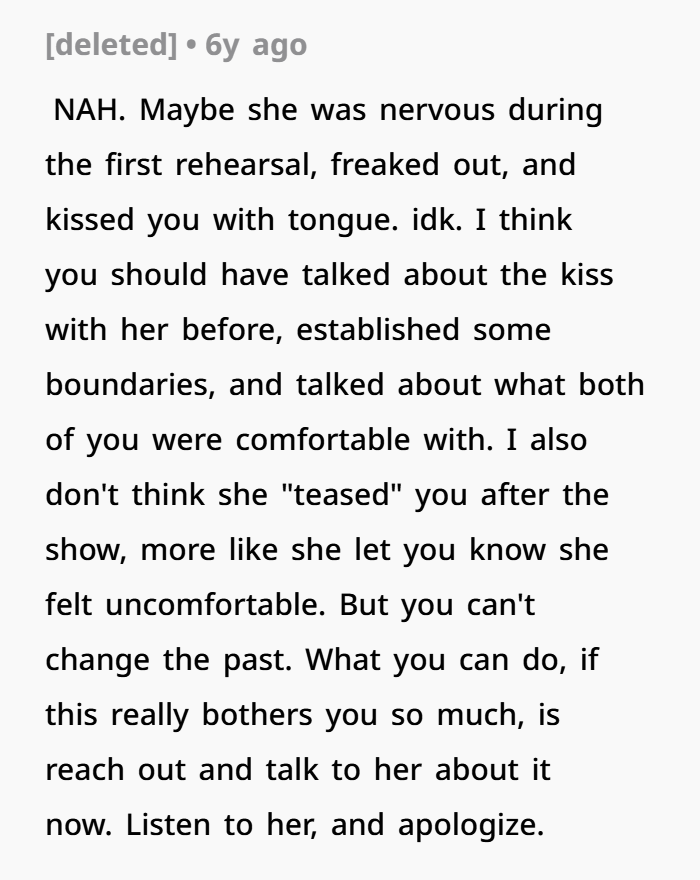
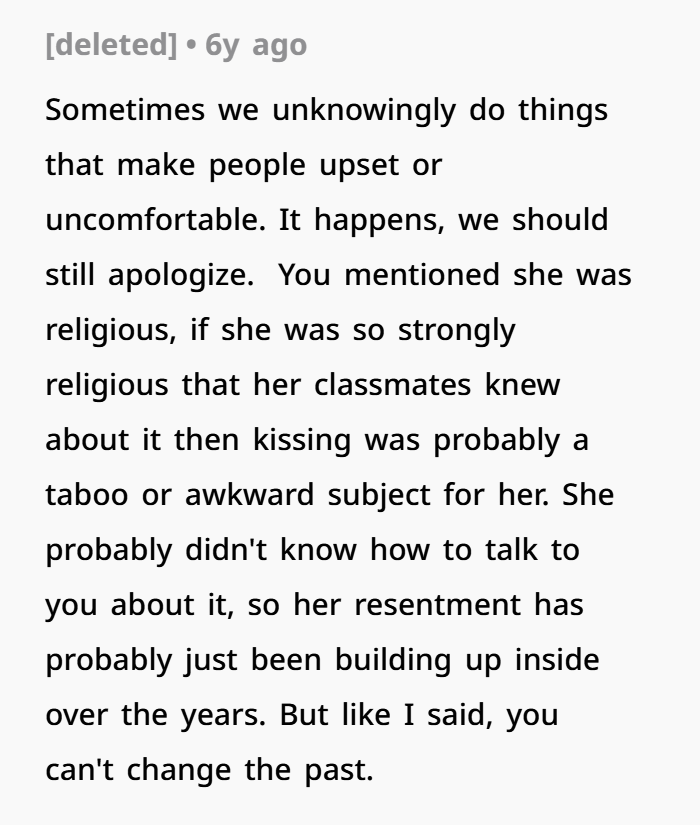
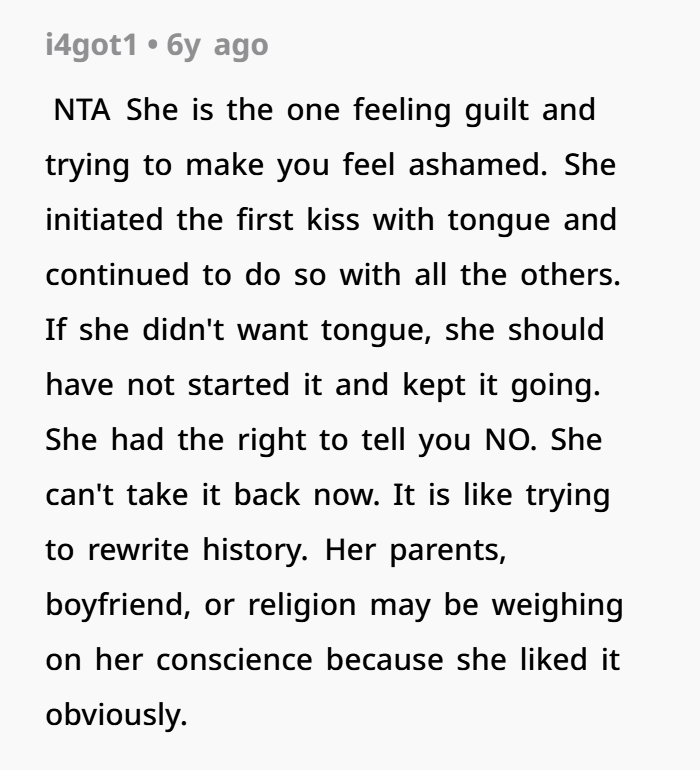
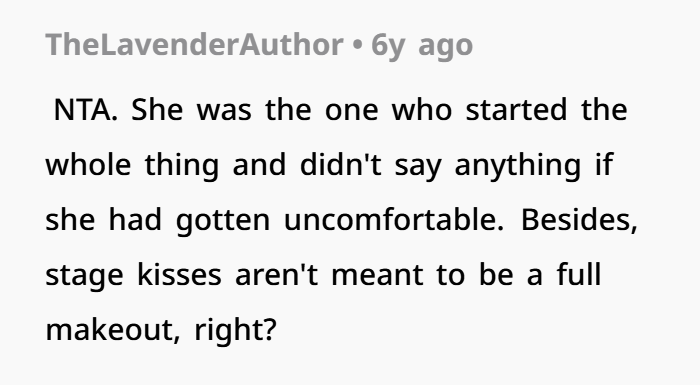
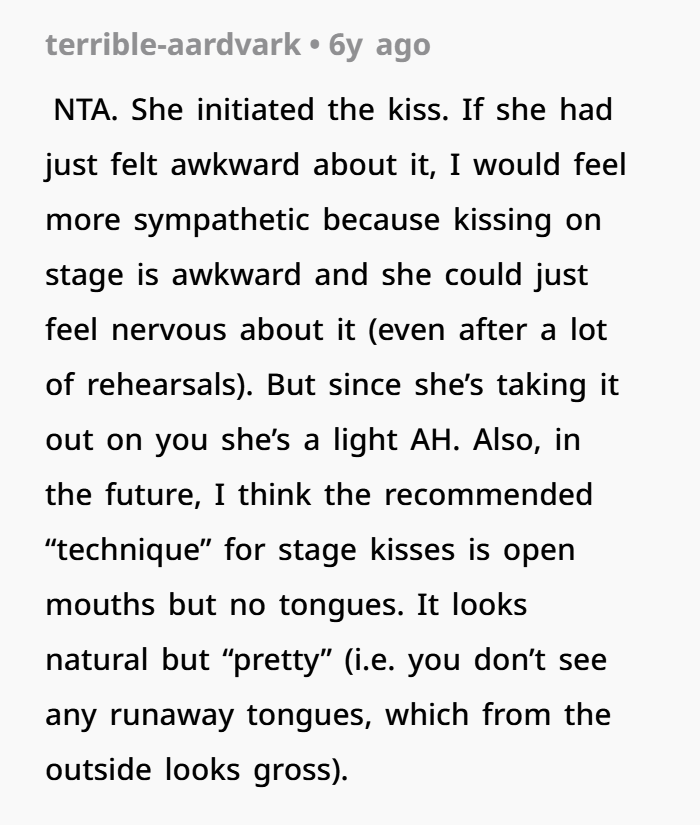
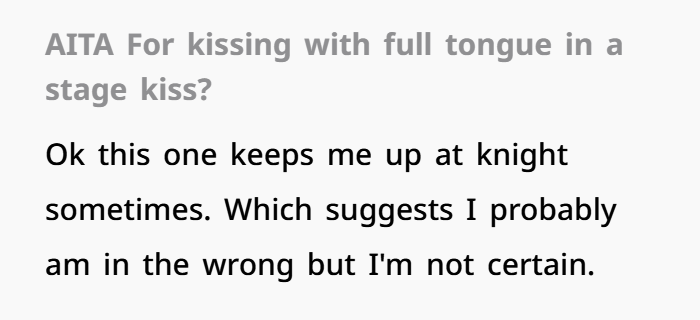
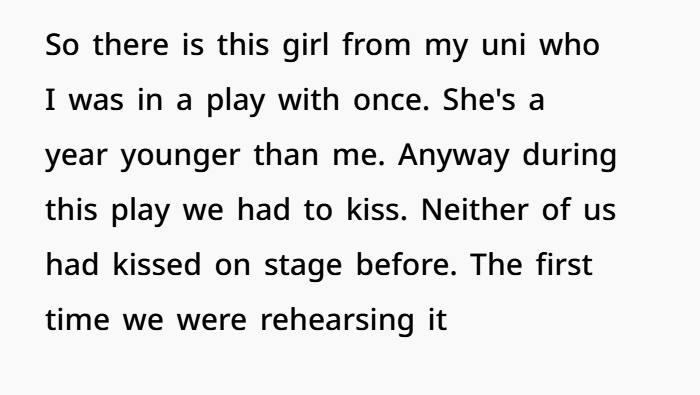
What started as a normal university play—something that should’ve just been another student theatre experience—turned into a situation that still sticks with him years later. The script required a kiss, which isn’t unusual in performing arts or stage acting. But neither of them had real experience with stage intimacy or how to handle it professionally. When they first rehearsed, he hesitated. He wasn’t sure how far to go or what was expected. But before he could even process it, she leaned in and initiated a much more intense kiss than expected. It caught him off guard, but in that moment, he just followed her lead. The director approved it, and from there, it became part of the performance. Rehearsals, live shows, same level of intensity every time. No discussion, no boundaries set—just treated like standard theatre practice.
Then things shifted.
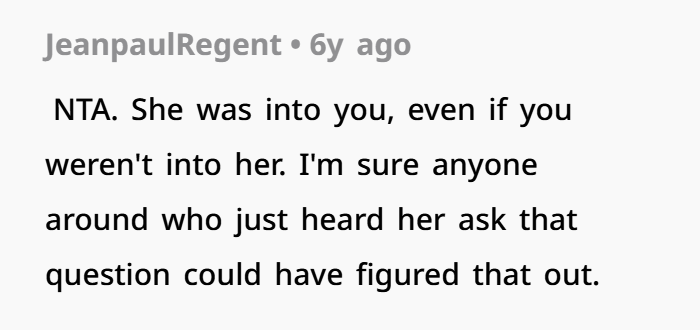
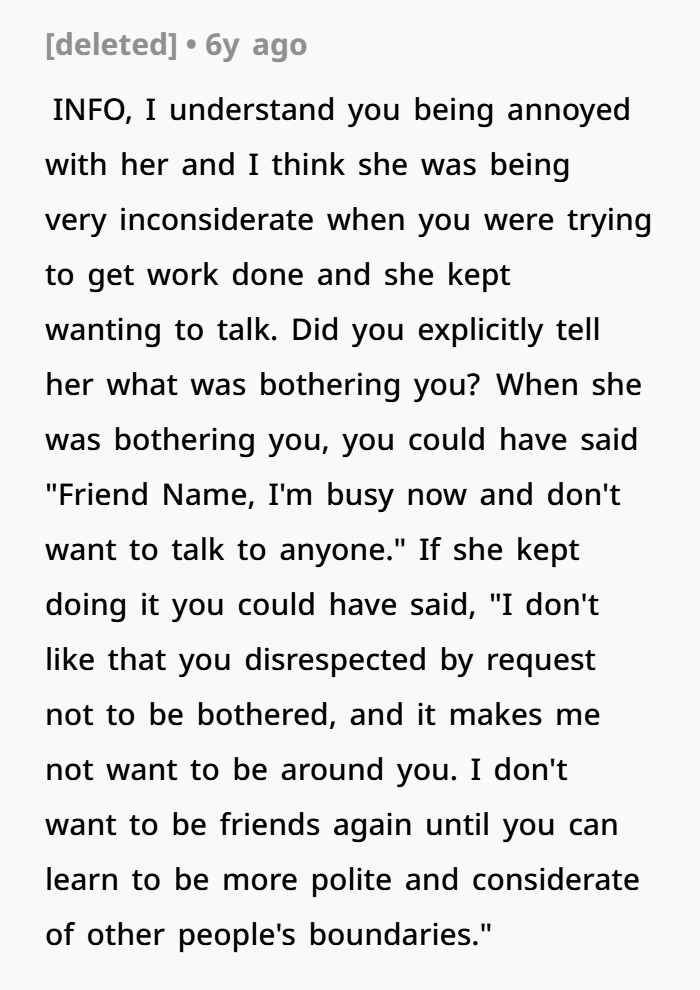
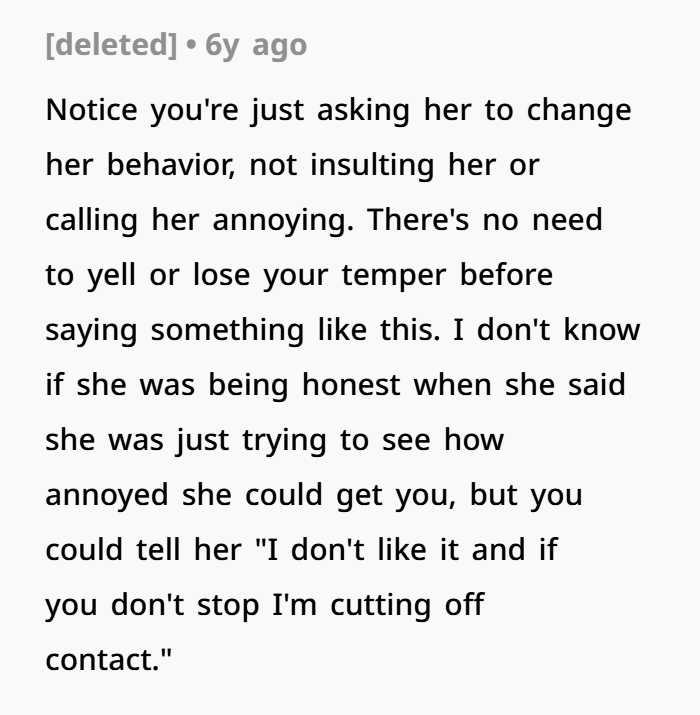
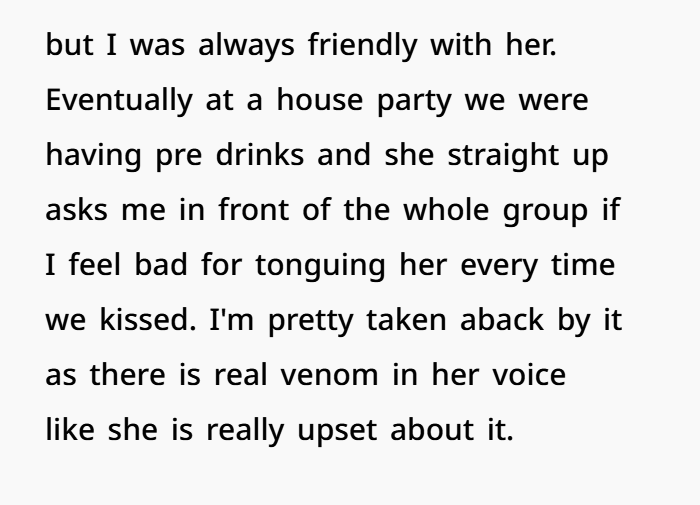
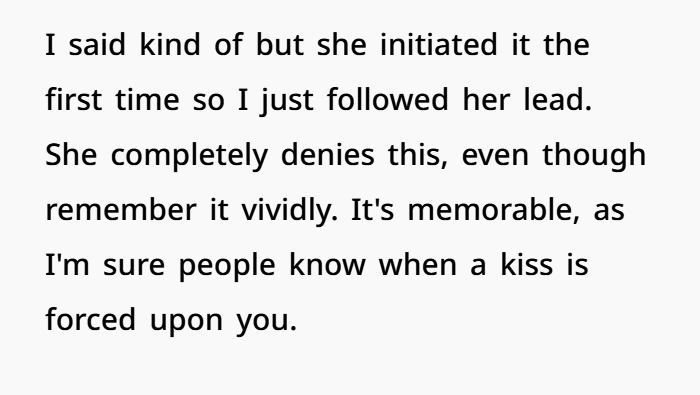
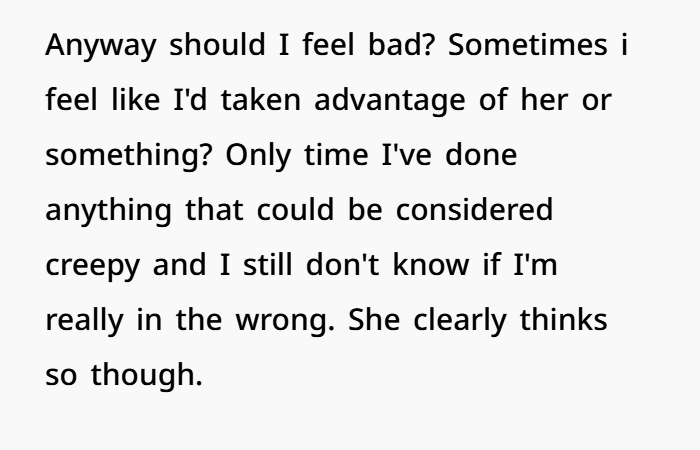
A comment at an afterparty hinted that maybe she wasn’t fully comfortable, even though nothing had been said before. Over time, that small signal turned into something bigger. Years later, it escalated into a public confrontation. At a party, she accused him of crossing boundaries, making it sound like he had pushed things too far. What makes this more confusing is the memory gap. He clearly remembers her initiating that first moment, while she completely denies it. Now he’s stuck in this gray area—between intent and perception. Wondering if he misunderstood the situation or if this is a case of miscommunication that slowly turned into resentment and emotional tension over time.

This situation? It lives in that gray space where things aren’t black and white. Consent, memory, perception—they’re all mixed together. And that’s exactly why it sticks in your head. Because you can’t neatly label it as right or wrong. It’s one of those situations that feels unresolved no matter how much you think about it.
Let’s slow it down and look at it properly.
Context is everything here. This wasn’t a random kiss or some dating situation gone wrong. It was part of a stage performance. In theatre, especially student-level productions, physical scenes are often handled without clear rules. No formal consent guidelines. No trained intimacy coordinators like you’d see in professional acting environments. It’s usually just people navigating it in real time.
And yeah… that can get messy.
Because when there’s no structure, people rely on assumptions.
From your perspective, you hesitated first. That matters. It shows you weren’t trying to push boundaries. You were unsure, careful. Then she initiated something more intense. In that moment, it makes sense that you’d take that as the standard. Like, okay—this is what’s expected here. And when it kept repeating, with no complaints, it just confirmed that belief.
That’s how most people would react in that situation.
But here’s where it gets complicated—consent isn’t always clearly expressed, and it can change over time.
Studies in social psychology and behavioral science show that people often go along with things under subtle pressure. Especially in group environments like theatre. There’s an unspoken pressure to not disrupt, not question, not make things awkward. So even if someone feels unsure, they might stay quiet.
That’s known as compliance under social pressure.
So one possible explanation? She acted in the moment without fully thinking it through. Later, she might’ve felt uncomfortable but didn’t address it. And over time, that unresolved feeling turned into something bigger—frustration, confusion, maybe even blame.
Not saying that’s exactly what happened. But it’s a very real pattern in situations like this.
Now layer in memory.
It’s reconstructive, meaning your brain fills in gaps and reshapes things over time. There’s actual research in cognitive psychology showing that when people feel uncomfortable about a past experience, their memory can shift to match those emotions. So what they remember feels real to them, even if it’s different from what actually happened.
So when she says she didn’t initiate the kiss, it doesn’t have to be intentional deception. She might truly believe that’s how it happened.
From her perspective, it might feel like:
“I got pulled into something that went too far, and I didn’t know how to stop it.”
From your perspective, it’s:
“She started it, I followed her lead, and it became normal for both of us.”
Both perspectives can feel completely true at the same time. That’s the tricky part. That’s why it feels so unresolved.
Now let’s talk about how she handled it.
Calling you out publicly, with anger and intensity—that’s not a fair or emotionally mature way to deal with something like this. In healthy communication dynamics, especially around sensitive issues like consent and boundaries, these conversations should happen privately. Public confrontation usually means one thing—there’s been a build-up of emotions over time. It’s not about solving the issue anymore. It’s about releasing frustration.
It also suggests this has been sitting with her for a long time.
But here’s the key question you’re really asking:
Did you do something wrong?
Based on what you’ve described—no clear.
You didn’t initiate the escalation.
You followed an established pattern.
There was no objection at the time.
And the behavior was repeated consistently.
That doesn’t align with intentional wrongdoing.
However—and this is important—you’re brushing up against something else: impact vs intent.
Even if your intent was completely neutral (just doing the scene properly), the impact on her might have been different. And that’s where the discomfort you’re feeling is coming from.
It’s not guilt in the sense of “I did something bad.”
It’s more like:
“What if I was part of something that didn’t feel okay to her, even if I didn’t realize it?”
That’s actually a pretty human and emotionally aware reaction.
But you also need to be careful not to take on full responsibility for a shared situation.
Because this wasn’t one-sided.
She had agency.
She made choices.
She didn’t communicate discomfort at the time.
In healthy interactions—especially ones involving physical contact—both people share responsibility for setting and communicating boundaries.
Now, could this have been handled better back then?
Yeah, probably.
Ideally, there would’ve been a quick conversation like:
“Hey, how do you want to play the kiss? Keep it light or go more realistic?”
That small check-in—just pausing and asking—can prevent a lot of this. You’ll even see it now in consent workshops, therapy discussions, and professional stage guidelines. But in real life, especially when you’re younger and still figuring things out, people don’t always think like that. You’re just reacting in the moment.
So now the real question—what do you do with this?
You don’t need to carry this as some kind of personal failure. Like you did something predatory or took advantage of someone. There’s nothing in your story that strongly supports that. This wasn’t manipulation. It was unclear communication in a shared space.
But if it’s still bothering you—and yeah, stuff like this can linger for years—there’s a balanced way to process it.
You can hold space for her experience… without dismissing your own reality.
If you ever get the chance to address it, it can be as simple as:
“I remember it differently, but if it made you uncomfortable at any point, that wasn’t my intention.”
That kind of response shows emotional intelligence. It acknowledges impact, without collapsing into unnecessary self-blame. It’s actually something you’ll hear in therapy and conflict resolution strategies—own the outcome, not imagined guilt.
Because honestly, this situation isn’t black and white.
No clear villain. No clear victim in the traditional sense.
It’s what happens when communication is missing in a moment where it really matters. And those moments? They stick. Not because something terrible happened—but because no one stopped to check if everything was actually okay.
The Reactions Are In