
How Robotic Exoskeletons Could Help People With Physical Tasks
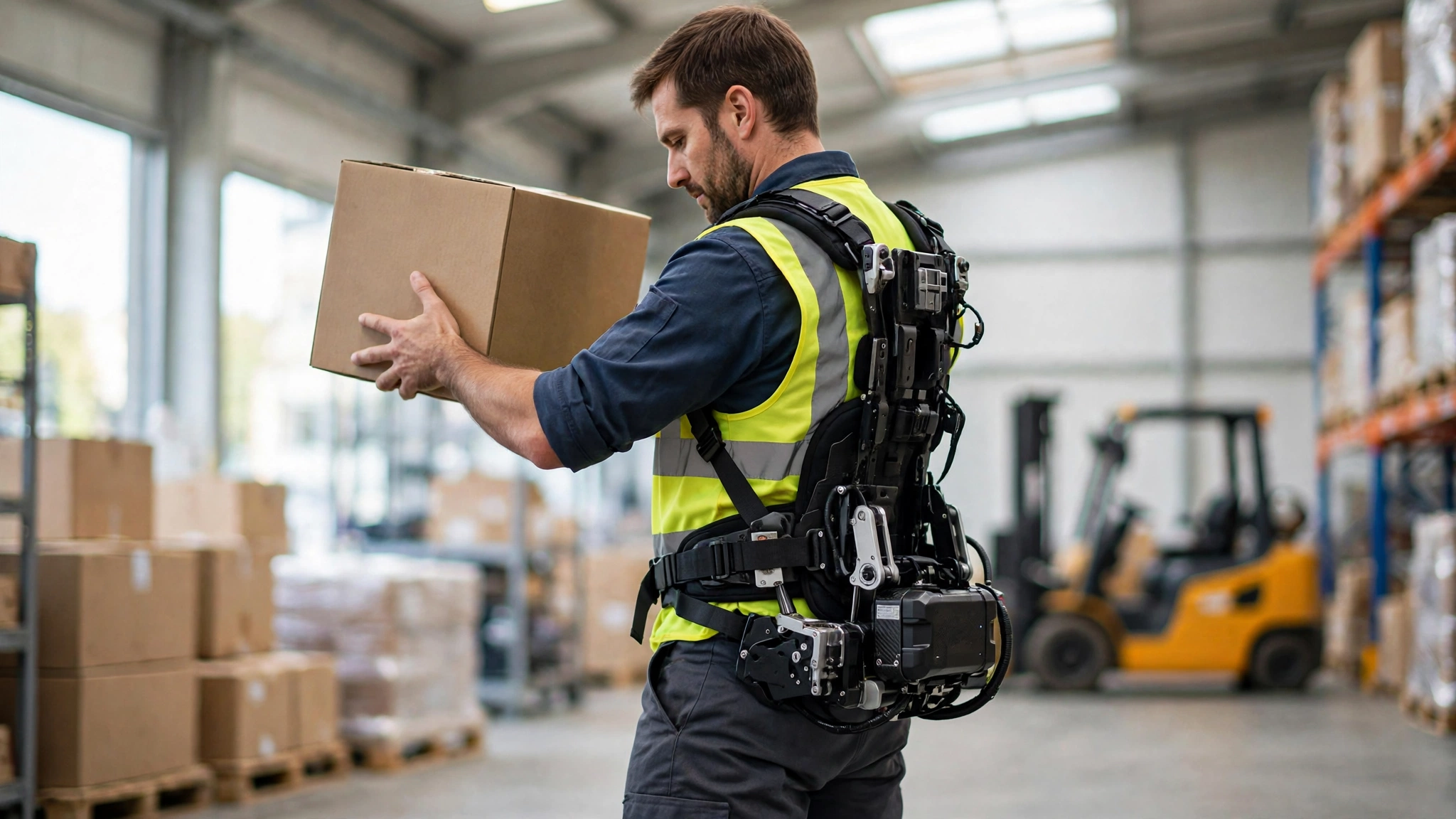
A robotic exoskeleton is a wearable machine that fits over the body and adds strength, support, or movement. It can help a warehouse worker lift a box with less strain, help a person with a spinal cord injury stand and take steps, or help a soldier carry a heavy pack. The idea sounds like science fiction, but working exoskeletons are already in hospitals, factories, and warehouses.
The technology has grown out of decades of research in robotics, medicine, and materials. Early exoskeletons were heavy, tethered to power supplies, and confined to labs. Lighter motors, better batteries, and smarter sensors have changed that. By 2025, several companies sell exoskeletons for medical rehabilitation and industrial work. This article explains how they work, who uses them, and what they still cannot do.
Exoskeletons come in many forms, from full-body powered suits to simple unpowered braces that take the load off a worker’s back. Some are built for patients relearning to walk, others for workers who lift all day. What they share is a simple idea: a machine that works with the human body, not instead of it.
What a Robotic Exoskeleton Is
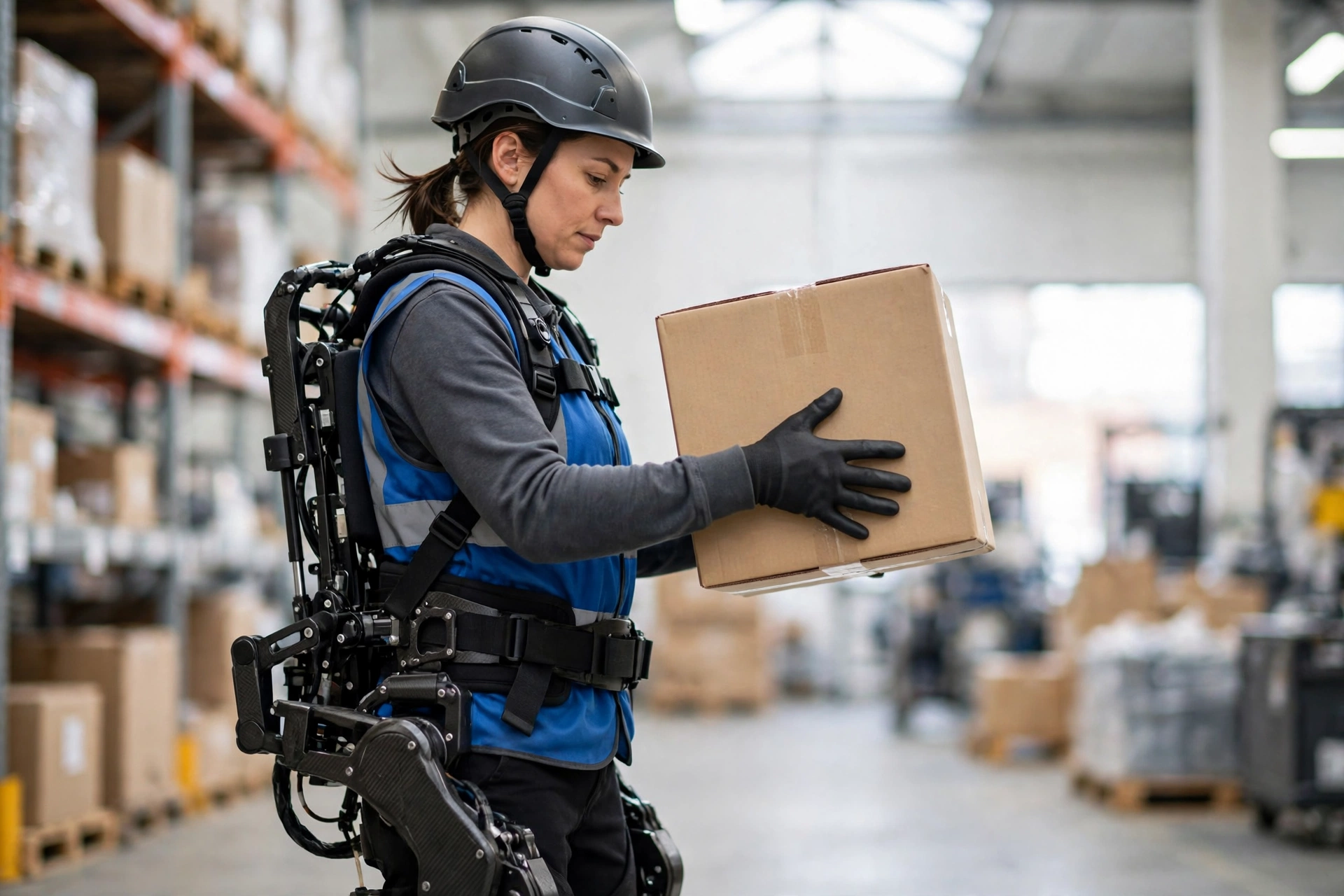
A robotic exoskeleton is a frame worn outside the body, with joints that line up with the wearer’s own joints. Motors, springs, or cables add force at the hips, knees, shoulders, or elbows. Sensors read the wearer’s movement, and a small computer decides when and how much to help.
There are two broad kinds. A powered exoskeleton uses motors and batteries to add force, so it can help a person stand, walk, or lift a load they could not manage alone. A passive exoskeleton has no motors. It uses springs and elastic bands to store energy from one movement and return it in the next, taking weight off the back or shoulders during repeated lifting. Passive suits are lighter and cheaper, and they never run out of battery.
The difference matters because each job needs a different suit. A patient relearning to walk needs a powered suit with motors and careful control. A warehouse worker lifting boxes all day may only need a passive back support. Some suits are soft exosuits, made of fabric and cables rather than a rigid frame, and they overlap with the gentle machines described in our article on soft robotics.
The idea is older than most people think. In the 1960s, General Electric built the Hardiman, a huge powered suit that was too heavy and too clumsy to be useful. It took decades of smaller motors, better batteries, and smarter sensors to turn the idea into machines people can actually wear.
How Exoskeletons Work
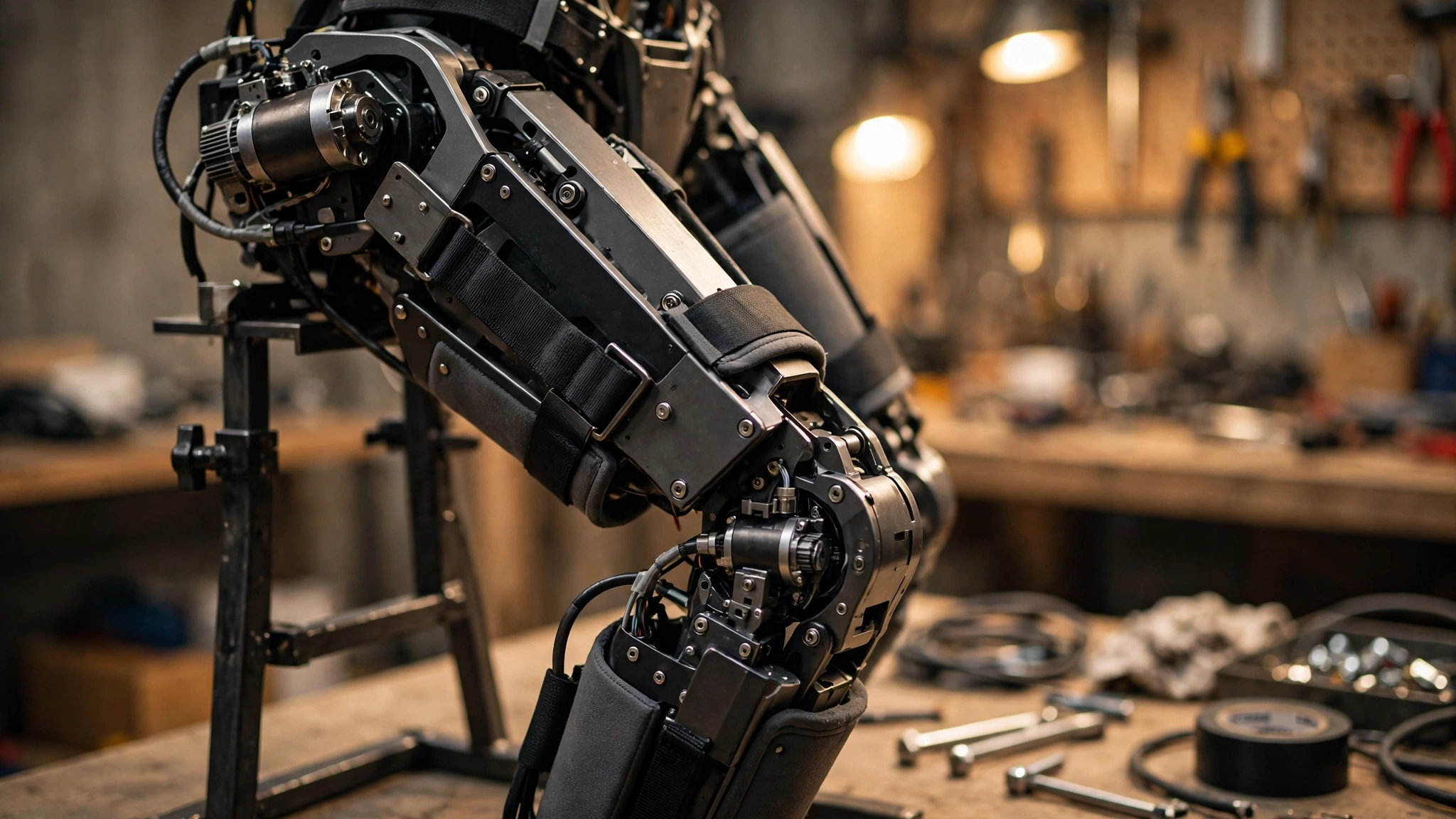
An exoskeleton works by reading the body and adding force at the right moment. Sensors on the suit measure joint angles, muscle activity, and pressure on the feet. A control unit reads those signals many times a second and works out what the wearer is trying to do: stand up, take a step, or lift a box. The motors then add force in step with the wearer’s own muscles.
The timing is what makes the suit feel natural. If the motors push too early or too late, the suit fights the wearer instead of helping. Engineers tune the control software for each task, so a suit built for walking uses a different pattern from one built for lifting. This control software is part of the wider move toward embodied machines, described in our article on physical AI.
Power is a practical limit. Motors need batteries, and batteries are heavy. A powered suit must carry its own power, which adds weight the motors then have to move. Designers balance battery size against running time, and most powered suits are built for sessions of an hour or two rather than a full working day.
Fitting matters as much as motors. A suit that does not line up with the wearer’s joints will rub, pinch, and tire the wearer out. Makers offer suits in several sizes, with straps and padding that can be adjusted, and a proper fitting session is part of buying one. A suit that fits well can feel like an extension of the body. A suit that fits badly will sit unused in a cupboard.
| Exoskeleton type | How it works | Best suited for |
|---|---|---|
| Powered rigid exoskeleton | Motors and batteries add force at the joints | Rehabilitation, walking assistance, heavy lifting |
| Passive exoskeleton | Springs and elastic bands store and return energy | Repeated lifting, back and shoulder support |
| Soft exosuit | Fabric and cables assist the wearer’s muscles | Walking help, light lifting, comfortable all-day wear |
Exoskeletons in Rehabilitation and Medicine
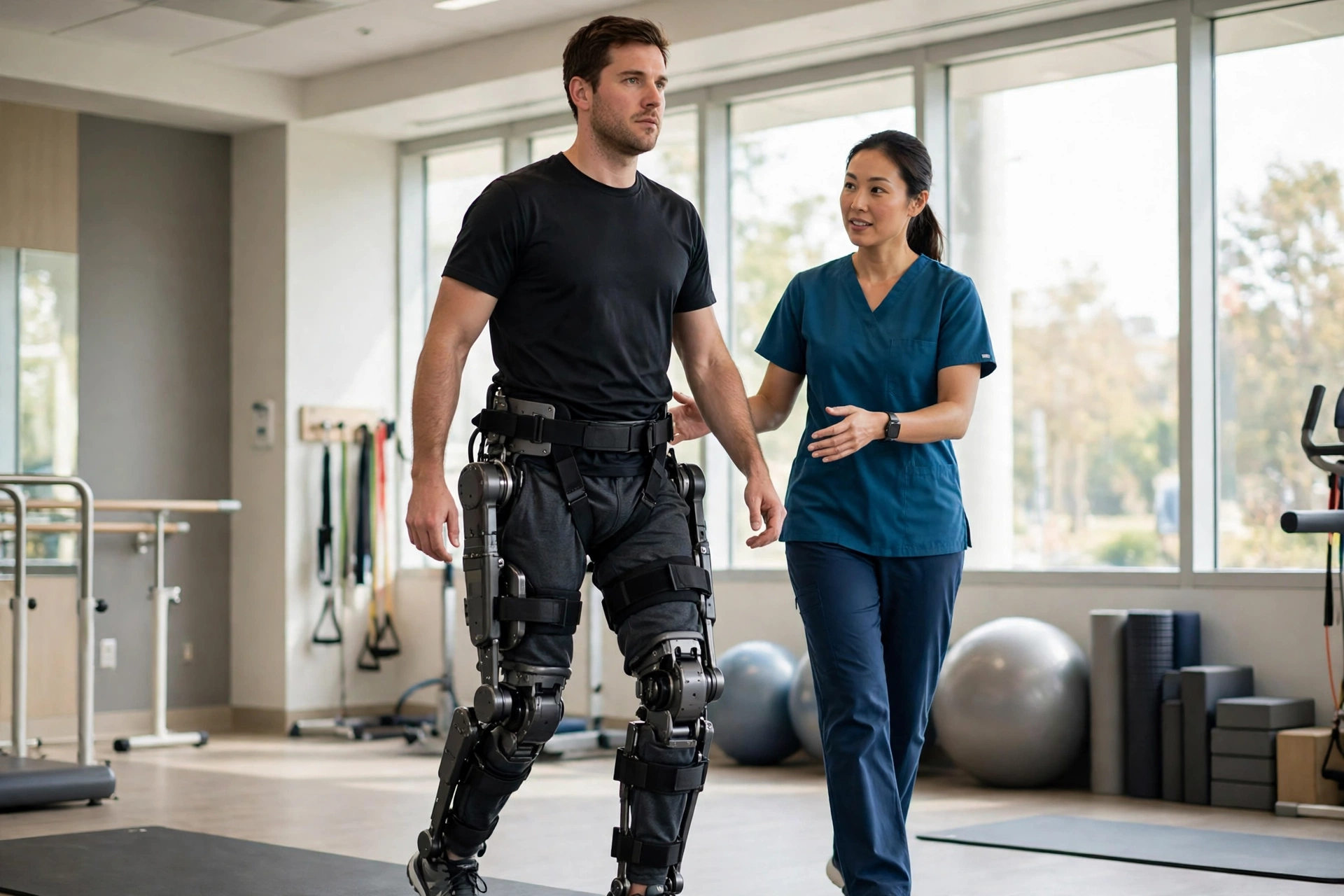
Rehabilitation is the most established medical use. After a stroke or a spinal cord injury, a patient may lose the strength or control needed to stand and walk. A powered exoskeleton can move the patient’s legs through the stepping motion, letting them practise walking with support. Repeated practice is central to recovery, and a suit lets a patient take many more steps in a session than a therapist could manage by hand.
Devices such as the EksoNR from Ekso Bionics and the ReWalk Personal from ReWalk Robotics are used in hospitals and rehabilitation centres. Both have received regulatory clearance in the United States, and therapists use them with patients who have had strokes or spinal cord injuries. The suit is set up for each patient, with the level of help adjusted as the patient gets stronger.
Gait training is the core of this work. Gait training means practising the pattern of walking: shifting weight, lifting the foot, placing it down, and repeating. An exoskeleton guides the legs through that pattern while the patient works on balance and posture. Therapists watch the patient’s progress and change the settings as the patient improves. The suit does not replace the therapist. It gives the therapist a tool that can repeat the same motion hundreds of times without tiring.
Exoskeletons are also used outside the hospital. Some patients use a personal exoskeleton at home to stand and walk around their own house, which can help with circulation, bone health, and mood. Researchers are also testing exoskeletons for people with multiple sclerosis and other conditions that affect walking, and for children with mobility problems, with smaller suits built to fit them.
Exoskeletons at Work: Factories, Warehouses, and Construction
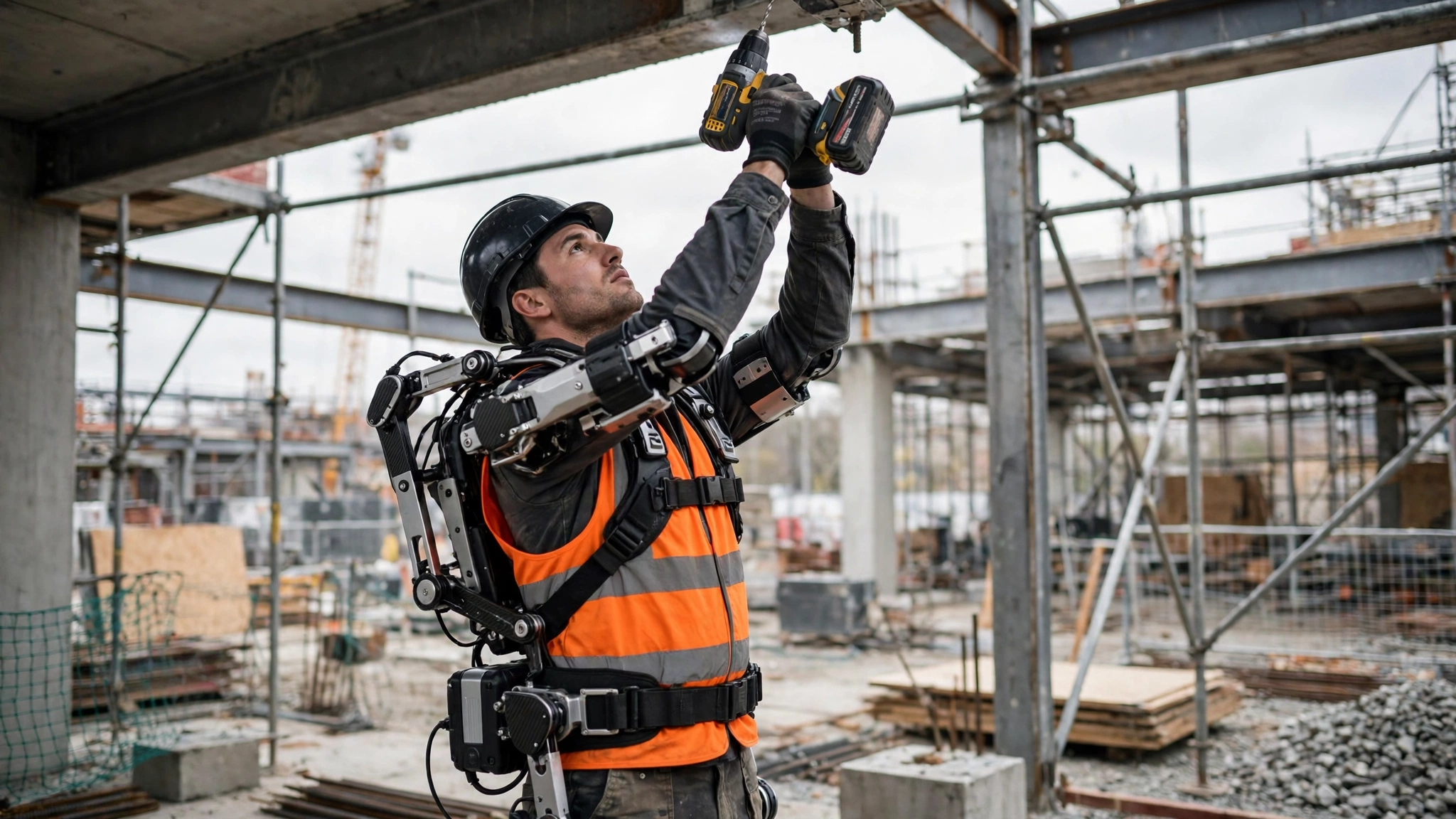
Factories and warehouses are the biggest market for industrial exoskeletons. Workers in these jobs lift, bend, and reach hundreds of times a day, and the strain adds up. A back-support exoskeleton takes some of the load off the spine when a worker bends to pick up a box. A shoulder-support suit helps a worker who holds tools overhead. The suit does not do the work for the person. It shares the load, so the muscles tire more slowly.
German Bionic sells the Cray X, a powered back-support suit used in warehouses and logistics. SuitX, now part of Ottobock, makes suits for the back, shoulders, and legs that are used in factories and on construction sites. These suits are designed to be put on in a minute or two and worn over work clothes, because a suit that takes ten minutes to put on will not be used.
Construction is a natural fit. Builders lift heavy materials, work in awkward positions, and carry loads across uneven ground. An exoskeleton can help a worker lift a bag of cement or hold a drill overhead without the same strain on the back and shoulders.
The link to the wider factory is clear. Exoskeletons work beside people in the same way that collaborative robots do, as described in our guide to collaborative robots. Both are built for shared workspaces where machines and people work side by side. The difference is that an exoskeleton is worn, so it goes wherever the worker goes.
Exoskeletons for Soldiers and First Responders
Soldiers carry heavy packs over long distances, and the load wears on knees, backs, and ankles. Military researchers have worked on exoskeletons for years, aiming to let a soldier carry more weight with less effort. Sarcos has developed the Guardian XO, a powered full-body suit designed to help a wearer lift and carry heavy loads. As of 2025 it remains a development programme rather than a standard piece of kit, but it shows what a full-body powered suit could do.
Firefighters and rescue workers face a similar problem. They carry breathing gear, hoses, and tools into burning buildings and disaster sites. An exoskeleton could help them carry that weight and climb stairs with less strain. Researchers are testing suits for these jobs, but the suits must handle heat, water, and rough treatment, which is a hard test for motors and batteries.
Challenges and Limits to Keep in Mind
Weight is the first limit. A powered suit carries motors, batteries, and a frame, and all of that weight sits on the wearer. Battery life is the second limit. A suit that runs for an hour is fine for a therapy session, but a warehouse worker needs a suit that lasts a shift, and batteries are not there yet.
Cost is the third limit. Powered exoskeletons are expensive machines, and the price puts them out of reach for many hospitals and small employers. Passive suits cost far less, which is why they are spreading faster in factories.
Fitting and training take time. A suit must be adjusted to the wearer’s body, and the wearer must learn to move with it. That takes a fitting session and a few practice sessions, and some people never get comfortable with a suit. Safety is also a live question: a powered suit that moves the wrong way could hurt the wearer, so makers build in limits on force and speed.
Finally, an exoskeleton is not a cure. It helps a patient practise walking, but it does not repair a damaged spinal cord. It helps a worker lift, but it does not fix a badly designed job. The best results come when the suit is part of a wider plan: therapy for the patient, or better lifting routines and job design for the worker.
Practical Tips / Examples / Things to Know
- Try a passive suit first for repeated lifting: it is lighter, cheaper, and needs no charging.
- Run a short trial with real workers and real loads before buying suits for a whole team.
- Get a proper fitting for every wearer, and check it again after a few weeks.
- Pair a rehabilitation exoskeleton with a therapist’s plan, and let the therapist set the help level.
- Plan for charging and battery swaps if you use powered suits for over an hour at a time.
- Keep the suit clean and check straps, joints, and batteries regularly.
- Ask the maker about training, spare parts, and repair times before you buy, not after.
Common Mistakes / Considerations / What to Avoid
- Buying a powered suit for a job a passive suit could do.
- Skipping the fitting, then finding workers stop wearing a suit that rubs or pinches.
- Expecting a suit to replace good lifting technique or a well-designed workplace.
- Using a medical exoskeleton without a clinician’s guidance or the right regulatory clearance.
- Forgetting battery life, and finding the suit flat halfway through a shift.
- Treating an exoskeleton as a cure for an injury, rather than a tool that supports recovery.
- Buying suits without a plan for maintenance, training, and replacement parts.
Final Thoughts
Robotic exoskeletons have moved from research labs into real use. In hospitals, they help patients practise walking after a stroke or a spinal cord injury. In warehouses and on building sites, they share the load and take strain off backs and shoulders. The technology still has limits: suits are heavy, batteries run short, and powered models cost a lot. But each year the suits get lighter, cheaper, and easier to use. The most useful exoskeleton is not the strongest one. It is the one that fits well, suits the job, and gets worn every day.