
How Photonic Computing Could Make Future Computers More Energy-Efficient
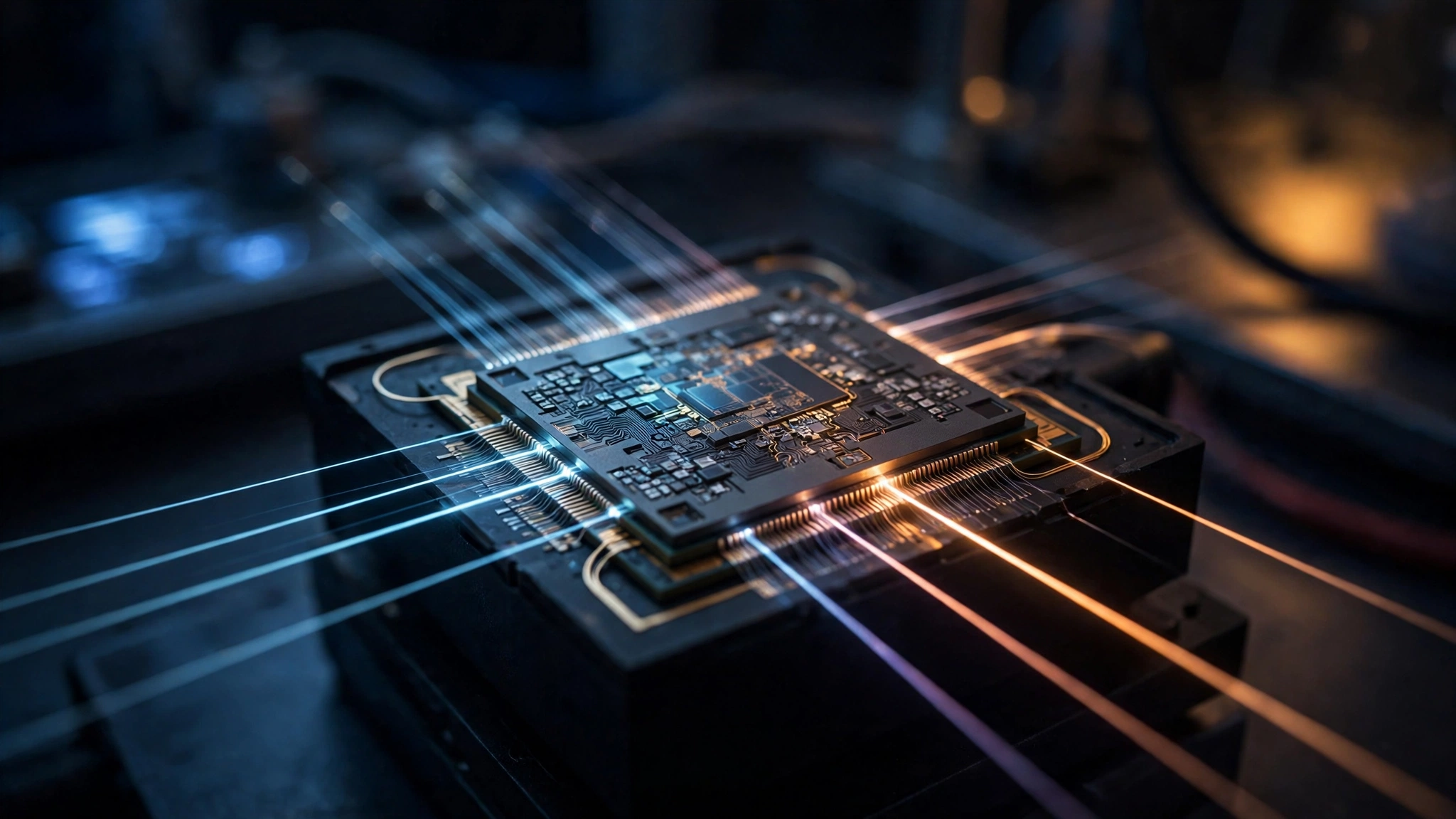
A modern computer chip moves data with electricity, and every time electrons travel through a tiny wire, some energy turns into heat. As chips pack in more transistors and AI models grow larger, that heat has become one of the biggest limits on computing. Photonic computing offers a different path: it moves and processes data with light.
Light travels fast, and beams of different colours can carry separate streams of data through the same channel at the same time. That simple idea could let future computers do the same work with far less energy. This article explains how photonic computing works, where it stands in 2025, and what still needs solving before it reaches everyday machines.
What Photonic Computing Actually Is
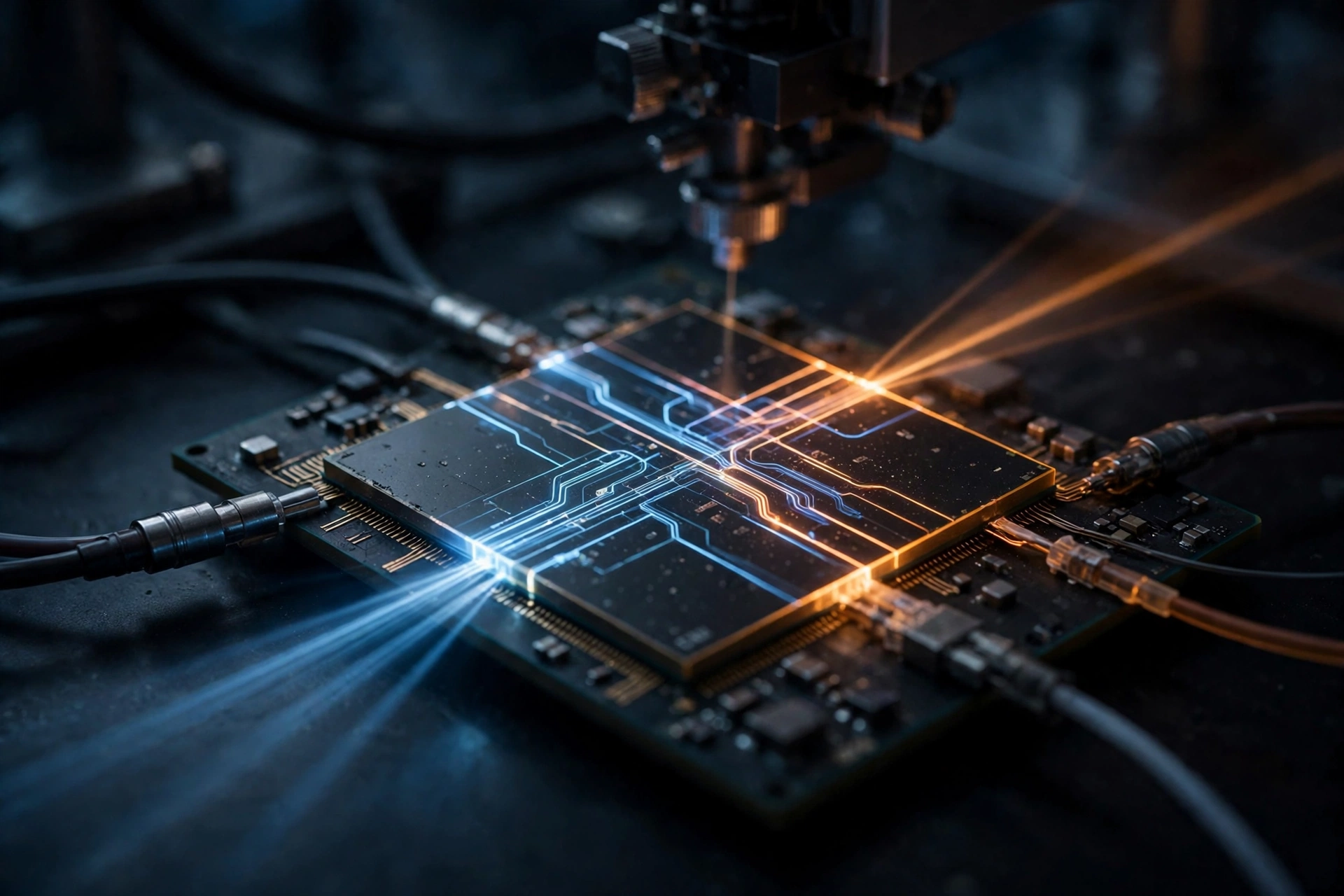
Photonic computing uses particles of light, called photons, instead of electrons to carry and process information. In an ordinary chip, data moves as electrical signals through copper wires and is switched on and off by transistors. In a photonic chip, data moves as light through tiny channels called waveguides, shaped and switched by optical components built into silicon.
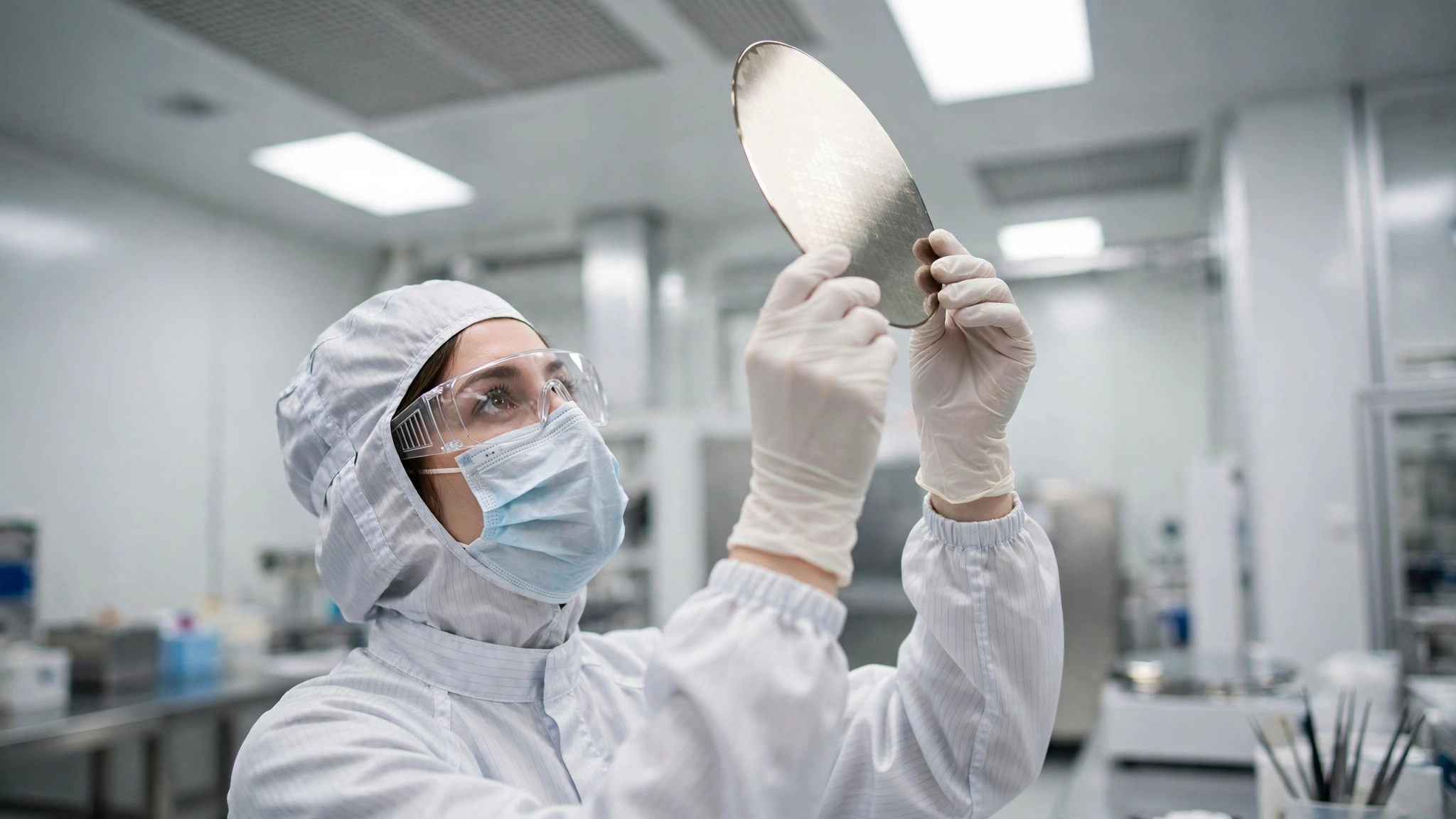
The field that makes this possible is called silicon photonics. It uses the same silicon wafers and factories as ordinary chips, but adds structures that guide light: waveguides to carry it, modulators to change it, and photodetectors to turn it back into an electrical signal. Because the manufacturing base already exists, silicon photonics has grown steadily over the last decade, first in networking equipment and now in computing research.
The promise is not only speed. Light can carry many signals at once, and it loses far less energy over distance than electricity. That matters most where data has to travel, whether across a chip, between chips, or between racks in a data centre.
Photonic computing is part of a wider search for computing beyond the traditional transistor. Other approaches take different routes to the same goal, such as the brain-inspired designs described in our article on neuromorphic computing and the very different physics of quantum computing. Photonic computing is the most practical of the three today, because it builds on the chip industry that already exists.

How Light Processes Data
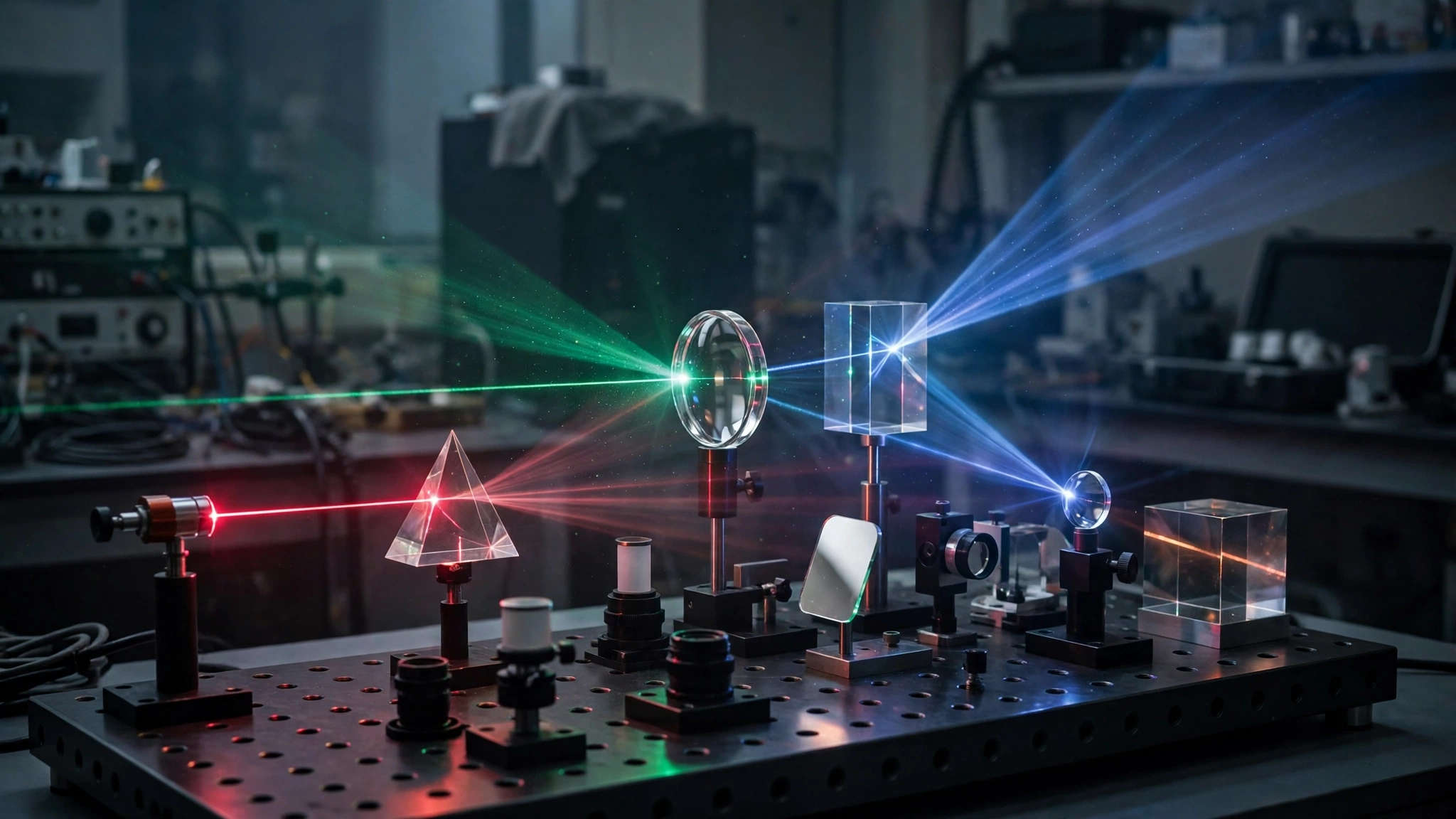
The workhorse of modern AI is matrix multiplication, the maths behind neural networks. A photonic chip can do this maths in a natural way. Light beams pass through a network of tiny interferometers, devices that split and recombine light so the beams interfere with each other. The result of that interference is the answer, and it appears almost as fast as the light travels through the chip.
One common building block is the Mach-Zehnder interferometer, which splits a beam of light in two, changes the phase of one half, and recombines them. By arranging many of these in a grid, a chip can perform a whole matrix multiplication in a single pass of light. It does not need a clock to step through the calculation one piece at a time, the way an electronic processor does.
A second trick is wavelength-division multiplexing. Different colours of light can travel through the same waveguide without interfering with each other, so one channel can carry many separate streams of data at once. It is the optical version of many lanes on one road, and one reason photonic systems can move so much data with so little energy.
There is a catch. Light is good at the linear maths of matrix multiplication, but not at everything. The rest of a neural network, such as the non-linear activation functions, is still easier to do electronically. That is why most photonic designs are hybrids: light does the heavy maths, and ordinary electronics handle control, memory, and the parts light cannot do well.
| Feature | Electronic computing | Photonic computing |
|---|---|---|
| Signal carrier | Electrons through copper wires | Photons through waveguides |
| Data over distance | Loses energy as heat | Loses very little energy |
| Parallel streams | Limited by wire count | Many colours in one channel |
| Best at | General-purpose logic and control | Matrix maths for AI workloads |
| Maturity | Decades of mass production | Early, mostly research and networking |
The table above sums up the trade-off: electronics lead in general-purpose work, photonics where data must travel and matrix maths dominates.
Why Energy Efficiency Matters Now
The energy problem in computing is no longer about a single chip. It is about the whole system. Training and running large AI models needs thousands of chips working together, and a large share of the energy goes not into the maths itself but into moving data between chips, between memory and processors, and between servers. Every move costs energy, and that bill keeps growing as models get bigger.
Data centres already use light for this reason. The fibre-optic cables that link servers together carry data as light, because copper cannot move that much data that far without wasting energy. Silicon photonics has brought that same idea inside the rack, into optical transceivers that sit next to the chips. Photonic computing takes the next step: instead of converting light back to electricity at the edge of the chip, it keeps the data in light form and does some of the computing with it too.
Heat is the other half of the problem. A chip can only use as much power as its cooling can remove, and modern AI chips already run hot. If the same work can be done with less energy, the chip runs cooler, the cooling system works less hard, and the data centre needs less power overall. For companies building AI infrastructure, that is a direct saving, and a reason photonic computing attracts serious attention.
Energy efficiency also matters at the edge. A phone or a sensor cannot carry a data centre’s power supply, so its computing must be frugal. Our article on edge AI looks at how AI is moving onto such devices. Photonic chips are not yet small or cheap enough for a phone, but the same logic applies: if light can do the maths with less energy, battery-powered devices could run smarter software for longer.
Where Photonic Computing Stands in 2025
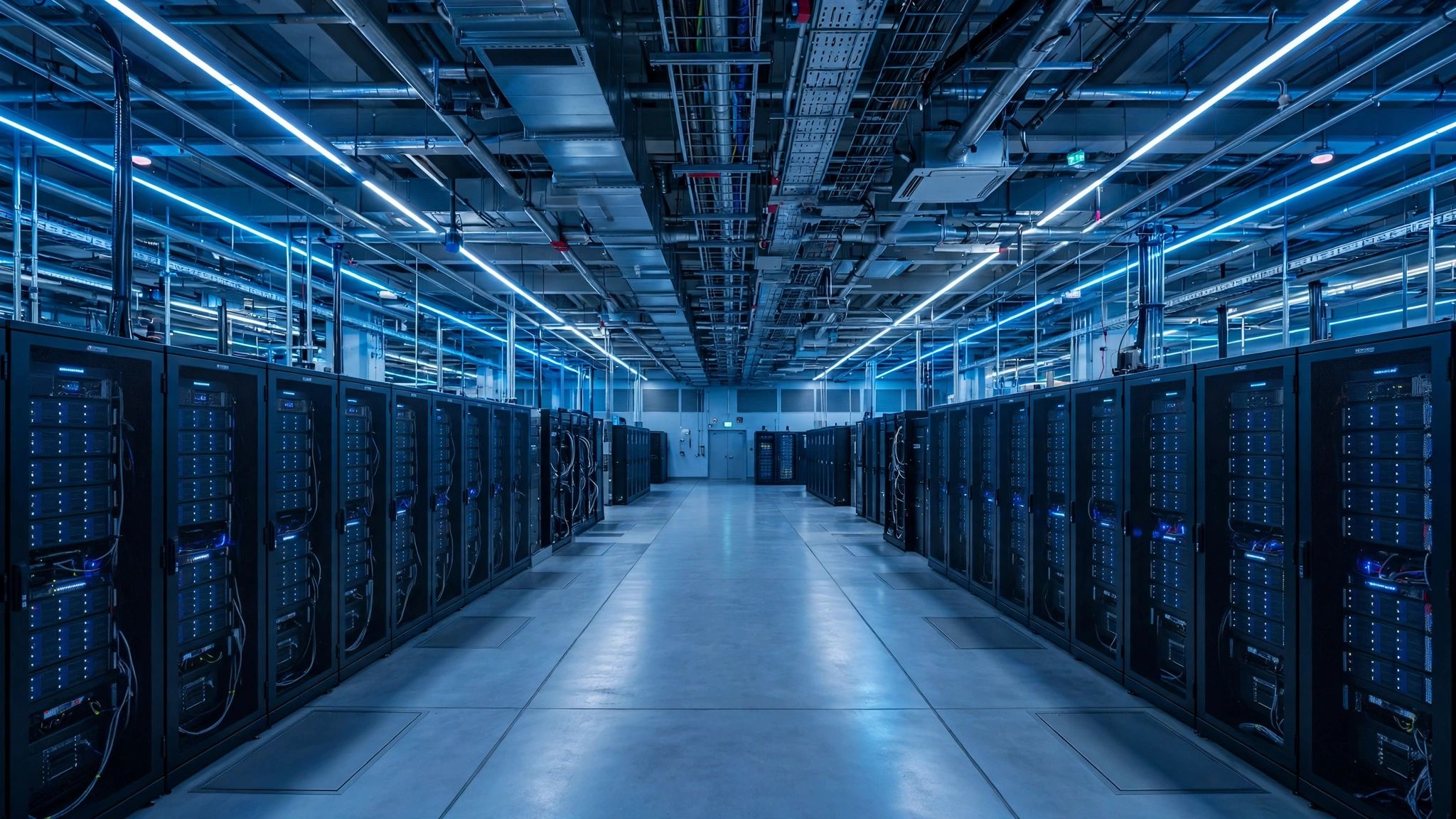
The most mature part of the field is optical interconnects. Silicon photonics transceivers are already a normal part of data centre networking, made by established chip and networking companies and produced in volume. They move data between servers as light. This is the foundation on which photonic computing is being built, and the part of the technology already proven in the real world.
Photonic processors for AI are a step further, and still in the early commercial stage. Companies such as Lightmatter and Lightelligence have built chips that use light to speed up AI calculations, aimed at data centres where energy use is a major cost. Their products work alongside ordinary processors, handling the matrix maths while electronics do the rest. As of 2025, these chips are being tested in limited settings rather than shipped at the scale of a mainstream GPU.
Research labs are pushing the field forward too. MIT and other universities have spent years building photonic processors and showing they can run neural network calculations with light. The physics works, and the challenge now is turning laboratory demonstrations into reliable, mass-produced chips. That needs better manufacturing, better packaging, and software that can use a photonic chip without the programmer thinking about light at all.
The likely path is gradual. Photonic computing will probably first appear in data centres running AI, where a photonic accelerator sits next to ordinary chips and handles the maths that light does best. Over time, as the technology matures and costs fall, it could reach more kinds of machines. It is unlikely to replace electronic computing outright. It is much more likely to work beside it, the way a graphics card works beside a CPU today.
Challenges and Limits to Keep in Mind
Manufacturing is the first challenge. Photonic chips need structures measured in nanometres, and tiny errors change how light behaves. Factories make electronic chips with great precision, but photonic components are more sensitive to variation. Until yields improve, photonic chips will cost more than electronic ones.
Precision is a second problem. Electronic computers work with exact digital numbers. Photonic chips, in their current form, often work in an analogue way, where the answer depends on the exact brightness and phase of light. Noise, temperature changes, and small manufacturing differences can all shift the result. For many AI workloads, a small amount of error is acceptable, but for general computing it is not. That is one reason photonic chips are aimed at AI first, where approximate answers are good enough.
Integration is a third challenge. A photonic chip still needs electronics for memory, control, and input and output, and connecting the two worlds is hard. Light and electricity have to meet at the boundary of the chip, and that adds cost and complexity. Packaging a photonic chip with its electronic partner, and keeping both cool and stable, is a problem the industry is still working through.
The software ecosystem is a fourth limit. A new kind of hardware is only useful if programmers can use it without learning a new field. Photonic accelerators need compilers and libraries that take a normal AI model and split it between the electronic and photonic parts automatically. That software is being built, but it is far behind the tools that exist for ordinary chips.
Finally, expectations need care. Photonic computing is promising, not finished. The research results are real, but they come from controlled lab settings and specific workloads. Anyone reading a claim about a photonic chip should ask what workload was tested, what it was compared with, and whether the result has been repeated outside the lab.
Practical Tips / Examples / Things to Know
- Follow optical interconnects first, because that is where photonic technology is already commercial and proven.
- Learn the basics of matrix maths in AI, since that is the workload photonic chips are built for.
- Watch companies such as Lightmatter and Lightelligence, and read their public technical material rather than marketing claims.
- Think of photonic computing as an accelerator beside a CPU, not a replacement for it.
- Pay attention to energy per calculation, not only raw speed, because efficiency is the real promise of light.
- Read research from MIT and other university labs to see what the technology can actually do today.
- If you run AI infrastructure, ask your suppliers what their plans are for optical and photonic parts in the next few years.
Common Mistakes / Considerations / What to Avoid
- Assuming photonic computers will replace electronic computers, when they are built to work alongside them.
- Trusting a speed claim without checking what workload was tested and what it was compared with.
- Ignoring the energy used by the lasers and the electronics around a photonic chip, and counting only the optical part.
- Expecting a photonic chip in a phone or laptop soon, when the technology is still aimed at data centres.
- Treating a lab demonstration as a finished product, when manufacturing and packaging are still being solved.
- Forgetting that most AI maths still needs electronics for control, memory, and non-linear steps.
- Overlooking the software gap, and assuming a photonic chip will work with existing AI tools without extra work.
Final Thoughts
Photonic computing is an elegant answer to a real problem. Computers now spend much of their energy moving data and cooling the heat that movement creates, and light offers a way to do that work with less waste. Silicon photonics already moves data inside data centres, and photonic processors are being tested on real AI workloads. The road ahead is still long, with hard problems in manufacturing, precision, integration, and software. But the direction is clear. As AI keeps growing, the energy cost of computing will only matter more, and the computers of the future will very likely use light for at least part of the job. Your next search may still run on electrons, but more of the work behind it could soon be done by light.