
What Is Quantum Internet Technology and How Could It Change Secure Communication
Today’s internet protects messages with maths. When you pay online, your data is scrambled with encryption that is hard to undo without the right key. That system works well, but it rests on a bet: that the maths stays hard enough to crack. A powerful enough quantum computer could one day break some of the encryption we rely on now.
The quantum internet takes a different approach. Instead of relying on hard maths, it relies on the laws of physics. It is a network that moves quantum information between quantum devices, using a strange link called entanglement. When two particles are entangled, measuring one instantly tells you something about the other, no matter how far apart they are. That link can be used to share encryption keys in a way that reveals any attempt to listen in.
This article explains what the quantum internet is, how it works, where the research stands in 2025, and what it could mean for secure communication.

What the Quantum Internet Actually Is
The quantum internet is a network designed to carry quantum information between quantum devices. The ordinary internet carries bits, which are either 0 or 1. A quantum network carries qubits, which can hold a blend of 0 and 1 at the same time. That difference is what makes quantum communication different from the communication we use today.
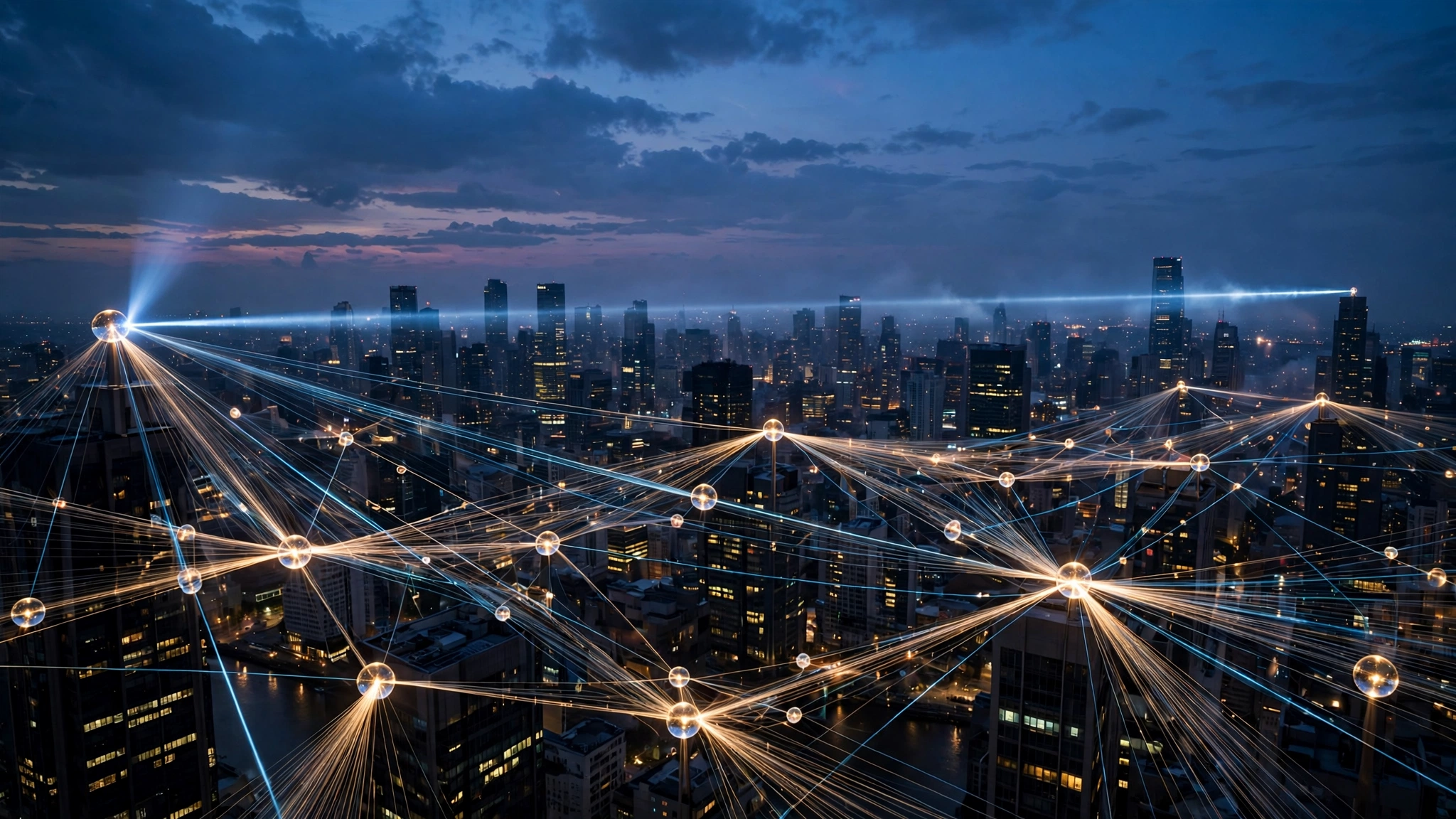
It helps to see the quantum internet as a partner to the classical internet, not a replacement for it. Your videos, emails, and web pages will keep travelling over ordinary fibre and radio. A quantum network would run alongside them, carrying quantum signals between special nodes. Its main job is not speed. It is security and connection: linking quantum computers together, and sharing secret keys with a level of protection that classical networks cannot offer. It builds on quantum computing, which we compared with classical computing in our article on quantum computing vs classical computing.
How It Works: Entanglement, QKD, and Repeaters
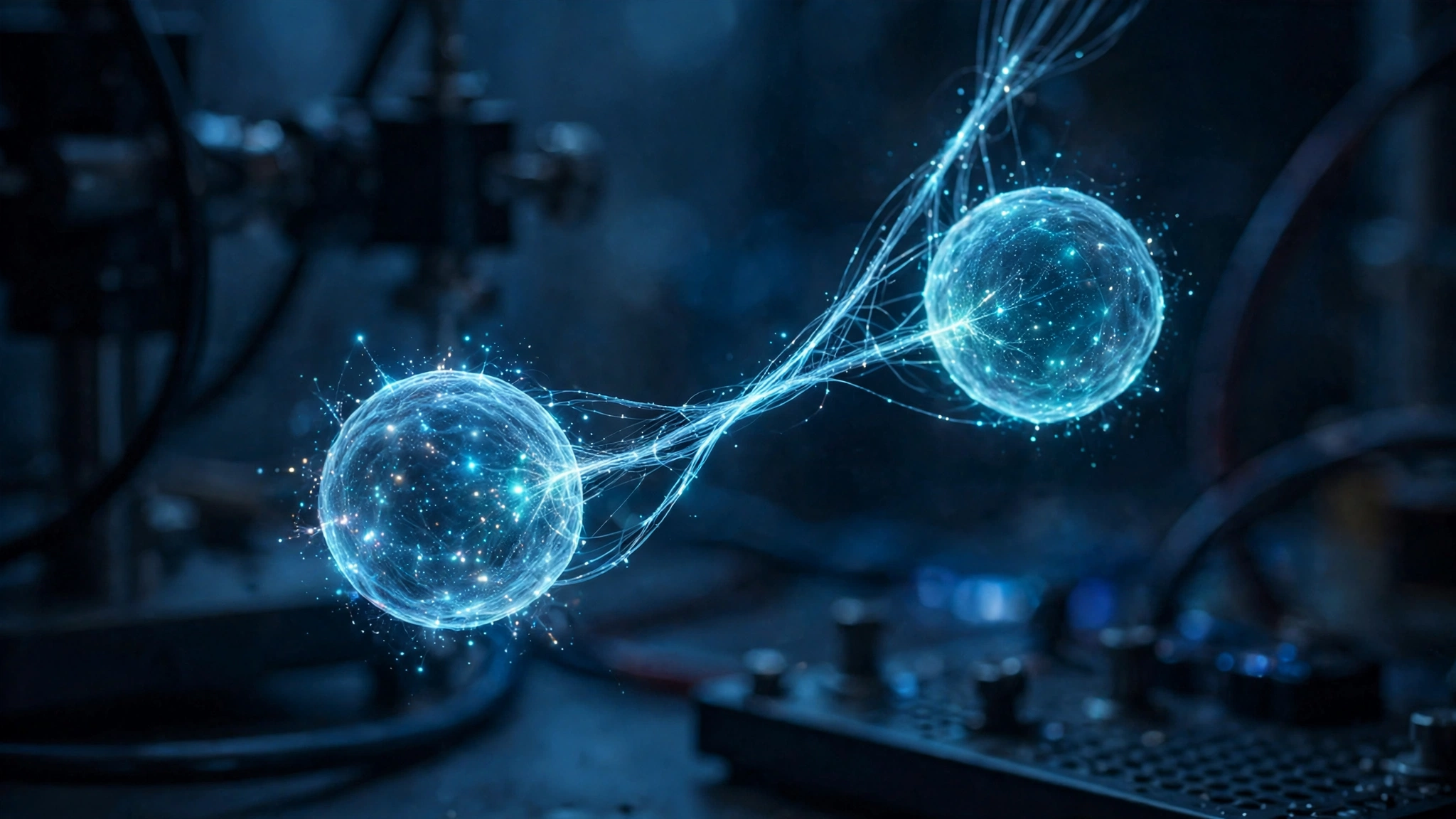
The heart of the quantum internet is quantum entanglement. When two particles are entangled, they share a single quantum state. Measure one, and the result tells you something about the other at once, even if the two are in different cities. Nothing travels between them in the ordinary sense. The link is part of how the particles were prepared.
The best-known use of entanglement is quantum key distribution, often shortened to QKD. Two people who want to talk in private first need a shared secret key. In QKD, that key is sent as a stream of single photons, the tiny particles of light, with each photon carrying one bit of the key. Measuring a photon changes it, so if someone tries to intercept the photons and read the key, the disturbance shows up in the results. On today’s internet, an attacker can copy data without leaving a trace. With QKD, the act of looking changes what is being looked at, so the two people can spot the eavesdropping and throw the key away before they use it.
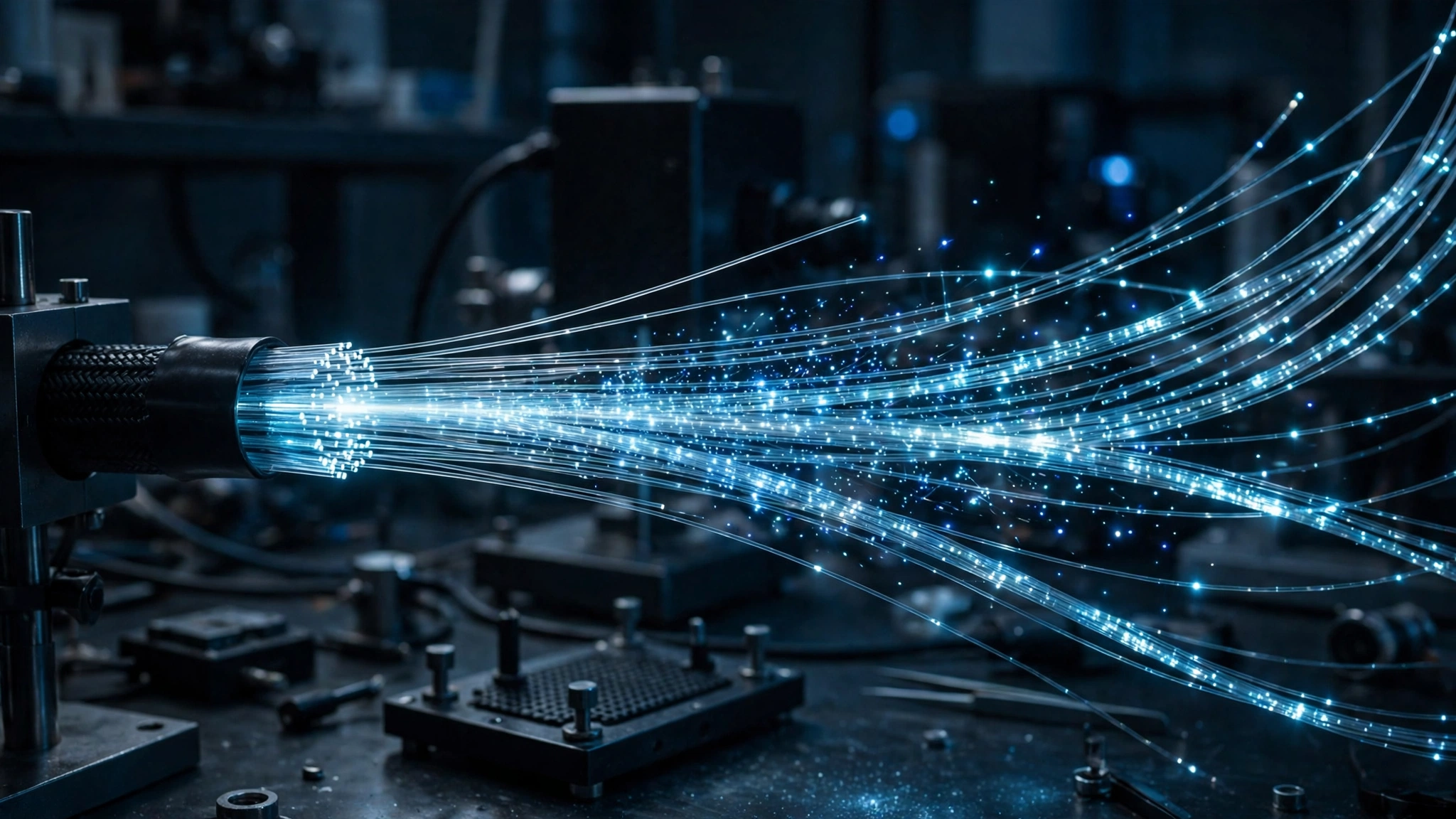
Distance is the hard part. Photons travelling through fibre optic cable get lost, and after a certain distance so few survive that the link becomes useless. Classical networks solve this with repeaters, which read a signal, strengthen it, and send it on. A quantum repeater cannot simply copy a qubit, because quantum physics forbids copying an unknown quantum state.
The answer researchers are working on is entanglement swapping. A quantum repeater creates entanglement with the node before it and the node after it, then joins those two links together. The result is entanglement between the two distant ends, even though no single photon travelled the whole way. Building repeaters that are reliable and fast enough is one of the biggest open problems in the field.
Classical Internet vs Quantum Internet
| Feature | Classical internet | Quantum internet |
|---|---|---|
| What it carries | Bits (0 or 1) | Qubits and entanglement |
| How security works | Hard maths problems | Laws of quantum physics |
| Eavesdropping | Can copy data without a trace | Disturbs the signal and can be detected |
| Main goal | Speed, capacity, and reach | Security and linking quantum devices |
| Maturity | Global, in everyday use | Lab-scale networks and testbeds |
The classical internet moves large amounts of data quickly to billions of people, while the quantum internet is built for a narrower job: moving quantum information securely between a smaller number of special nodes.
Where the Research Stands in 2025
As of 2025, there is no public quantum internet. What exists is a set of lab networks and testbeds where researchers are proving each piece of the idea.
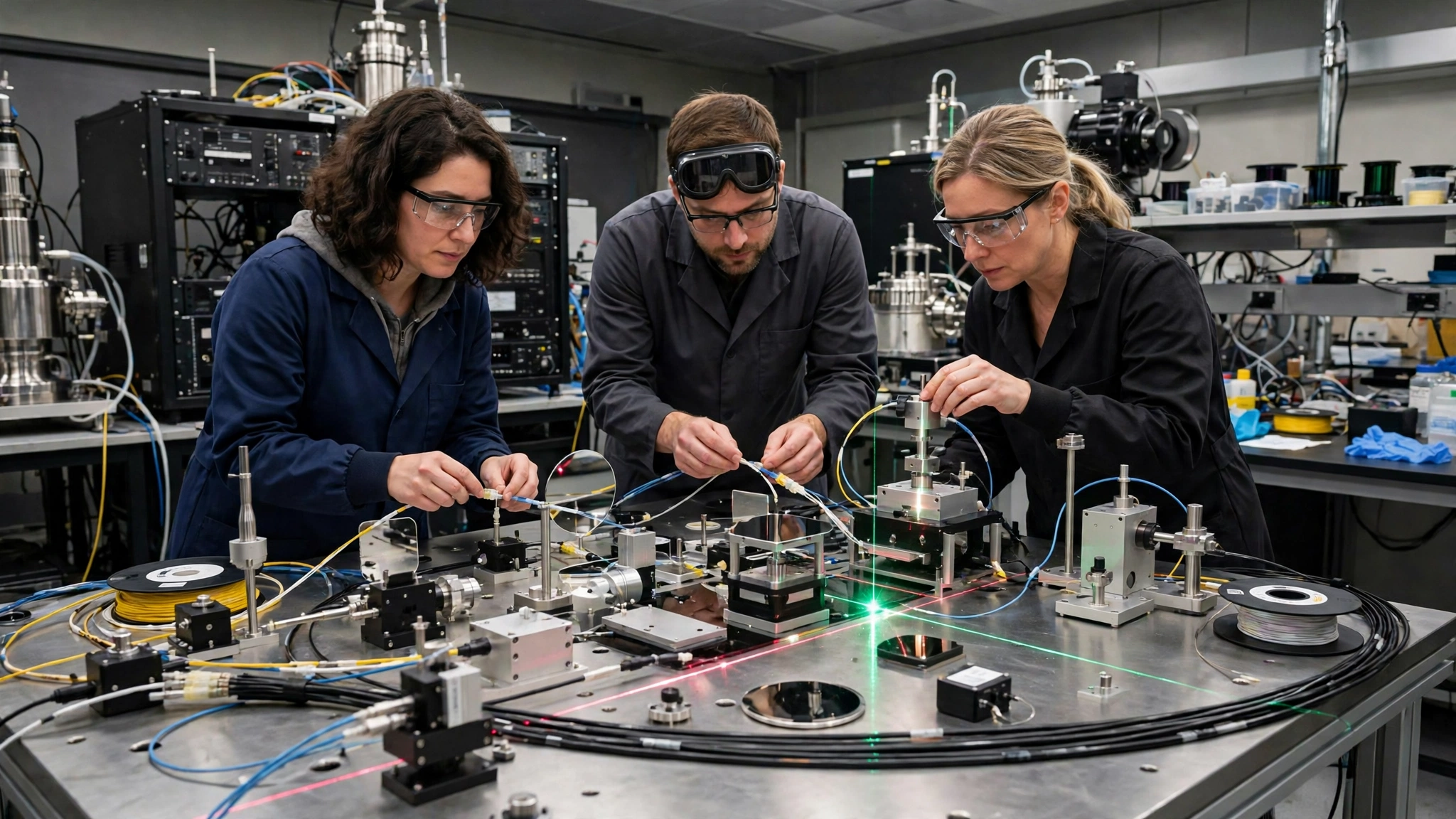
In the Netherlands, researchers at QuTech, a research centre run by TU Delft and the Netherlands Organisation for Applied Scientific Research, have linked three quantum processors into a network. The experiment showed that separate quantum devices can share entanglement, the basic step a quantum internet needs.
China has run some of the largest field tests. Its Micius satellite has been used to share quantum keys between ground stations far apart, and a long ground network connects several Chinese cities with quantum links. These tests show that QKD can work over large distances, including through space, though these are still research setups, not everyday services.
In the United States, the Department of Energy published a blueprint for a national quantum internet in 2020, and research groups around Chicago have built testbeds linking local laboratories. The Chicago Quantum Exchange, a collaboration of universities and national labs, is one of the groups working on this. In Europe, the Quantum Internet Alliance brings together research groups from several countries to work on a shared design.
What It Could Mean for Secure Communication
The clearest use is protecting messages that must stay secret a long time. Governments, banks, hospitals, and power companies all hold data that would still be sensitive in ten or twenty years. An attacker can record encrypted data today and store it, hoping to break it later when a powerful quantum computer exists. Keys shared by QKD are not exposed to that risk in the same way, because the security does not depend on a maths problem a future machine might solve.
That makes the quantum internet most relevant for the highest-stakes communication first. Diplomatic messages, military command links, financial transactions between banks, and medical records are the kinds of data where the extra protection is worth the cost and complexity. Everyday messaging is unlikely to move to quantum links soon, because the hardware is expensive.
There is a second use that matters just as much. A quantum internet would let quantum computers in different places work together. A single quantum computer is limited by how many qubits it can hold. Link several together through entanglement and they can act as one larger machine.
Sensitive data also travels from many small devices, not only from big organisations. Cameras and sensors send readings back to servers all day, and keeping those links safe matters. That idea connects with the rise of edge AI, where data is processed close to where it is collected. A quantum-secured link could one day protect the most sensitive of those streams.
The same thinking applies to software that acts on our behalf. Our article on agentic AI describes systems that carry out multi-step work for users, and those systems will need communication links that can be trusted. Quantum key distribution is one way to provide that trust, once the networks are ready.
Challenges and Limits to Keep in Mind
Distance is the first limit. Photons are lost in fibre, and the loss grows quickly with distance. Quantum repeaters are the answer in theory, but building them is hard. They need to store entanglement, keep it stable, and swap it on demand. As of 2025, repeaters exist as lab demonstrations, not as products you can buy and install.
Fragility is the second limit. Quantum states are delicate. Heat, vibration, and stray light can disturb them, which is why many quantum devices run at very low temperatures or in carefully shielded rooms.
Cost and scale are the third limit. The equipment for QKD and quantum networking is expensive, and each link needs special hardware at both ends. That is why the first users will be governments and large companies, not households. For the technology to spread, the hardware needs to become cheaper and easier to run, and that will take years.
Standards are a fourth challenge. A network only works if different makers’ equipment can talk to each other. The quantum internet needs shared rules for how nodes connect, how keys are formatted, and how errors are handled. Work on these standards is still early.
Finally, there is the question of what to use right now. Post-quantum cryptography, a set of new classical encryption methods designed to resist quantum computers, is already available. The US National Institute of Standards and Technology released its first post-quantum standards in 2024. These are software updates, not new hardware, so they can be rolled out far more quickly than a quantum network.
Practical Tips / Examples / Things to Know
- Learn the difference between QKD and post-quantum cryptography: QKD uses physics and new hardware, while post-quantum cryptography uses new maths and software.
- If you run a business, ask your IT team whether your encryption needs updating for the quantum era, and plan the switch as part of normal upgrades.
- Follow research from public labs such as QuTech and the Chicago Quantum Exchange, since their published results are the most reliable guide to progress.
- Treat claims about a working quantum internet with care, and check whether the source means a lab test, a small network, or a real service.
- Remember that the quantum internet will work alongside the classical internet, not replace it, so plan for both.
- Protect the endpoints as well as the link, because a quantum key does not help if the device holding it is not secure.
- Start with the data that must stay secret longest, such as health records or financial archives, when deciding what needs the strongest protection.
Common Mistakes / Considerations / What to Avoid
- Thinking the quantum internet will be faster than today’s internet, when its goal is security and linking quantum devices, not speed.
- Assuming a quantum network makes all communication unbreakable, and forgetting that endpoints, software, and key storage still need protection.
- Confusing QKD with post-quantum cryptography, which are different tools for the same problem.
- Expecting a public quantum internet soon, when the work in 2025 is still at the level of lab networks and testbeds.
- Ignoring post-quantum cryptography while waiting for quantum networks, when the software update is available now and far easier to adopt.
- Believing that entanglement lets you send messages instantly, when entanglement alone carries no usable message without a classical channel alongside it.
- Taking a vendor’s claim about quantum security at face value, without checking what has been tested and published.
Final Thoughts
The quantum internet is one of the most interesting ideas in technology today, and also one of the least finished. The physics is sound: entanglement can link distant devices, quantum key distribution can reveal eavesdropping, and small networks have already been built in labs in the Netherlands, China, and the United States. What is missing is scale: better repeaters, cheaper hardware, and settled standards, before a real network can serve anyone outside a research lab.
For most people, the practical step in 2025 is not to wait for a quantum network. It is to make sure the encryption they already use is ready for the quantum era, by moving to post-quantum standards as they become available. The quantum internet will matter most for the messages that must stay secret the longest, and for linking quantum computers into something larger than any one machine. It will not replace the internet we use every day. It will sit beside it, protecting the links that matter most.