
What Are Self-Healing Robots and How Could They Work?
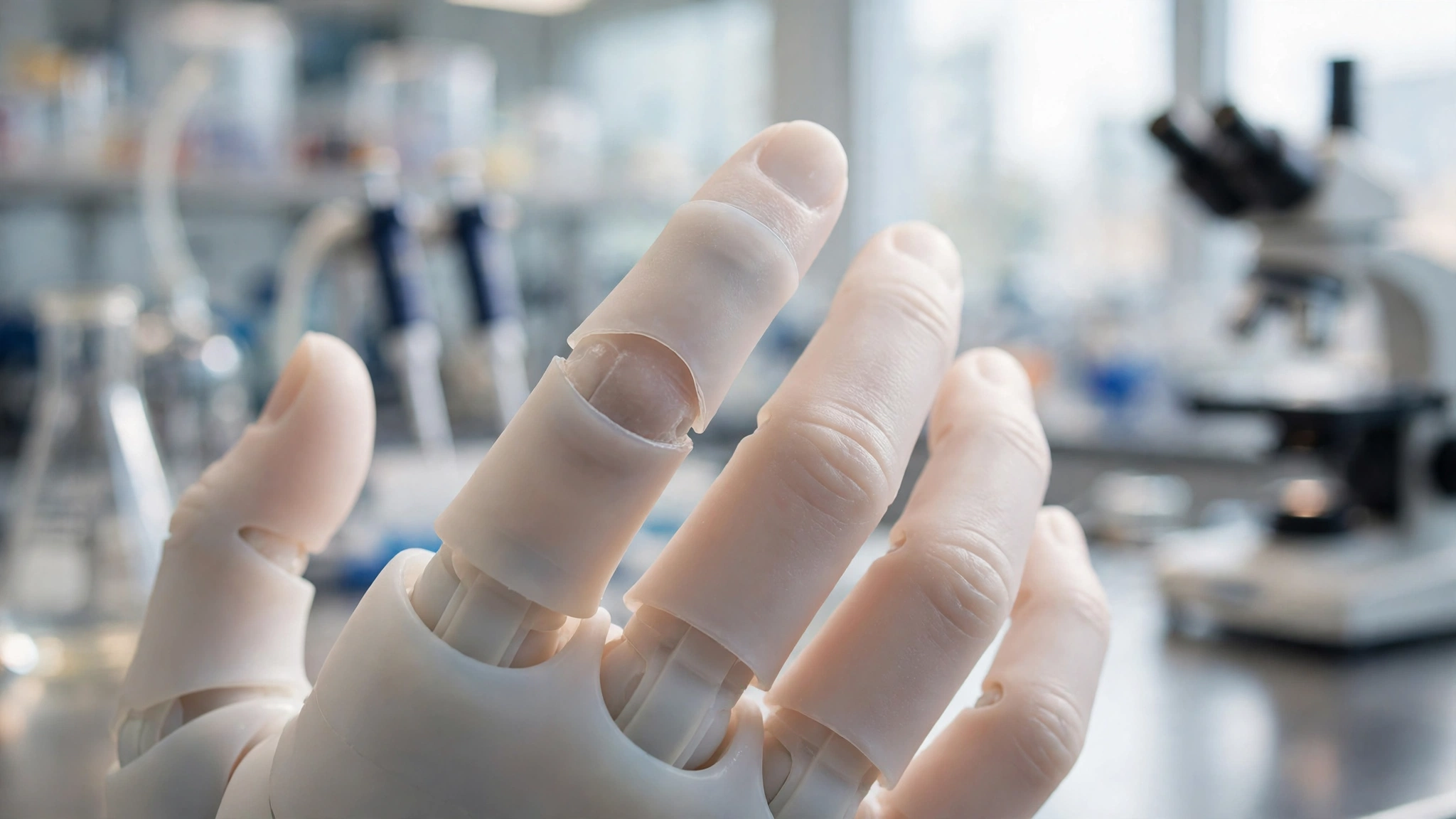
A robot that cuts its own skin and then heals the wound sounds like science fiction. Yet self-healing robots are a real area of research, and the idea behind them is simple: build a machine from materials that can repair themselves, so small damage does not end the job.
The work is still mostly in the lab. No factory or hospital runs a self-healing robot in daily service yet. But the pieces are coming together: materials that close up after a cut, sensors that notice damage, and soft robot bodies that are easy to heal. This article explains what self-healing robots are, how the healing works, where they could be useful, and what still stands in the way.
What Self-Healing Robots Actually Are
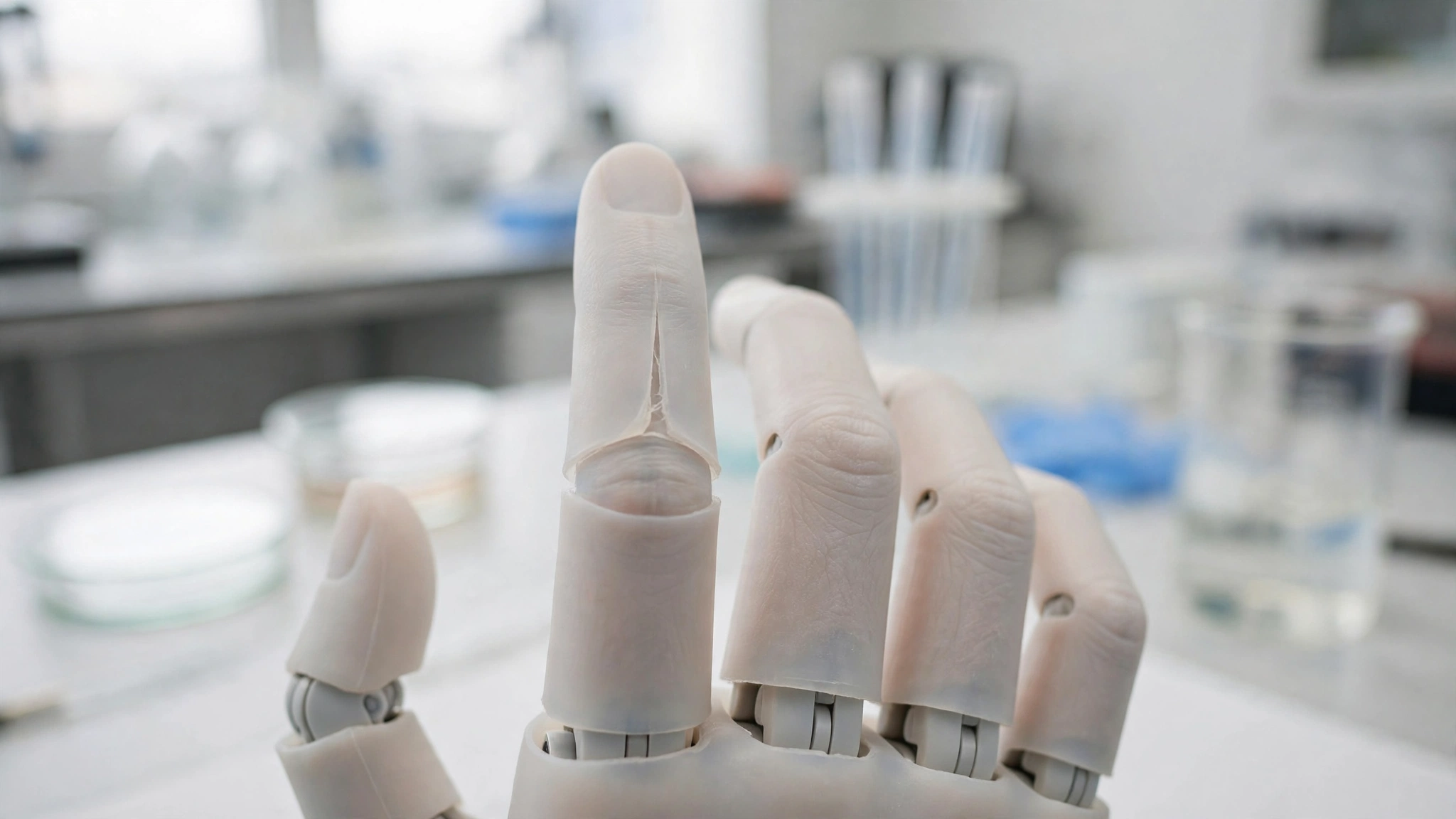
Self-healing robots are machines built, at least in part, from materials that can repair damage on their own. When the material is cut, cracked, or punctured, it seals the damage and recovers some or all of its strength, sometimes with a little help from heat or light. The repair happens in the material itself, with no technician needed to open it and swap a part.
The idea comes from biology. Human skin closes a small cut without any conscious effort, and engineers have been trying to give machines a simpler version of that ability for years. The first clear results came from materials science: researchers showed in the early 2000s that a polymer could seal a crack by releasing a healing agent stored inside it. Robot builders then saw the connection. A robot that works in a rough place, or far from help, would last much longer if it could fix its own skin.
Most self-healing robots today are soft robots. Their bodies are made of silicone, rubber, or gel, the same kinds of materials that can be made self-healing. A rigid metal arm is hard to heal, because metal does not flow back together at room temperature. A soft body is different: its material is already flexible, so a cut can close and the bonds across it can reform. That is why self-healing research and soft robotics research move together, as described in our guide to soft robotics. The soft body gives the robot its gentle touch, and the self-healing material gives it a way to survive damage.
It helps to be clear about what “healing” means here. A self-healing robot cannot rebuild a crushed motor or a broken circuit board. What it can do is repair its outer material: the skin, the gripper, the flexible limb. That matters because the skin is often what fails first. A small cut in a soft gripper lets air escape, and the gripper stops working. A tear in a robot’s cover lets dust and water reach the electronics inside. Healing those small failures keeps the whole machine running.
How Self-Healing Works
There are two broad ways a material heals itself. In the first, called extrinsic healing, the material carries tiny capsules filled with a healing liquid. When a crack forms, it breaks the capsules open, the liquid flows into the crack, and it hardens into a solid that glues the two sides together. This was one of the earliest methods shown in the lab, and it works well for a single repair. Its weakness is that the capsules are used up: once a spot has healed, it cannot heal again in the same place.
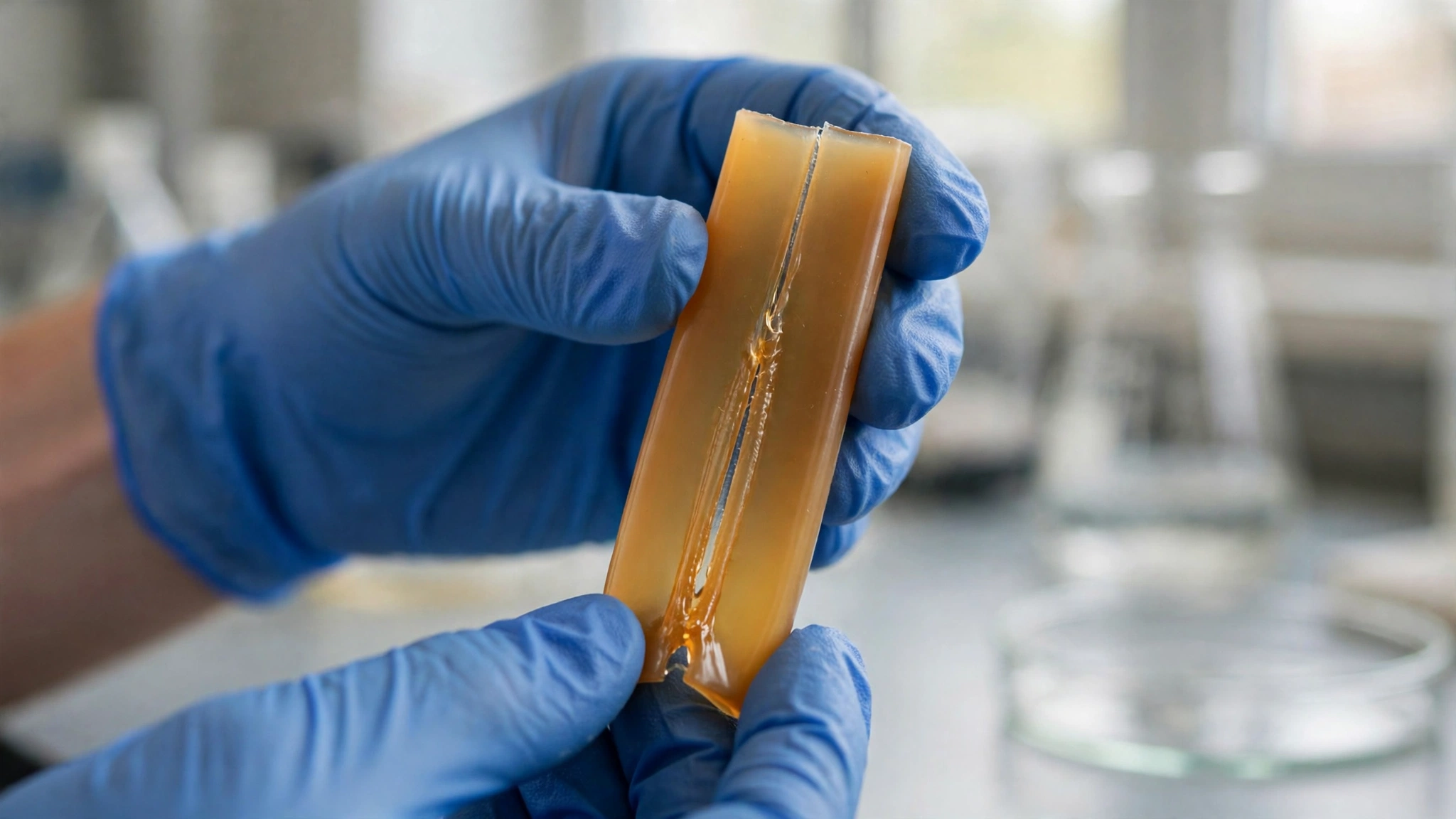
In the second, called intrinsic healing, the material itself can form new bonds across a cut. The polymer chains in the material are held together by bonds that can break and reform, such as hydrogen bonds or a reversible chemical reaction known as Diels-Alder chemistry. When the material is cut, the two faces can be pressed together and the bonds form again across the join. Because nothing is used up, the same spot can heal more than once. New versions are often designed with the help of AI tools that search for better material combinations, as covered in our article on AI designing new materials.
Self-healing polymers are the most studied group. They are plastics whose molecular structure allows bonds to reform after damage, sometimes at room temperature and sometimes with gentle warming. The trade-off is usually between healing speed and strength: a material that heals quickly is often soft and weak, while a strong material heals slowly or needs more heat to trigger the repair.
Hydrogels are another important group. A hydrogel is a soft material that holds a lot of water, similar in feel to jelly. Some hydrogels can heal at room temperature simply by pressing the cut faces together. Hydrogels are attractive for robots that work with the human body, such as wearable devices or soft surgical tools, because they are soft and can be made compatible with living tissue. Their weakness is that they dry out, and a dried hydrogel loses both its softness and its ability to heal.
Shape-memory materials add a different trick. A shape-memory polymer or alloy remembers its original shape and returns to it when warmed. In a robot, this can pull the edges of a cut back together, which makes the healing bonds easier to form. Shape-memory materials are also used as actuators, the parts that make a robot move, so a single material can serve two jobs at once.
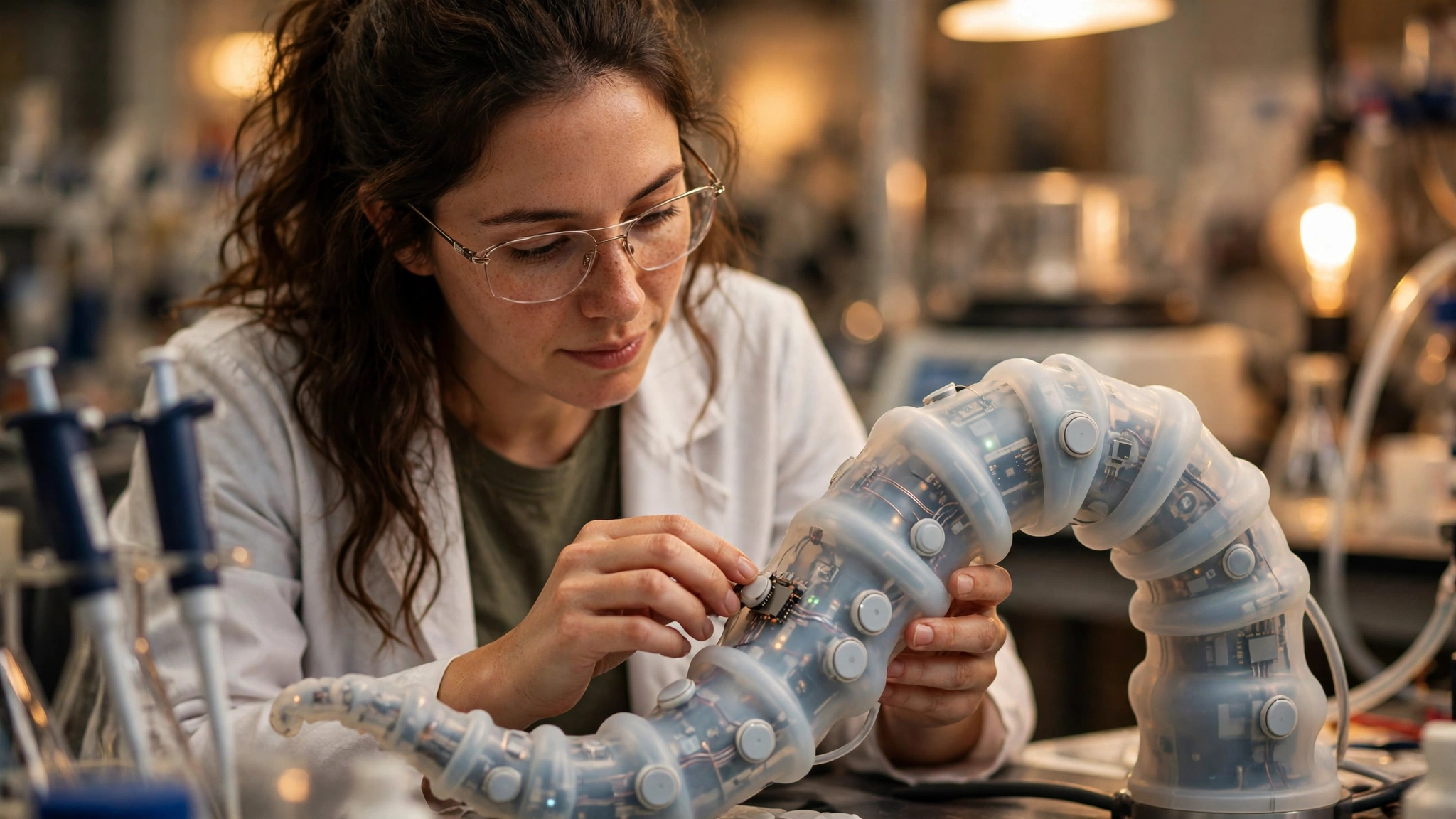
Healing is only half the story. A robot also needs to know it is damaged. That is where sensor-based damage detection comes in. Researchers build stretchable sensors into the robot’s skin that measure changes in electrical resistance or capacitance. A cut changes the signal, which tells the robot where the damage is and how bad it is. Some designs let the robot respond by slowing down or warming the area to speed up healing. This mix of sensing and repair is part of the wider idea of machines that understand their own bodies, the kind of embodied intelligence described in our article on physical AI.
| Healing method | How it repairs damage | Main strength | Main weakness |
|---|---|---|---|
| Microcapsule healing | Liquid released from capsules hardens in the crack | Works without outside help | Each spot heals only once |
| Intrinsic polymer healing | Bonds reform across the cut | Same spot can heal many times | Often needs heat and time |
| Hydrogel healing | Water-rich network rejoins at room temperature | Heals quickly and gently | Dries out and loses strength |
| Shape-memory assisted healing | Material pulls cut edges back together | Helps large cuts close | Needs warming to trigger |
Where Self-Healing Could Make a Difference
Soft robots are the clearest fit. A soft gripper that handles fruit or packs food can pick up a sharp edge and tear. Today, that means a replacement part and a stopped line. A gripper made from a self-healing polymer could seal a small tear during a short warming cycle and keep working. The same logic applies to soft wearable robots and prosthetics, where a tear in the skin is a common failure and a repair that happens in place saves a trip to a workshop.
Robots that work far from help are another strong case. A robot exploring a damaged building, a mine, or the surface of another planet cannot be repaired by a person nearby. Small damage that would end the mission becomes survivable if the robot can heal it. Space agencies have studied this problem for years, and self-healing materials are one of the ideas considered for long missions where spare parts are limited.
Wearable and medical robots could benefit too. A soft device worn on the body is bent, stretched, and scratched all day, and a small tear can grow into a failure that makes the device useless. A skin that heals small cuts would extend the life of the device and reduce the number of replacements a patient needs.

Challenges and Limits to Keep in Mind
The biggest limit is strength. Most self-healing materials are soft and weak, because the same loose molecular bonds that let them heal also make them easy to pull apart. A self-healing skin can seal a cut, but it cannot carry a heavy load. Researchers are working on tougher versions, including materials that combine a strong network with a healing network, but a self-healing material that is also strong is still hard to make.
Speed is another problem. Some self-healing materials need hours to recover their strength, and some need to be heated to work at all. A robot that must stop and wait for a wound to heal is not useful in a busy factory. Faster healing at room temperature is a major goal of current research.
Repeated damage is a further limit. Microcapsule healing works once per spot, and even intrinsic materials lose some strength after several healings. A robot that is cut in the same place many times will eventually fail. Healing extends a robot’s life; it does not make it immortal.
Sensing and control are still rough too. Detecting a small cut is possible in the lab, but doing it reliably in a dirty, hot, or wet environment is harder. The sensors themselves can be damaged, and a robot that cannot tell it is hurt cannot heal. Deciding when to heal, when to keep working, and when to ask for help is not solved yet either.
Finally, almost everything in this field is still at the prototype stage. The robots that heal are built by hand in small numbers, and the results are shown in papers and demonstrations rather than in products. Nobody should expect to buy a self-healing robot this year. The realistic timeline is slow: better materials first, then reliable demos, then small commercial uses in soft grippers and wearables.

Practical Tips / Examples / Things to Know
- Think of healing as damage tolerance, not invincibility: a self-healing robot survives small cuts, it does not survive being crushed.
- If you follow this field, look for room-temperature healing, because materials that need heating are harder to use in real robots.
- Pair healing with sensing, so the robot can tell where it is damaged and whether the repair worked.
- Start with soft robots when you test self-healing materials, since their flexible bodies suit the materials best.
- Watch hydrogels for medical and wearable uses, but remember they dry out and need to stay wet to heal.
- Check how many times a material can heal in the same spot, because one-time healing and repeat healing are very different.
- Look for lab demonstrations rather than product claims, since this field is still mostly research as of 2025.
Common Mistakes / Considerations / What to Avoid
- Expecting a self-healing robot to repair motors, wires, or circuit boards — healing works on the material, not the electronics.
- Believing a healed spot is as strong as new; most repairs recover only part of the original strength.
- Ignoring healing time and assuming a robot can be cut and keep working at full speed right away.
- Using a hydrogel skin in a dry or hot place where it will dry out and stop healing.
- Forgetting that the sensors themselves can be damaged, leaving the robot blind to its own injuries.
- Designing a robot that depends on healing instead of designing it to avoid damage in the first place.
Final Thoughts
Self-healing robots are not ready for the factory floor or the hospital ward yet, and anyone who says otherwise is getting ahead of the research. What exists today is a set of convincing materials and lab prototypes that show the idea works in principle. A soft gripper that seals a tear, a wearable device that survives a scratch, a remote explorer that fixes its own skin: each of these is a small step, but together they point to robots that last longer, waste less, and keep working where no repair crew can reach them. The next years will show whether the materials can get stronger and faster without losing their ability to heal. If they can, self-healing will stop being a research curiosity and become a normal part of how robots are built.