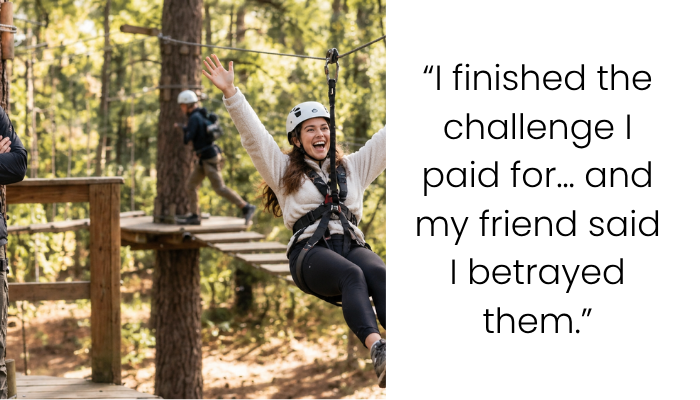
My Friend Quit the Extreme Course — Then Got Mad That I Finished
This AITA story is about two friends who decided to try a challenging zip-line obstacle course together. They had done similar activities before and felt ready for the adventure. During the course, they helped and encouraged each other through the harder parts.
Halfway through, one friend became uncomfortable and decided they wanted to stop. The poster stayed with them and made sure they were safely brought back down before continuing the course. Since finishing the challenge was an important personal goal, the poster chose to complete it alone.
After the activity, the friend became upset and said the poster was selfish for continuing without them. The poster explained that they had already supported their friend and that completing the course was meaningful because of the time, money, and effort they had invested. The disagreement may have been caused by feelings of disappointment, embarrassment, or frustration rather than the actual decision to continue.
The situation shows how friends can view the same experience in different ways. One person may see finishing a challenge as personal growth, while another may feel left behind. Good communication and understanding can help prevent small disagreements from damaging a friendship.


The Psychology Behind Friendship Conflicts and Different Goals
At first, this situation may look like a simple disagreement between two friends. One friend wanted to finish a difficult activity, while the other friend decided to stop. But the real issue is deeper than the activity itself. It is about friendship expectations, personal goals, and how people deal with different choices.
When friends start a challenging experience together, they often feel like they are a team. Many people believe that friends should complete difficult moments together because shared experiences can create strong emotional connections.
Because of this, one person may feel hurt when their friend decides to continue without them. They may feel left out or unsupported. However, there is an important difference between giving emotional support and being responsible for another person’s decision.
In this situation, the person who continued the activity did support their friend. They waited, stayed with them during the difficult part, helped make sure they were safe, and even planned another activity together afterward.
Once the friend had safely finished their part, continuing the challenge was not the same as abandoning them. It was simply a personal decision to complete a goal that was meaningful.
Why Personal Goals Are Important
Many people take on difficult challenges because they want to grow and improve themselves. Completing something that feels scary or uncomfortable can help build confidence and create a feeling of achievement.
A challenging experience can become a personal milestone. It can show someone that they are capable of handling difficult situations.
This is why many people set goals related to fitness, career growth, learning new skills, or personal development. Reaching these goals can improve self-confidence and create a positive mindset.
For the person who continued the activity, finishing the challenge was likely about more than just completing a course. It was about proving to themselves that they could overcome something difficult.
How Comparison Can Change Feelings
Sometimes people feel upset when they compare themselves to others.
Social comparison is a normal part of human behavior. People often look at the abilities and achievements of those around them. However, this can sometimes create negative emotions.
For example, if one person struggles with a task while another person succeeds, the person who struggled may feel disappointed or embarrassed. This can happen even when the successful person did nothing wrong.
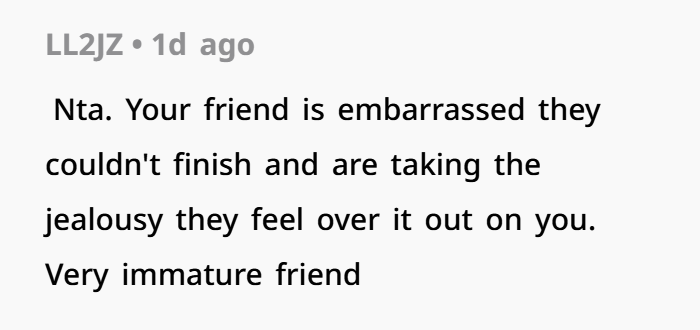
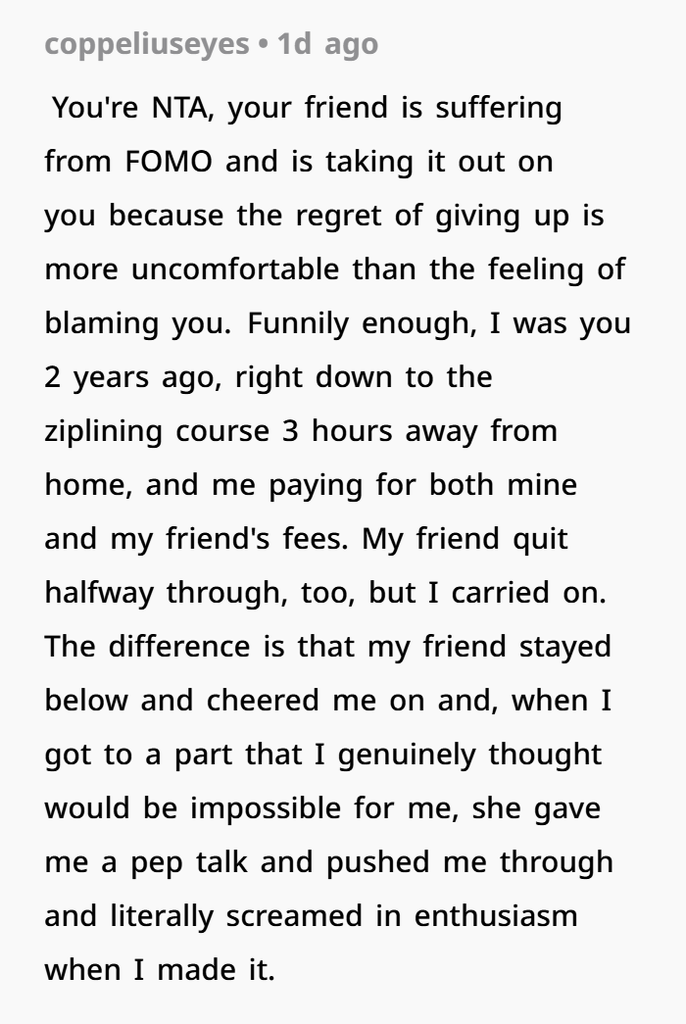
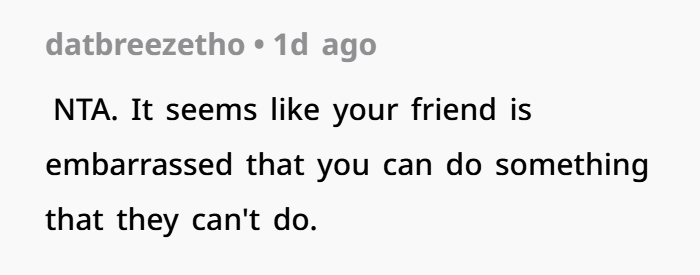
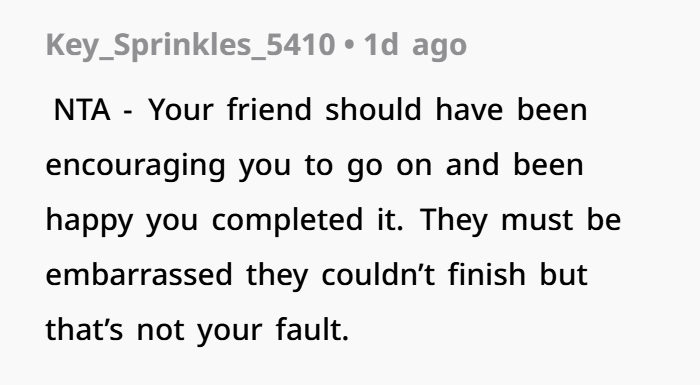
The friend may not have been upset only because the other person continued. They may have also been uncomfortable seeing someone else complete a challenge they could not finish.
These feelings can happen in many situations, including sports, fitness activities, workplace goals, and other personal challenges. Learning how to manage these emotions is an important part of emotional intelligence and healthy relationships.
Friendship Does Not Mean Making Every Choice Together
A healthy friendship allows both people to have different goals and different limits.
Supporting a friend does not always mean making the exact same decision as them. Two people can care about each other while choosing different paths.
One friend may decide that a challenge is not right for them, while the other friend may want to continue. Both choices deserve respect.
The friend’s disappointment is understandable. They may have imagined the activity as something they would complete together. Seeing their friend continue without them may have felt disappointing.
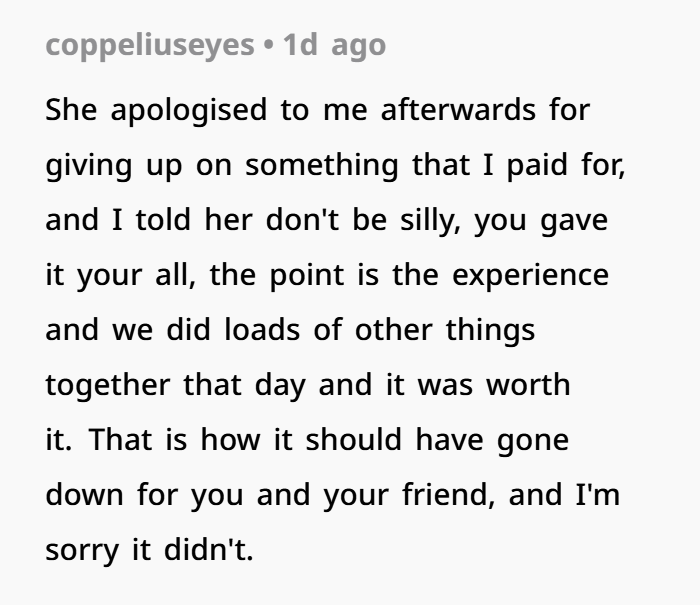
A simple conversation could have helped avoid confusion. Asking, “Are you okay if I finish, or would you rather I stop too?” could have allowed both friends to share their feelings.
Good communication skills are important for maintaining strong relationships. Many conflicts happen because people make assumptions instead of having honest conversations.
When Disappointment Turns Into Conflict
Feeling hurt or disappointed is normal. Everyone experiences difficult emotions in friendships and relationships.
The important thing is how people respond to those feelings. Ignoring someone, spreading negative comments, or trying to make them feel guilty can damage trust.
Healthy relationships require respect, understanding, and the ability to accept that two people can have different goals.
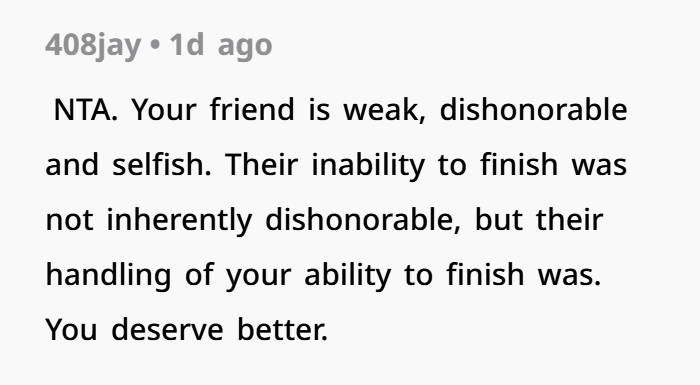
The main problem in this situation was not that one person completed the challenge. The bigger issue was that the friend saw someone else’s success as a personal problem.
A friend’s achievement does not take anything away from another person. Everyone has their own pace, strengths, and personal journey.
Final Thoughts
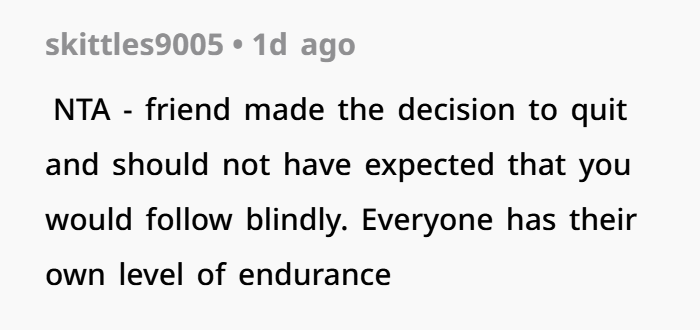
The person who continued the activity appears to have handled the situation fairly. They supported their friend, respected their choice to stop, and completed a personal goal that mattered to them.
The friend’s feelings are understandable, but expecting someone else to give up an important goal is not always fair.
Strong friendships are built on trust, respect, communication, and support. People can encourage each other while still allowing one another to follow their own goals.
The biggest lesson is that healthy relationships need balance. Friends should be able to celebrate each other’s achievements without feeling threatened by them.
Readers’ Comments Speak Out