My Neighbors Stopped Paying for Our Shared WiFi, So I Cut Them Off
A simple agreement between neighbors slowly became a problem over money. A 26-year-old woman lives with her fiancé in an apartment complex. After they upgraded their home internet service, their 50-year-old neighbor asked if his family could share the WiFi. The plan was simple: both households would split the monthly internet bill. At first, everything worked well, and the neighbors paid their share on time.
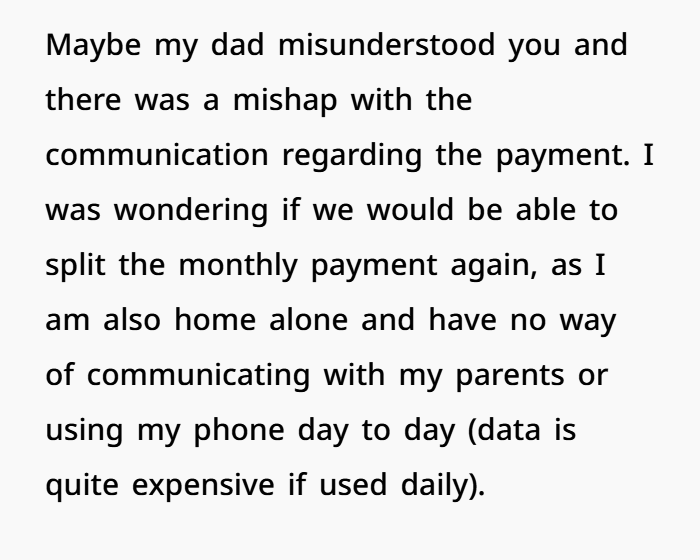
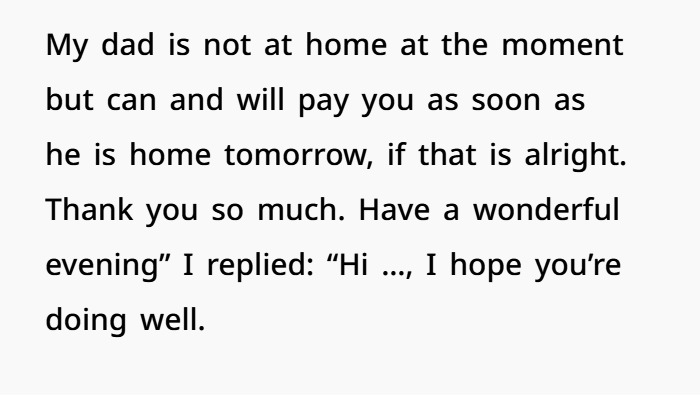
After a few months, the payments became less regular. Three people next door continued using the WiFi, but the woman and her fiancé were still responsible for paying the internet provider. After six months of poor service, the couple switched to a faster and more expensive internet plan. When the old connection stopped working, the neighbor’s 20-year-old daughter contacted the woman. She said she needed WiFi to communicate while home alone and could not afford to depend on mobile data. The woman decided to share the new connection with them.
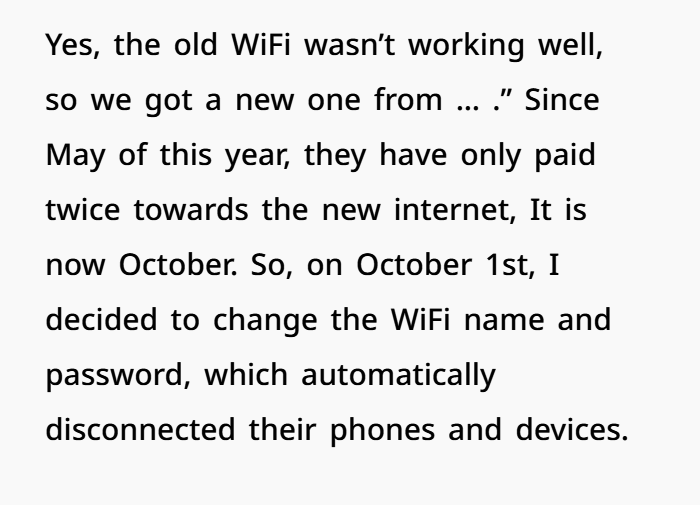
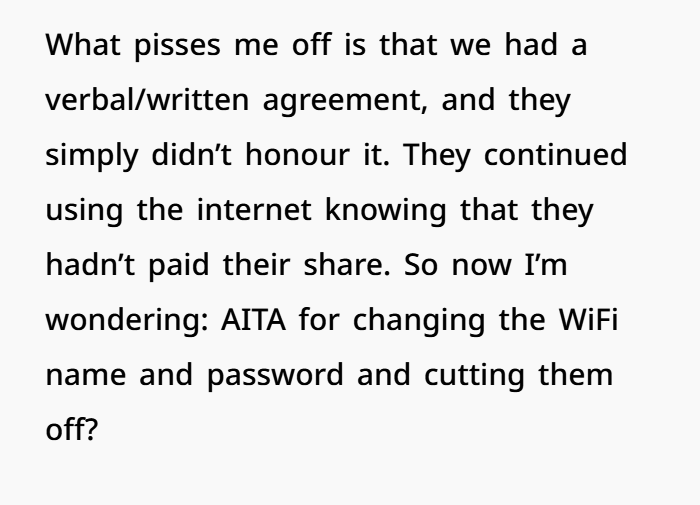
Unfortunately, the payment problem continued. Between May and October, the neighbors only paid twice. The woman became tired of asking for money while covering most of the monthly expense herself. On October 1, she changed the WiFi network name and password. This removed the neighbors’ devices from the service. She felt that continuing to pay for another household’s internet use was no longer fair to her own household budget.
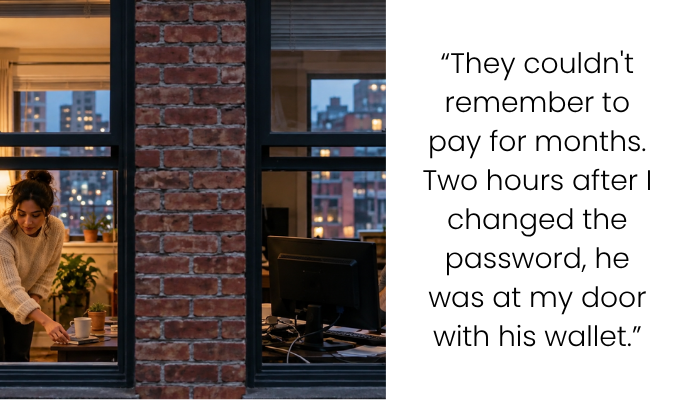
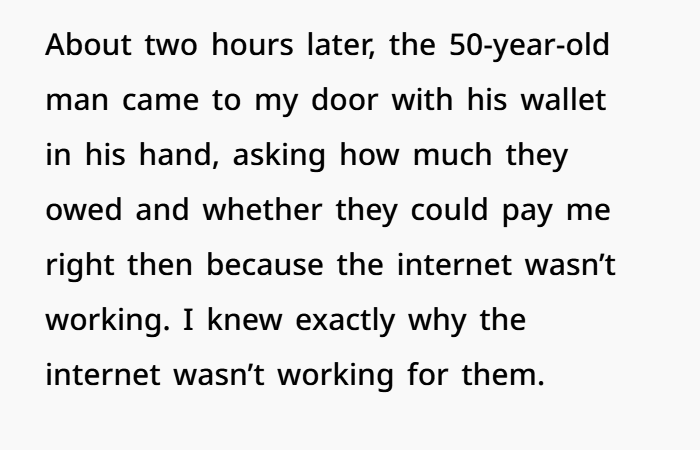
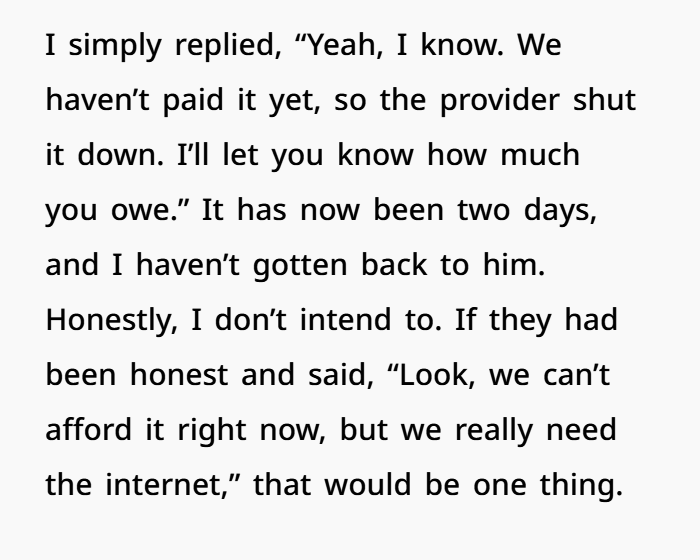
Within two hours, the neighbor came to her door with his wallet and was ready to pay. The woman told him the service was unavailable because the bill had not been paid and said she would calculate what he owed. Two days later, she had not contacted him and did not plan to restore their access. Her main issue was not whether the family had financial difficulties. She was frustrated that they had agreed to share the cost but only seemed ready to pay after losing access. For her, the experience became an important lesson about money, shared services, and setting clear financial boundaries with neighbors.

Sharing WiFi Is a Favor, Not an Unlimited Subscription
The main question in this story is simple.
Was the narrator required to keep sharing her home internet after her neighbors stopped paying their agreed share?
No.
The neighbors were not customers of her internet provider. The internet account belonged to the narrator, and she was responsible for paying the bill.
She simply agreed to share her WiFi with the neighbors if they helped with the monthly cost.
When they stopped paying regularly, that agreement stopped working.
Sharing WiFi Was a Private Agreement
This was not free public WiFi.
It was a private home internet connection.
The narrator paid for the service and controlled the account. Her neighbors were allowed to use it because they had agreed to contribute toward the internet bill.
That seems like a simple arrangement.
They get internet access.
She gets help with the monthly expense.
But an agreement only works when both sides do what they promised.
According to the story, the neighbors only paid twice between May and October.
That is very different from being a few days late one month.
It had become a pattern.
Months of Missed Payments Change Things
Anyone can forget a payment.
People get busy. Household expenses can pile up. A reminder may sometimes be all that is needed.
But several months of missed payments are different.
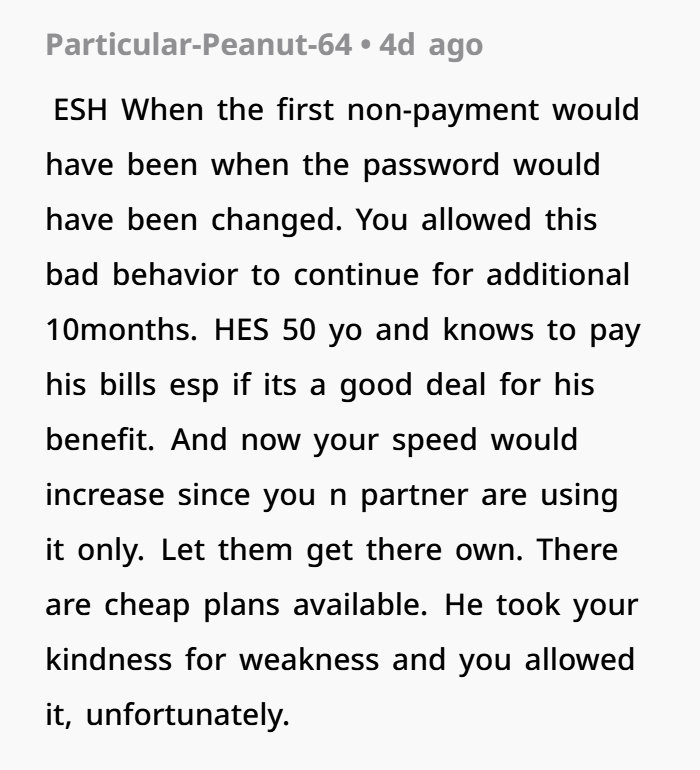
The neighbors continued receiving internet access even when they were not contributing toward the cost.
Meanwhile, the narrator continued paying the internet service provider.
Eventually, she changed the WiFi password.
That was her right as the account holder.
Sharing the connection was a favor based on an agreement. It was not a permanent subscription for the neighbors.
The New Password Suddenly Made Payment Important
One detail stands out.
For months, the missing payments apparently did not feel urgent.
Then the WiFi stopped working.
About two hours later, the neighbor reportedly arrived with his wallet and asked how much he owed.
That does not necessarily mean he was intentionally taking advantage of the narrator.
Money problems can be complicated. Families sometimes have to choose which household bills get paid first.
But the timing does show something important.
As long as the internet kept working, there was little immediate reason to fix the payment problem.
Once access stopped, the issue suddenly became urgent.
Sometimes clear boundaries work better than repeated reminders.
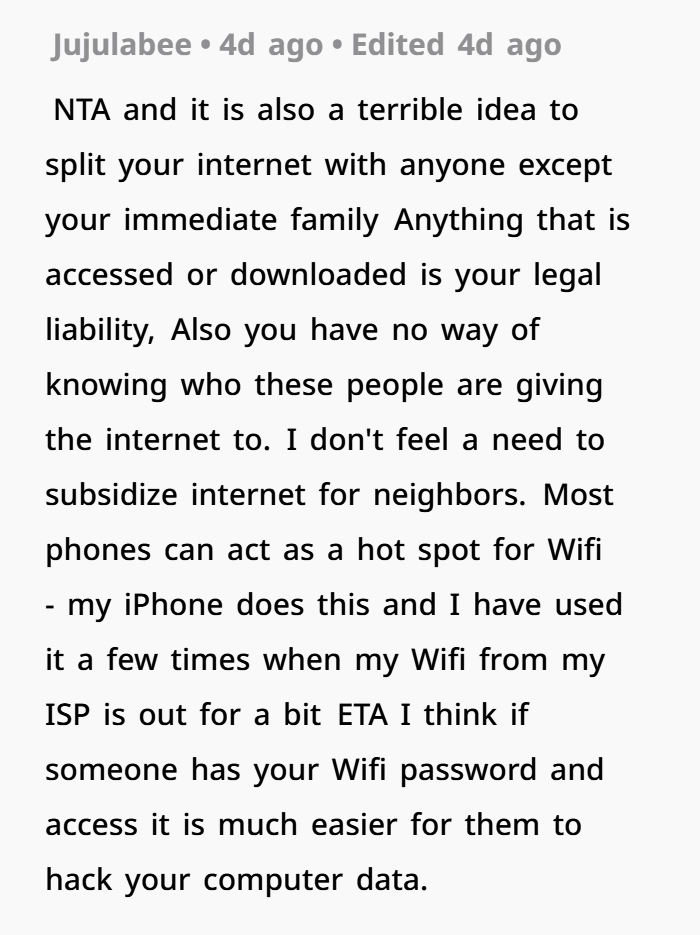
There Is Also a WiFi Security Issue
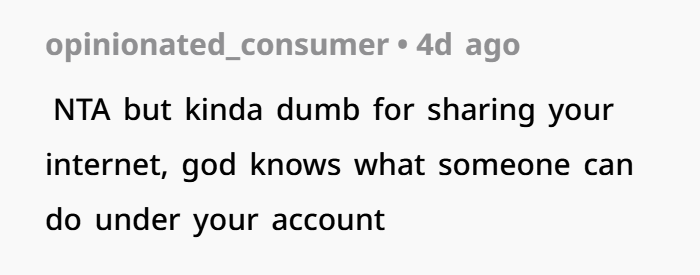
Money is not the only reason to think carefully before sharing home internet.
There is also WiFi security and online privacy to consider.
A home wireless network can connect phones, computers, smart TVs, security devices, tablets, and other technology inside a home.
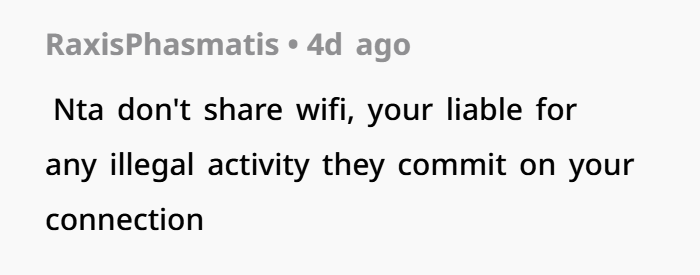
The more people who know a WiFi password, the harder it can become to control who has access.
The Federal Trade Commission recommends protecting home WiFi networks and routers with strong security practices.
The Cybersecurity and Infrastructure Security Agency also recommends steps such as changing default router credentials and using appropriate wireless security settings.
These basic cybersecurity habits can help protect a home network and the devices connected to it.
More Users Can Mean More Devices
Sharing WiFi with another household does not necessarily mean sharing with just one person.
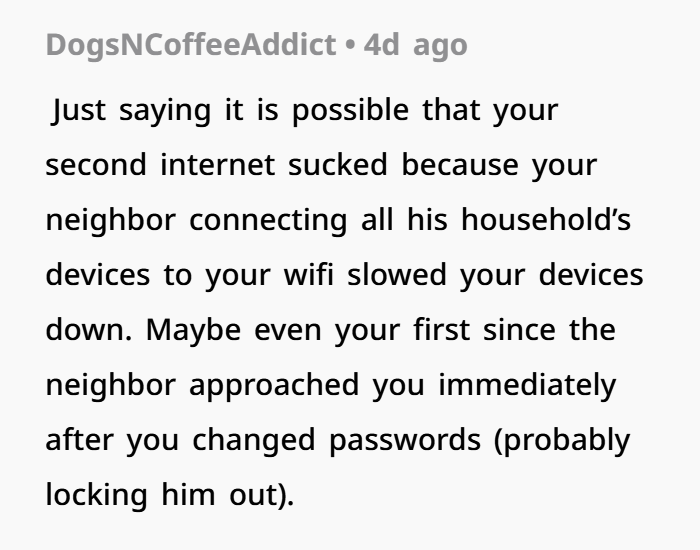
There may be several phones, laptops, tablets, televisions, gaming systems, or smart-home devices using the connection.
The password might also be saved on devices for a long time.
That does not mean the neighbors are doing anything wrong.
It simply means the narrator has less control over her private home network.
For someone thinking about home internet security, that is worth considering.
A WiFi password should be treated like access to a private household service, not something that automatically stays available forever once it has been shared.
A Guest Network Could Be Safer
If the narrator ever decides to share internet access again, a guest WiFi network could be worth considering.
Many modern routers allow homeowners to create a separate guest network.
A guest network can give visitors internet access without placing their devices on the main home network in the same way.
This can be useful for visitors, extended family, or other trusted guests who need temporary internet access.
However, the narrator does not have to create one for her neighbors.
She is also completely free to stop sharing her connection.
The Daughter’s Message Deserves Some Sympathy
The neighbor’s 20-year-old daughter adds another side to the story.
According to the narrator, the daughter sent a polite message.
She explained that she was alone, did not have affordable mobile data, and believed there may have been some confusion about the payment.
She also offered to have her father pay when he returned.
That does deserve some understanding.
Reliable internet access can be important for school, work, communication, banking, job applications, and many everyday tasks.
But feeling sympathy for someone does not create a permanent obligation to provide free internet.
Those are two different things.
The Daughter Isn’t Responsible for Her Father’s Agreement
It is also fair to separate the daughter from the payment issue.
If her father made the agreement with the narrator, the daughter may not know exactly what was promised or how often payments were made.
She does not need to be blamed for that.
At the same time, the narrator does not have to continue sharing her WiFi because the daughter needs internet access.
If reliable internet is important to the neighboring household, they need a more dependable long-term solution.
That could mean getting their own home internet service or consistently paying whatever amount they agree to contribute.
Depending permanently on a neighbor’s private WiFi can easily create problems.
This story is a good example of that.
The Narrator Made One Unnecessary Mistake
The narrator had a strong reason for changing the password.
But she made the situation more complicated when she explained why the internet stopped working.
She reportedly told the neighbor that the internet provider had disconnected the service because the bill had not been paid.
That was not what actually happened.
She had changed the WiFi password herself.
There was no real need to hide that.
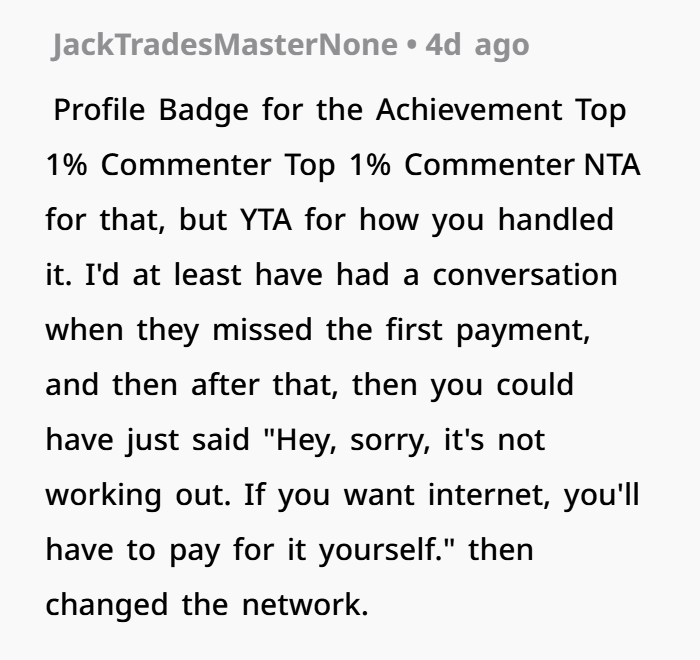
She could simply have told him that the payment agreement was no longer working and she had decided to stop sharing the connection.
That would have been clear and honest.
Clear Communication Would Have Been Better
Setting boundaries does not require making up an excuse.
The narrator could have explained that the neighbors had only contributed twice since May and that she was no longer comfortable sharing her home internet.
That would tell the neighbor exactly where things stood.
It would also prevent another misunderstanding.
Right now, the neighbor may believe that paying the missing amount will automatically restore internet access.
But the narrator apparently does not want to continue the arrangement.
Being direct would make that clear.
Good communication is especially important when money and neighbors are involved.
Small misunderstandings can quickly turn into larger disagreements.
Past Payments and Future WiFi Are Separate Issues
There are actually two different questions here.
The first is whether the neighbors should continue having access to the WiFi.
The second is whether they still owe money from the previous agreement.
Those issues do not have to be handled together.
Changing the password simply means the narrator is no longer giving them permission to use her connection.
Any money they previously agreed to pay is a separate matter.
If the unpaid amount is small, the narrator may decide that continuing the dispute is not worth the stress.
If the amount is significant, she could provide a simple record showing the agreed payments and what remains unpaid.
Either way, she does not need to give them the new WiFi password.
Household Expenses Need Clear Rules
This story also shows why informal agreements about money can become difficult.
Whether people are splitting internet bills, utilities, household expenses, rent, or other monthly costs, it helps to have clear expectations from the beginning.
Everyone should know how much they are expected to pay and when payment is due.
Even a simple written message can prevent confusion later.
Personal finance does not only involve big decisions like mortgages, insurance, or retirement planning.
Small recurring household expenses matter too.
When several missed payments build up over time, they can create frustration and damage trust.
The Bigger Problem Is Trust
In the end, this story is not really about a WiFi password.
It is about an agreement that stopped working.
The narrator continued providing internet access.
The neighbors were supposed to contribute toward the cost.
When those payments became inconsistent for several months, the arrangement was no longer fair to the person paying the account.
And there is an important distinction here.
The narrator did not cancel the neighbors’ internet service.
She stopped allowing them to use her private internet connection.
The neighbors are still free to purchase their own service, use mobile data, or find another legitimate internet option.
Having the password in the past does not create a permanent right to someone else’s home network.
Final Verdict: NTA
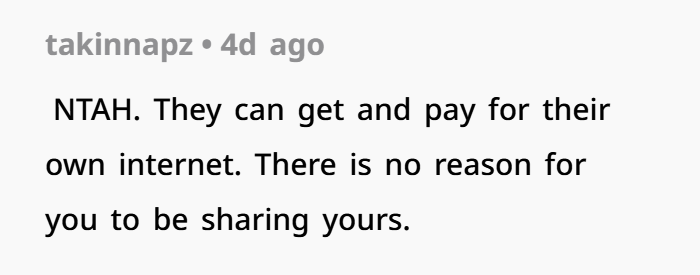
The narrator was reasonable to change her WiFi password.
She had been sharing a service that she controlled and paid for. The neighbors had agreed to contribute, but the payments became very inconsistent.
After months of that pattern, she was not required to keep providing internet access.
There are also good practical reasons to limit who has access to a home WiFi network, including cybersecurity, online privacy, router security, and control over connected devices.
The one part the narrator could have handled better was her explanation.
Instead of saying the internet provider had disconnected the service, she could have simply told the truth: the payment arrangement was no longer working, so she had decided to stop sharing her WiFi.
That would have been clearer and more respectful.
But it does not change the main issue.
Sharing WiFi was a favor based on an agreement. It was not an unlimited free subscription.
Once the neighbors stopped keeping up their side of the agreement, the narrator had every reason to end it.
See The Comments Below